
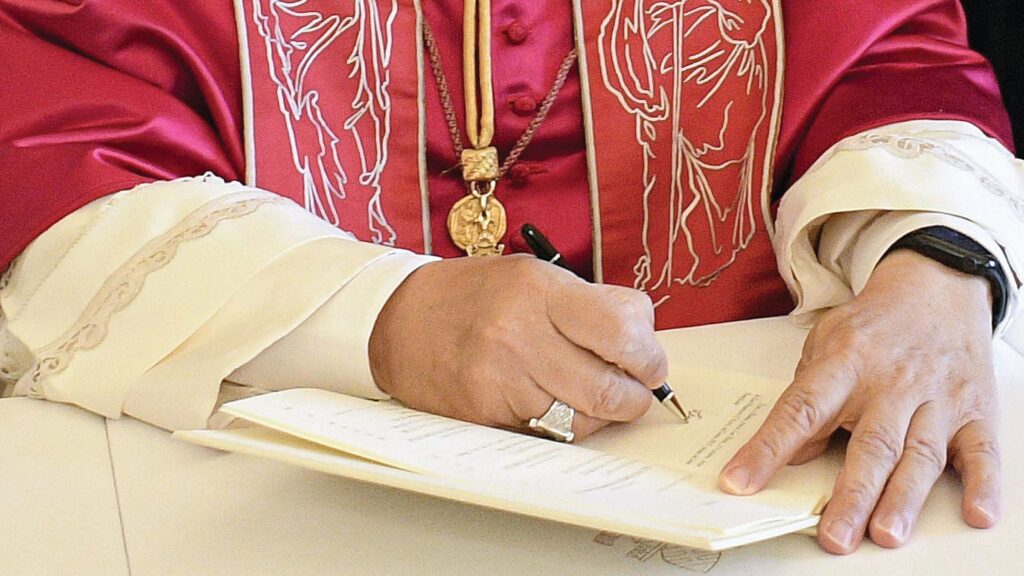

I really wanted to love the Pope’s new encyclical. I wanted to read a teaching from the Church that would both enlighten my understanding and remind me of why I could never be anything other than Catholic. I wanted a document that was confident in the truth, in its teaching, and the Institution that was founded to proclaim them both. This was not that encyclical. At least not all of it was.
I will spare you all the throat clearing and incensing that goes on in these situations. Yes, there are some genuinely good ideas in the document. I also found the summary of the Church’s social teaching very helpful too. The other 35,000 words are a bit mixed.
Which leads me to first my observation: the document is too long. Way too long. So long in fact, I am not sure that all those who have commentated on it have actually read through all of it. Which means that many who have rushed to say things concerning it are unlikely to have thought deeply enough about it.

First teaching from a ‘new’ Pope
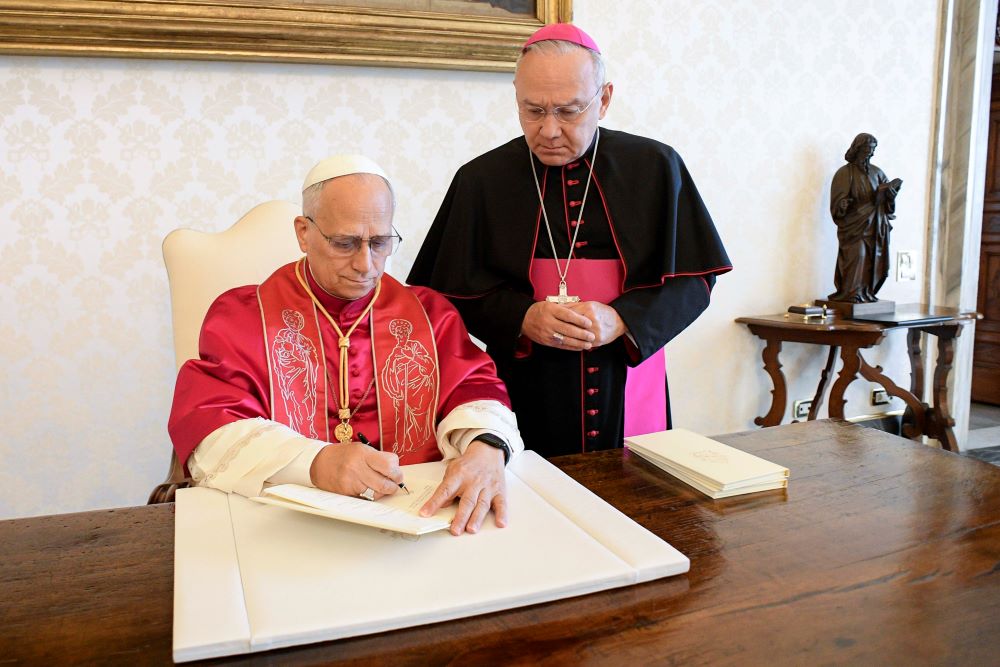
Pope Leo’s encyclical MAGNIFICA HUMANITAS (MH) was as much anticipated for what it would reveal about our (relatively) new Pontiff as it was for what it would say about AI. A document on this topic is timely and therefore not unwelcome. A document in the voice of this Pope was sorely needed. Were we going to get more of the same confusion and turmoil that were the hallmarks of the previous pontificate, or was there a steadier hand at the helm of the Barque of St. Peter? The betting market was wide open. I have enough confidence from this encyclical to say that we are in calmer waters for now.
I also think this encyclical reveals we have a Pope who prays and whose prayers deeply inform his thinking. His meditation on AI being a potential new Tower of Babel which needs to be countered with the spirit that rebuilt the walls of Jerusalem is genuinely nourishing. There is more than one turn of phrase throughout that meditation that is genuinely insightful. Where I feel a little let down are that the consequences of that meditation are left on the vine so to speak. Let me explain.
AI Troubles
There is no doubt much anxiety surrounds the advancement of AI. And some of that is coming from those who invented it in the first place. Talk of mass disruption, huge job losses and intrusion on ordinary people’s private lives are daily headlines. There is no escaping the fact that the world thinks AI is a big deal. Just how big a deal time will tell.
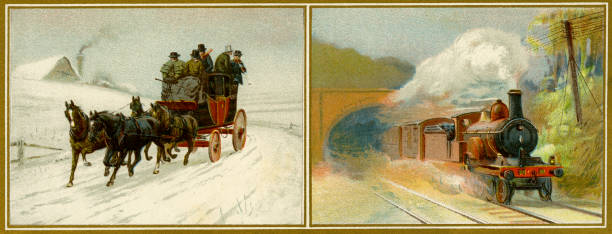
One of the assumptions of MH is that AI will be a major disruption. All new technologies from the microchip to the steam engine have been precisely that. But they have also brought major advances; even though those advances come at a price. The problem is, that those who generally enjoy the benefits are not always the ones who pay it. So, it is easy for me to wax lyrical about the steam engine because I never lost my job manufacturing horse buggies. I don’t want to be cavalier about a price someone else has to pay. AI is likely to bring many benefits, but they will have their price. As Christians, we should not be indifferent to that fact.
However, the fears surrounding AI are based on predictions. For example, that the rate of change it will bring will outpace our ability to absorb those who will be displaced. Some point to the likelihood of autonomous self-driving vehicles that may be fully operation by the end of the decade. Transportation across the world employs about 30% of the male population. The possibility of so many men being unemployed very quickly and without time to reabsorb them into something else, is potentiality very destructive.
A missed opportunity
The missed opportunity in the encyclical is that at the heart of our uncertainty lies a deep suspicion: we just don’t trust ourselves. And we certainly don’t trust those in charge. We have ample evidence, both empirical and anecdotal, to warrant that suspicion. Whenever power is concentrated it is manipulated- pandemics, global financial crises and supply chain issues are all code for “just trust us.” And ‘trust you’ we don’t.
The Church’s ancient wisdom teaches something very specific: trust the world only in so far as it reflects and corresponds to God’s order. Otherwise rely solely on God and His grace. Personal sin and original sin both muddy the waters. And we have been doing our best to pretend that sin is not a thing. And the sons of the Church have been doing what they can to help us forget it. When was the last time you heard a serious sermon on sin and its eternal consequences?1
All institutions are just groups of people. And all people are sinners. The difference is not which group of people do we trust more, but rather into whose hands does any one group entrust itself? Do they rely on God’s grace because they recognise their sin, or do they just trust in whatever is the flavour of the day? And this is where my disappointment in the encyclical begins to manifest itself.
New hope/same problem
Contemporary Catholicism has, for the last two or three generations, shown a remarkably naïve confidence in modernity. In the post-war years and during the time of the Second Vatican Council, I can imagine there was a palpable sense of relief. The war was over, modern inventions, thanks to wartime technology, were trickling into the home making life much easier for everyone. Modern medicine was advancing and means of communication were improving. Certainly, there was the looming threat of the Communist Bloc countries and nuclear war; but knowledge, education and transportation were all rapidly advancing and improving your life.
The Church had to face a situation that it had never faced before and I think it was culturally ill prepared to meet: success. The Church had a sophisticated theology of suffering and sacrifice, but it had never coped with mass prosperity before. Throughout history an elect always prospered- You know that the princes of the Gentiles exercise dominion over them, and they that are great exercise authority upon them. But never did entire populations rise so fast. The average man in modernity lives, eats and enjoys a life that not even Pharaoh in all his glory ever dreamed possible.
Against this background, the Church’s message of consolation in suffering not only seemed old and outdated- it just seemed plain wrong. Or at the very least, useless. We were heading towards a world of unlimited prosperity for everyone with no apparent end in sight. So long as we didn’t blow ourselves up in the meantime. What would a message of hope sound like to people in the West who were thriving? How do you preach a Gospel of suffering when everyone is flourishing? We were prepared to console you in your distress. But what do we say to you when you succeed?

A syllabus of errors
And so, I think the sons of the church made a spiritual, doctrinal and cultural mistake. We didn’t think our theology had enough to say about the modern world, and we started inventing a new theology that would. We stopped talking about sin- that old thing– and started talking about how wonderful everyone was. Every message from the pulpit was about how much God loved you and how wonderful you must be if a God so loving loved you infinitely. In the end, we started to believe that God was truly a lucky God to have created creatures like us. We then started singing hymns in the voice of God at mass- I the Lord of sea and sky– instead of singing parts of the mass as a reminder of the reality of sin and propitiatory sacrifice- miserere mei Domine.
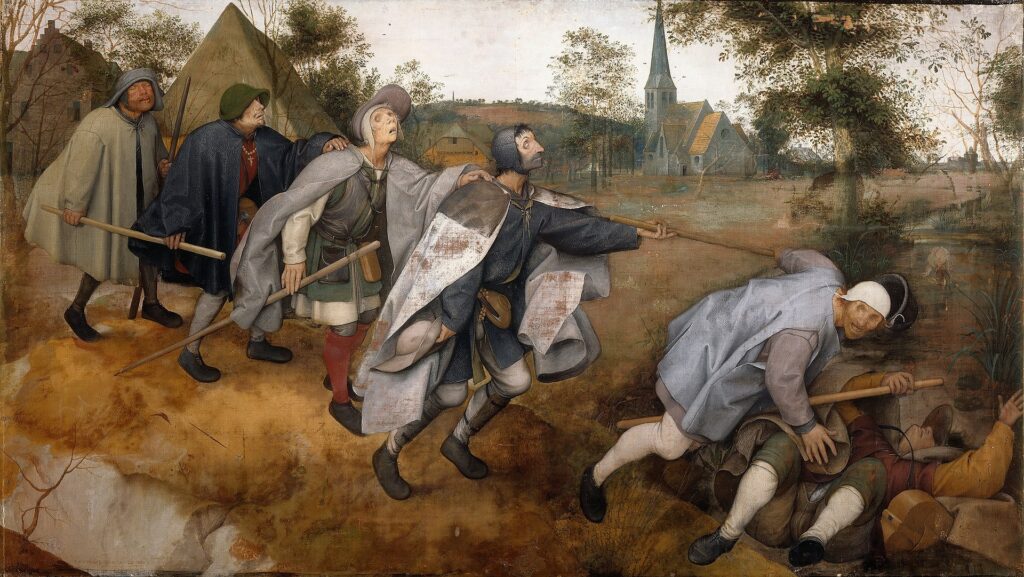
And our mistake grew. Not only did we think we were marvellous, we started to think everything we did was marvellous too. The sons of the church began teaching how the church had to be open to the world and in dialogue with modernity. But not in the sense that we needed to find a way of speaking into the world. No, we- meaning you- had to be humble. The world had much to teach us, if only we would listen. And so, a few hundred million abortions later and countless lost religious vocations and broken marriages- we weren’t in dialogue with the world any more, we were its disciple. We didn’t just throw the baby out with the bathwater- we chucked the whole lot and shacked up with the neighbours:
Rub-a-dub-dub, Two men in a tub.
The Church discovered its new found optimism and confidence in modernity and its intuitions. Governments could regulate us out of sin and organise us into virtue. It was ok to love the world- for God so loved the world… but the Lord did not love the world so. And this we forgot. And we have never recovered from our optimism.

Where does this leave MH?
And this is where I think MH was a missed opportunity. Its limits are the limits of a contemporary Catholicism still trying to convalesce from its incurable confidence in modernity. The modern church’s confidence in liberal institutions and their ability to regulate us out of problem’s we have sinned ourselves into is a dead-end. I know this is dreadfully unpopular, but the Lord was not raised on the Cross so that He could get a better view of the world. He died on the Cross so as to free us from the mess we have made of it.
And that mess is sin. Which is why I argue the modern church can’t get its act together. Christianity is not a religion of this world, even though it is a religion in this world. And the heart of our religion is to resist. To resist the decay of personal sin and to resist the slow decline of original sin. But resistance requires effort- and we have grown accustomed to the comforts that modernity has brought- until modernity makes a discovery that threatens us. I think we are suffering from a certain sense of guilt that comes from having compromised ourselves into accidia- and we are nervous that something is coming to correct us. AI, I think, looms large in our collective imaginary as a destroyer of worlds because we know we have become lazy in our struggle. We fear being overcome by what we will not resist.
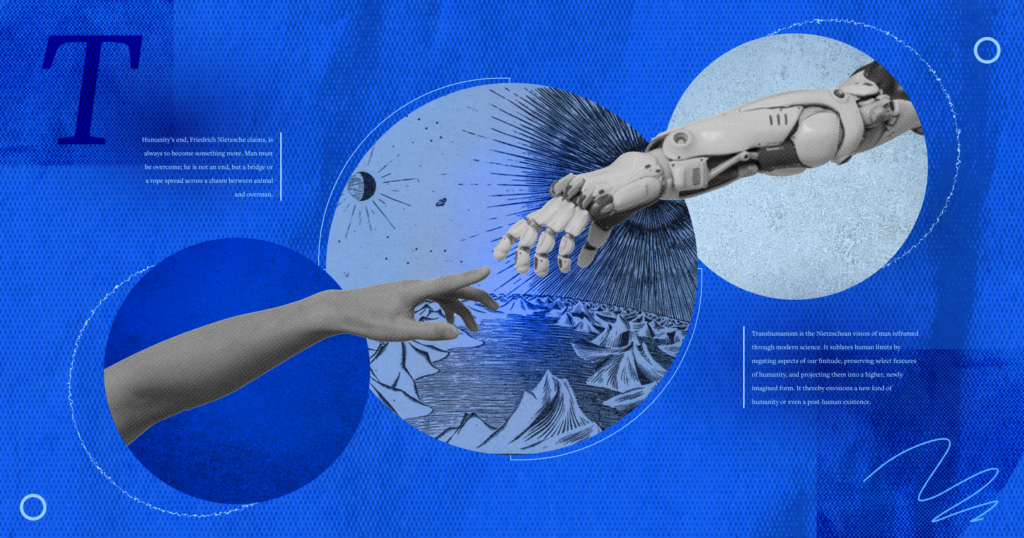
And here is where I think the encyclical needed to say more. It needed to reflect on the root causes of our fear. Pope Leo quite rightly said that AI will never replace human intelligence. But why? That is an easy thing to state- but where is the argument for it that the world needs to hear? The encyclical only mentions the word soul three times- and one of those is a quote from the Magnificat. Yes, AI might reach a level of synthetic reproduction indistinguishable from human intelligence to the average person- but it will never have an interior life. It will never be a spiritual substance. A document addressing the question of our humanity and challenging the assumption of transhumanism without a sustained reflection on the soul is a missed opportunity.
In its place we have appeals for government regulation and UN supervision. These will do little to address our guilt and inspire us to virtue. Christianity is not a religion that scales from the personal into the public through politics. Christianity scales from the personal to the public through culture- through the ideas it cherishes and the habits those ideas form. The Gospel is a perfect means to holiness; it makes for rather poor public policy when it is not first a culture. To turn the other cheek is my personal obligation as a Christian- it makes for very bad law enforcement. I am personally called to lay down my life- but no government should allow its country to be crucified.
Until we rediscover the resistance at the core of our religion- we will never produce a culture capable of taking the Gospel and making it a way of life for peoples, nations and their institutions. Christianity scales through culture- not by UN regulations.
But with none of this, I imagine, would Pope Leo disagree- the soul, sin and our need for repentance. My prayer is that he finds the opportunity (and the document) to say it.
- Unless you were at the TLM on Sunday ↩︎