
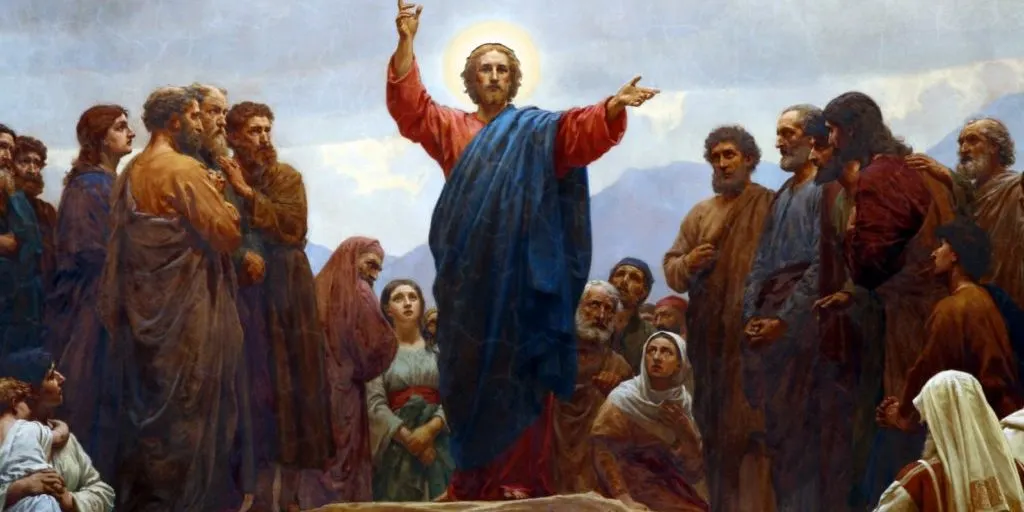

Already before Charles III acceded to the British throne, it was widely reported that, instead of the title Defender of the Faith, which British monarchs have claimed ever since Henry VIII – before his own fall from the Church – brilliantly refuted the errors of Martin Luther, the future king preferred to be called the Defender of ‘faiths’. This attitude, officially confirmed and declared in the 2025-2026 Sovereign Grant Report, illustrates the difference between the virtue of faith as the Catholic Church understands it and the common usage of the word in today’s world. For King Charles III, faith no longer means the true faith handed down by Tradition, but any personal conviction about what we think is important in life. Thus, people today speak of the Catholic faith as they would speak of the Muslim faith, the Jewish faith, the Buddhist faith or any other faith. This ultimately puts the true faith on a par with the beliefs of other religions. So what is the faith?
Let’s begin by looking at what the Oath Against Modernism tells us about it:
‘I hold with certainty and sincerely confess that faith is not a blind sentiment of religion welling up from the depths of the subconscious under the impulse of the heart and the motion of a will trained to morality; but faith is a genuine assent of the intellect to truth received by hearing from an external source. By this assent, because of the authority of the supremely truthful God, we believe to be true that which has been revealed and attested to us by a personal God, our Creator and Lord’.
True faith is a gift coming from above, beyond the individual person. Faith is not a blind sentiment. Actually, it is not a sentiment at all. It is not the attempt of someone in the dark to pinpoint something they can grasp and hold on to. Nor is the faith blind. While it does retain a certain obscurity (we do not yet see with clarity the object of faith, that is to say, God and His mysteries), it cannot nevertheless be blind, since it is God Himself who communicates it to the soul by means of what He has revealed, and God is eternal light and truth. As St Thomas Aquinas explains, every virtue has a ‘seat’ in the soul. Faith finds its ‘seat’ primarily in the intellect, which God enlightens by means of the virtue of faith. Faith does this by unveiling to our minds truths that God sees and knows perfectly, but which are hidden from us.
So we have on one hand the fact that faith, as St Thomas teaches, is more certain than any purely human science can be, because God Himself guarantees the truths of faith, and God cannot be mistaken: ‘No one must have doubts about the faith, but all must believe the truths of faith more than those which they see; for man’s sight can be deceived, but God’s knowledge is never deceived’.1 On the other hand, the realities that are revealed to us are not yet shown to us in all their clarity. This is reserved for the Beatific vision of Heaven. So we can say that our faith is both clear and therefore absolutely certain, and obscure enough to give us the merit of believing God on His word.
A Gut Feeling?
For the Modernist, faith comes not from above, that is, from God, but from below, that is, from the depths of the human person. When a person senses that there should be something to guide our decisions, lest we be no more than sophisticated animals, there develops within them thoughts of a higher power that somehow presides over the destinies of humanity and gives us principles to live by, a moral code to follow. These thoughts, when taken seriously and organised into a body of beliefs, produce what they call ‘faith’.
It is for this reason that the Modernist conception of faith approves of all religions. If faith comes from inside the person, there will be as many religions as there are people, for everyone is different and could potentially come up with a different view of God and the moral law. ‘You have your religion, I have mine.’ It should be obvious that such a notion of faith is incapable of unity. If someone says that, according to their beliefs, it’s perfectly moral to avoid having children, or if another says that, according to his beliefs, it is acceptable to put your aged parents to sleep when they no longer have a certain quality of life, what really can you say to them other than appeal to a sense of decency which itself is constantly evolving? It is not hard to prove that, as close to us as a century ago, common decency thought that not having as many children as you could was selfish. Today, the same ‘common decency’ says the exact opposite: large families are frowned upon, and those who practice contraception and abortion are considered to be champions of civilisation.
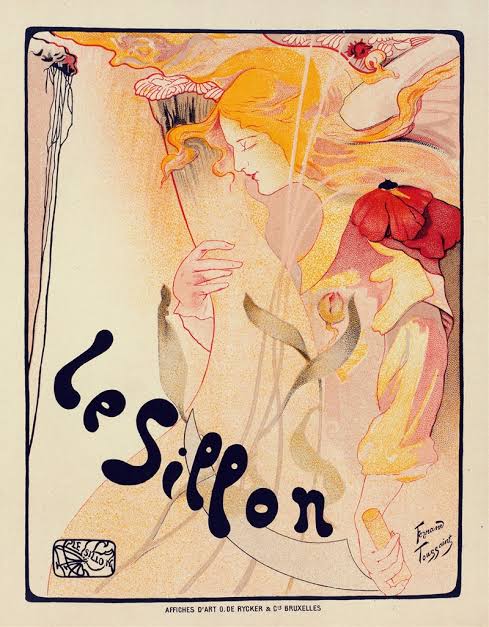
There has to be something objectively verifiable in faith; otherwise, the very concept dissolves before our eyes. This is the reason for which St Pius X declared that if Modernism triumphs, it means not only the death of the true faith; it means the death of true civilisation. This last point was crystallised in a well-known passage from the letter he addressed to the French socio-political movement called Le Sillon: ‘There is no true civilisation without moral civilisation, and no moral civilisation without the true religion: it is an established truth; it is a fact of history’.2
Fides ex auditu (Rm 10:17)
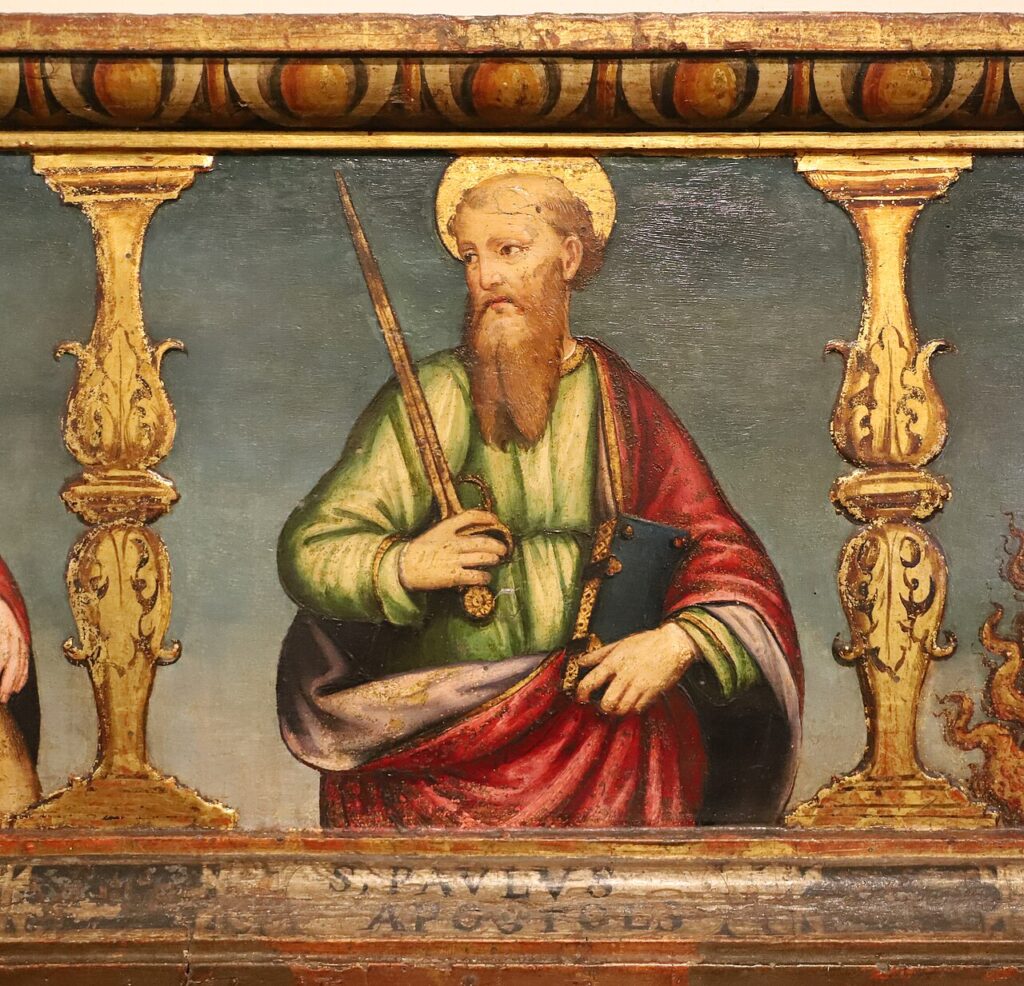
The divine truths which are the object of faith are revealed to us through a human mediation. St Paul stresses that true revealed faith reaches us from an external source:‘Faith comes from what is heard, and what is heard comes by the preaching of Christ’ (Rm 10:17). It is initially preached by the apostles to the people who hear, and who are then touched by grace to repent of their sins. They give their assent to the words God has spoken and are then baptised. This is why the Church has the grave duty to preach the Gospel in every age and among every people. The truth is necessary for salvation, for salvation can only be found in the truth.3 That truth, in order to be embraced, must be heard, and having been heard, it must be embraced, and lead to the sacraments, which are the means God has instituted so that grace can reach each soul.
If you are enjoying Oriens Journal please consider subscribing to receive new posts and support our work, consider becoming a free or paid subscriber.
The ultimate guarantor of the authenticity of this truth is God Himself. We believe what He has revealed simply because He has revealed it, even though our own minds may not be able to comprehend how this is. For instance, Jesus Christ instituted the Holy Eucharist by saying the words ‘This is my Body…. This is my Blood’ over the bread and wine. His words are clear, and the Catholic Church has always received them for what they are: a revelation about the transformation (properly called transubstantiation) of the bread and wine into the Body and Blood of Christ, enabling Christ in His humanity to be really and truly present to every generation, even though in His visible glorified humanity He is seated at the right hand of God the Father in Heaven. Our senses, however, remain in the dark. Our eyes see what looks like bread; our taste is convinced that what we are eating is bread. Our intellect, on the other hand, knows that we are really receiving the Body of Christ for the simple reason that God has told us so, and God can never be wrong – nil hoc veritatis verbo verius – nothing is more true than the word of truth itself – as St Thomas expressed it in the hymn Adoro Te Devote. Faith is a divine light which makes us ‘see’ things that we cannot ordinarily see, but it does not show us the reality itself. It is not yet the clear light of eternity that will be ours in Heaven when we see God face to face.
‘What shall we do?’ (Acts 2:37)
The knowledge of the true faith is a pure gift of God. Since it is a gift freely given, everyone who has it must strive to share it with others: ‘Freely have you received, freely give’ (Mt 10:8). This has been often repeated by the Church in modern times: every Christian is missionary by nature, for the gift of faith is not given to be kept for oneself and buried in the ground (cf. Mt 25:25), but to be shared, so that the seed may be widely sown and reap a greater harvest.
But how can we share the faith in a world that is often not so much opposed to it as indifferent to it? A few simple suggestions:
Be kind, but clear. Never give the impression that the faith is something abstruse (it is not) or something for professionals. It is always sad to hear someone say: ‘Oh, I’m not a religious person’, as if religion were a collection of esoteric doctrines that you need a graduate degree to decipher. Everyone by nature is a religious person, because everyone is created to know, love and serve God in this life and be happy with Him forever in Heaven. Though they reach the very mystery of the Godhead and we can never exhaust their content, the truths of the faith as handed down to us are simple; they are accessible to everyone.
Express joy about the Catholic Faith and try to demonstrate it in our own way of living. When we meet someone who exudes peace and joy, we ordinarily want to know the cause. At the same time, no Catholic is less persuasive than the one who does not emanate happiness at being Catholic. Conversely, someone who does have that joy cannot fail to prompt intrigue and questions. This is all the more true in a world as sad as ours. The best way to have that joy is regular contact with the Lord through prayer and the sacraments, especially the Most Holy Eucharist.
Invite people to Mass or other Catholic events. The power of an invitation must never be underestimated. There are people who are just waiting, and perhaps curious, but don’t want to intrude. Whereas one may hesitate to invite someone out of fear of appearing importunate, an invitation offered at the right time and in the right way, even if turned down on the spot, often gets people thinking. Sometimes, even, they are very grateful to be considered important enough for us to want to share with them what we hold most dear.4
Be prepared to answer questions. These may concern Catholic doctrine, practices or even controversies. St Peter had already told the first generation of Christians: ‘Always be ready to make your defense to anyone who demands from you an accounting for the hope that is in you’ (1 Pt 3:15). This point admittedly requires that we do our homework and do some regular reading in good Catholic books. If, in spite of this, we do not have the answer to a particular question, we mustn’t be afraid to admit our ignorance, but then we promise to find out from someone who knows.
Be coherent, that is to say, live a life that reflects what the Church teaches. On this point, the Catechism has some remarkable advice: ‘The sixth beatitude proclaims, Blessed are the pure in heart, for they shall see God. Pure in heart refers to those who have attuned their intellects and wills to the demands of God’s holiness, chiefly in three areas: charity; chastity or sexual rectitude; love of truth and orthodoxy of faith. There is a connection between purity of heart, of body, and of faith: The faithful must believe the articles of the Creed “so that by believing they may obey God, by obeying may live well, by living well may purify their hearts, and with pure hearts may understand what they believe” (Saint Augustine).5
Pray and offer sacrifices for souls. While this is the most hidden part of our task to convert souls, it is also the most important. When we name someone in prayer, God increases His grace to that soul, all the more so when our prayers are joined with certain acts of self-denial, such as fasting, giving up some of life’s comforts, or giving alms. Let’s not forget, too, that everyone has a Guardian Angel, and it is most advantageous to have recourse to their intercession as our most potent allies before approaching a soul with an invitation.
Finally, don’t give up on those who appear to be recalcitrant. Rome was not built in a day, and some souls need time to come to the realisation of what’s really at stake in life. The true shepherd takes time with his sheep; he stoops down to their level in order to heal, strengthen and lift up. He’s happy to carry them on his shoulders when they cannot yet walk. He knows no rest till he has brought the soul back to God.
- St Thomas Aquinas, prologue to his Commentary on the Creed. ↩︎
- Pope St Pius X, Apostolic Letter Notre charge apostolique, 25 August 1910 (the original was published in French): ‘Pas de vraie civilisation sans civilisation morale, et pas de vraie civilisation morale sans la vraie religion : c’est une vérité démontrée, c’est un fait d’histoire’. ↩︎
- Cf. Catechism of the Catholic Church, no. 851. ↩︎
- A nurse who tended to my father in his final months later told me how touched she was that my father thought her worth trying to convert. Even though he did not succeed, he certainly sowed a seed that may later have taken root. ↩︎
- Catechism of the Catholic Church, 2518, quoting St Augustine from the De Fide et Symbolo 10, 25). ↩︎