

Roman Holy-days
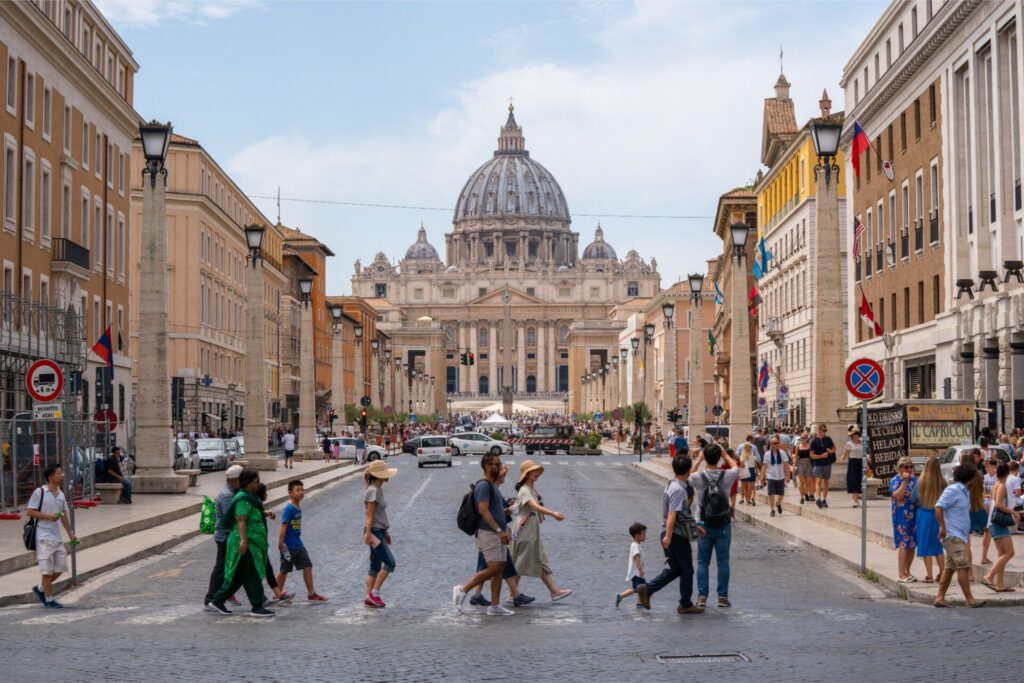
When I was newly ordained, my first parish was on the outskirts of Rome. The kind of place that does not appear in the guidebooks. And for good reason. But there is a sort of genuineness in places like those- that is both a blessing and a challenge.
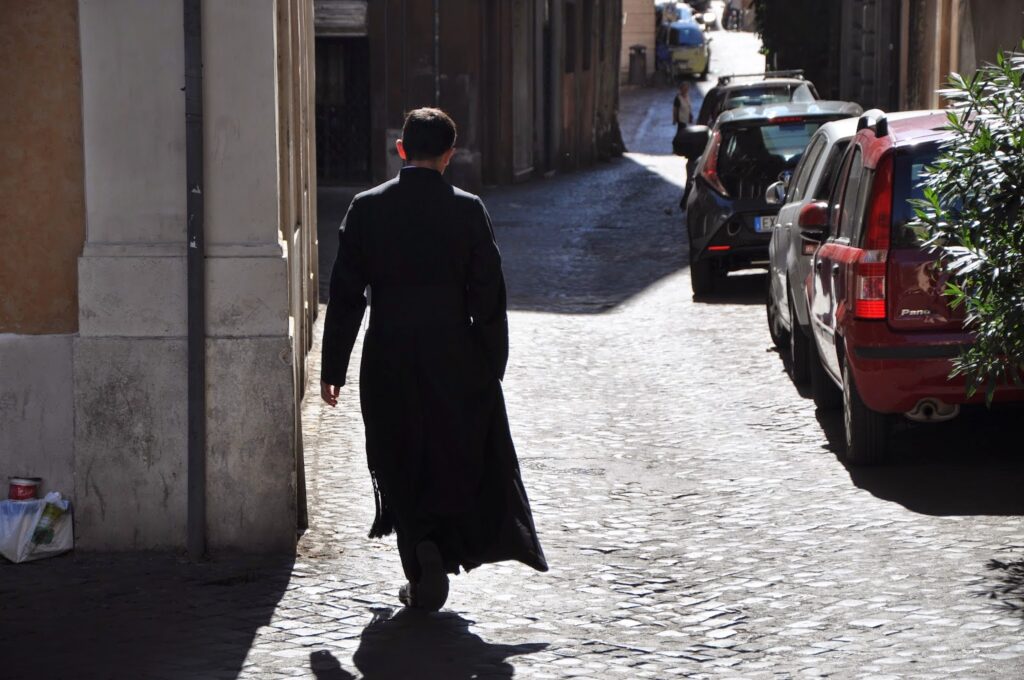
One of those ‘challenges’ was how they viewed priests. With, how shall I say, a certain jaded ‘real-world indifference’. After two thousand years, Romans have quite literally seen everything and are shocked by nothing. Not entirely a bad thing in itself- just a little dispiriting when you have dedicated your life to something that people don’t take nearly as seriously as you do. One of the fallouts from their attitude, was that priests were seen as a kind of timballo1 of tribal witchdoctor and village idiot. Priests were at times figures of ridicule. Now, although not always pleasant, it did help to keep a young priest’s feet firmly grounded in reality. There was little room for things to ever go to your head.
I remember being put out by that attitude. Armed with all the arguments as to why the priesthood should be taken seriously; it actually dawned on me that there is some truth to what they were saying. There is a reason not to take all of a priest seriously- because priests should take most things very lightly. Except for one thing- the only thing that we should worry about. More on that in a minute.
Not just click bait
I know we live in an era of clicks, views and subscriptions. Even our little Journal sinks or swims according to how many eyeballs it attracts. It is the burden of our age. And so, the title of this essay can seem click-baity. But there is actually a little more serious theological depth to the title than first may appear. And this stands in relation to the story I just told. Let me explain.

A Promise made…
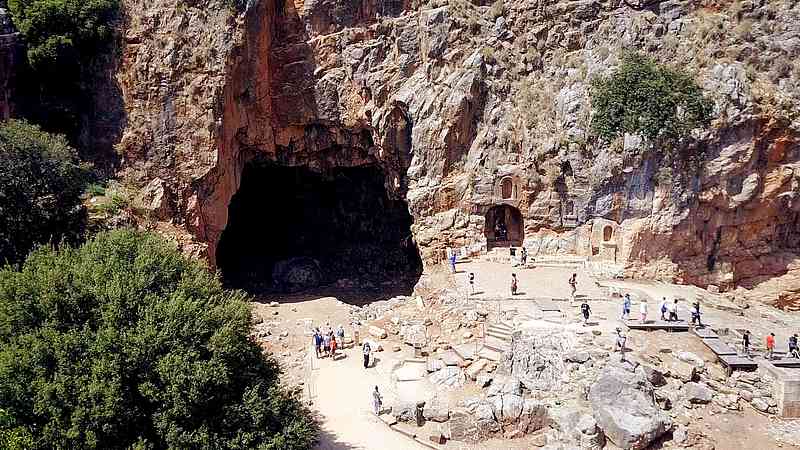
I have been reflecting lately on the Lord’s promise to Peter about the Church in chapter 17 of Matthew’s Gospel: and the gates of hell shall not prevail against it. Two things have occurred to me: the first, why would the Lord have made that promise; and second, if He has made that promise, do we have anything really to worry about?
Is a promise kept
There is a great deal of chatter at present about the Church’s survival and the never-ending list of calamities that seem to move her a mere inch away from utter annihilation- but does any of it matter? If the Lord has promised She will endure- then She will endure. And we are all running around like Chicken Little worrying about the very thing we have been promised won’t happen. It would seem every headline, by-line and caption that warns of impending doom is not just click-bait; it is an outright lie. Either we believe the Lord, or we don’t. If we take the Lord’s promise seriously, which we should; and literally, as suggested by His words- then we have no cause for concern. All the worries about the “end of the Church” are plainly misguided. And it doesn’t matter whether those predictions come from us, the Society of Pius X or the National Catholic Reporter. So, then, the question remains: what on earth (and heaven) have we traditionalists got to worry about?
What the promise promises
If the Lord has made a solemn promise that the gates of hell cannot overcome the Church, there is no greater guarantee that the Church will exist throughout all times and all circumstances of history. And so many of our concerns about nominations, emanations and the German Episcopal Conference should all be taken with a grain of salt. Sure, it’s a bad look. Sure, it might be a bit confusing, and even a bit embarrassing- but it won’t bring down the Church. We can all just relax… Take it easy… Nothing to see here folks… But does that promise actually warrant that attitude? That attitude abounds in certain corners of the hierarchy- but is it justified?
Leaving aside some of the obvious difficulties in the above, let us return for a moment to consider why the Lord would have made such a promise. At face value, it is entirely reasonable that the Church should endure. If the Lord’s words will not pass away, then neither should the Church. But is there anything further to add?
If the Church’s survival is not at stake, it frees us from worrying that any one man or group in the Church is indispensable. Anyone can disappear tomorrow and the Church will go on. And perhaps even a little better for it. We are freed from an unhealthy attachment to people, places and things. And the same people can be free from an unhealthy attachment to themselves and their own positions. It means I never have to take myself too seriously. Whether I am pope or parish youth minister-nothing about me is indispensable to the Church. The Romans have a saying: morto un papa, se ne fa n’altro. Quite literally: when one pope dies, we’ll just make a new one. That sounds utterly impious; but undeniably true.

Where our attention should be
If the Lord’s promise means that the attention need not be on me- then where should it go? And this is where traditionalists get rightly, very bothered. The Church’s survival is not at stake- but yours and mine is. We may not have to worry about the Church enduring forever; but we do have to worry about where we are going to spend forever. The problem with the whole “there’s nothing to see here folks” attitude that doesn’t sit right with traditionalists, is that even though it pays lip service to something important- the Lord’s promise- it fails to appreciate what that promise compels us to do— care for the salvation of souls. Our Lord’s promise makes no guarantees about how well the Church will survive and in what conditions Her faithful will survive along with Her. Or even how many of us will survive- just that more than zero people will survive whatever catastrophes we may be living through at any point in time. It does not however, guarantee your salvation. And that is where the whole “steady as she goes” schtick breaks down.
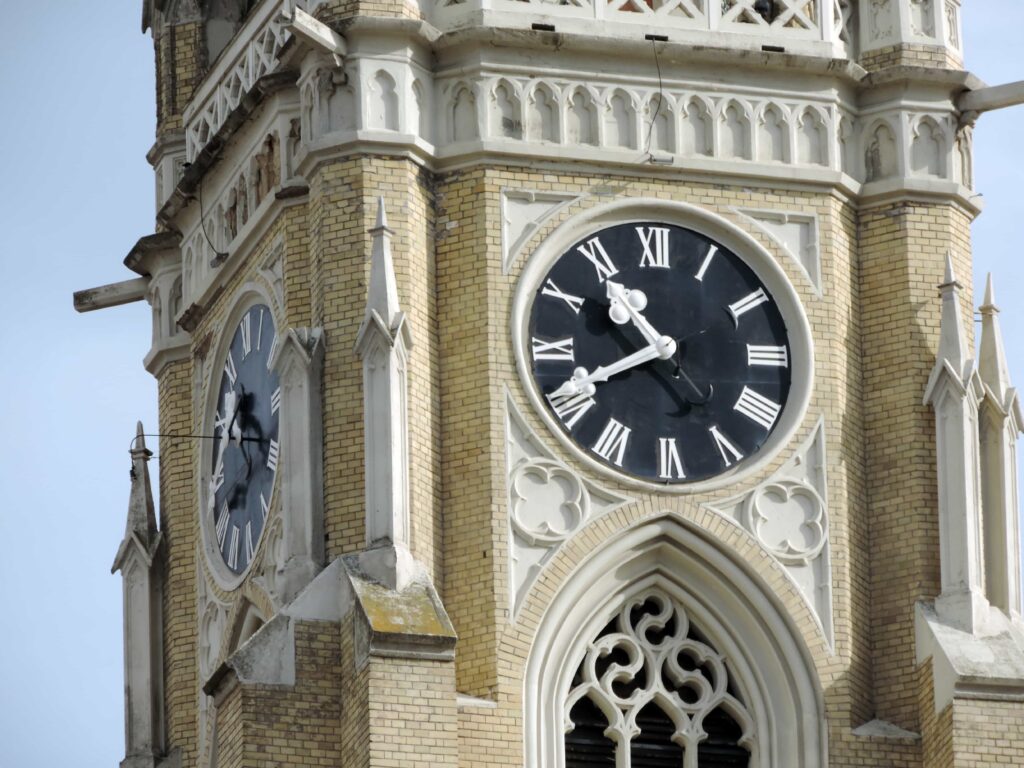
Where is the urgency
We must be urgent about our salvation- but never anxious. Therefore, our attention should be on whether we are taking our salvation seriously enough. And this is what we should be worrying about.
Now, all sorts of lip service is paid to the necessity of salvation. Church documents, the odd sermon here and there and the occasional prayer all remind us that it is important. But where is the urgency?
At present, what is urgent is ‘having conversations’ so that stakeholders can be consulted in the on-going process of discernment as people journey along the path to a vision of togetherness. But what about young people in ‘situationships’ entirely disconnected from the truth? What about the families who fail to raise any kind of moral objection to such situations? I know sin is dreadfully unpopular in Church gatherings these days and the last thing we ever want to be is ‘judgemental’. However, I am not sure that Scripture and Tradition see it that way.
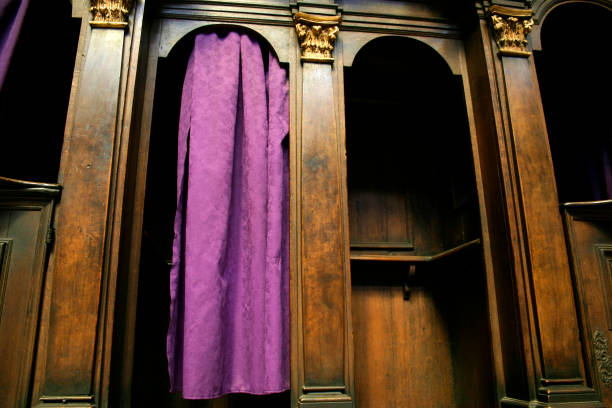
Where is the urgency about the plight of the unborn- especially now since so much of this evil is committed via mail-order drugs and behind closed doors. Where is the urgency for falling numbers at Mass attendance? Where is the urgency for opposition to gay pride months, parades and flags being flown in catholic charities? Confessionals with no queues and seminaries with fewer applicants. There is no urgency for those things. Where is the urgency for souls?
And that is the one thing that a priest should take seriously. Everything can be discussed, argued over or even ignored- but not someone’s salvation. When it comes to salvation- time stops, all bets are off and it becomes the only thing that matters. More than life and death are at stake- it is the question of forever. And we only get one life in order to determine our eternity. But not only priests- everyone needs to take this seriously.
In an era where life expectancy is increasing, and modern means of medical intervention mean that death is not always so random or even a surprise; the physical reminders of the urgency can be far from view. But that is no excuse- it is just a reminder to double the effort.
The urgent business of Tradition
And here I think is where traditionalism is most out of step with the rest of the church. It is not just our love for the ancient Mass that puts us most out of step with those around us; it is rather that sense of urgency for souls the Tradition of the Church compels us to live. We feel most like aliens in the Church not because we carry a 1962 hand missal- but because we won’t fill out the latest parish questionnaire asking us to choose which eucharistic ministry we’d like to lead. And whilst the German Episcopal Conference cannot destroy Catholicism- it can lead souls to ruin. It is why we are so vocal and yet so out of sync. Traditionalists are not attracted to Tradition because it’s old stuff we prefer- it is a source of salvation. And it teaches quite clearly- pay attention to how seriously you approach it.
This a reminder to traditionalist to take traditionalism extraordinarily seriously, but ourselves a whole lot less so. Do not allow the importance of the task to become importance of the self. That is the very thing from which the Lord’s promise frees us. I know the model for the last serval decades has been ‘freedom’ from the unpleasantness of doctrine only to replace it with the inescapable tyranny of the self. As traditionalists, we should be mindful that we are prone to the same temptations of self-importance. There is nothing ‘magical’ about us.
So, yes- we have much to take seriously- just not ourselves.
A clashing symbol
If you outlaw the Tradition- then eventually only outlaws will be traditionalists. We are a scrappy lot. And that scrappiness is still needed. Someone does need to cut through the mindless chatter about “conversations about the journey” that never end. But the journey itself will: it ends in death, judgement heaven and hell. And it will take a lot scrappiness to stop the nonsense. But scrappiness alone is not enough. Our task is to march straight to the moral centre of the Church and remind everyone what is at the centre: the Tradition.
Next month, we spend a little time addressing why the Tradition of the Church is the Church’s moral centre and how that centre shapes our interior life.
- For those not immersed in the Italian culinary scene, timballo is a dish with a host of different ingredients blended together. ↩︎