

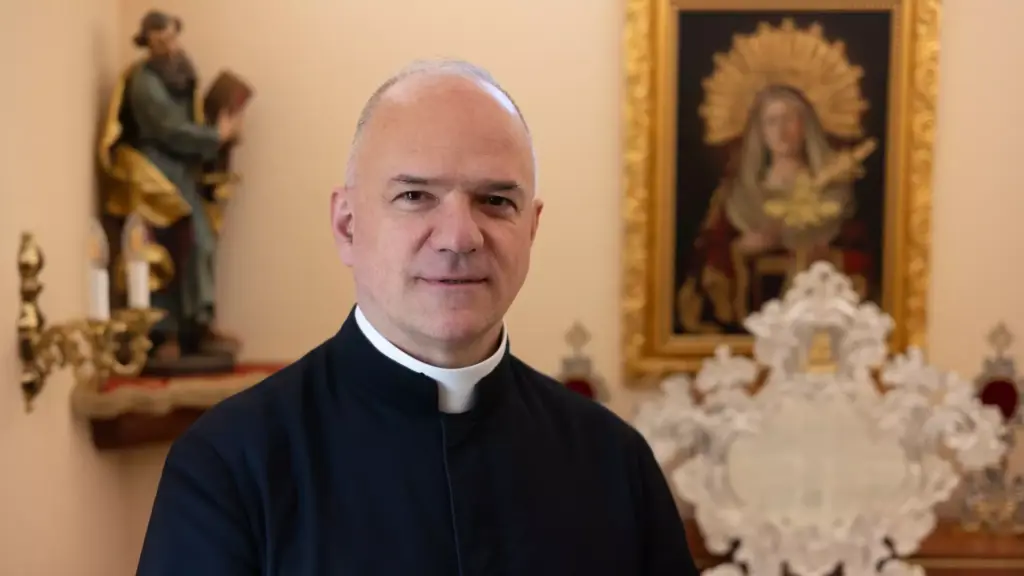
by Fr. Brian W. Harrison, O. S.
We have the great pleasure of introducing Fr Brian Harrison to our audience. Fr Harrison is an Australian priest who belongs to the priestly society Oblates of Wisdom. He is an emeritus professor of theology at the Pontifical Catholic University of Puerto Rico. Fr Harrison will be offering articles for the Journal from time to time.
Last February (2026) the leader of Society of St. Pius X, Fr. Davide Pagliarani, announced that his priestly fraternity cannot “in conscience” accept the pathway toward reconciliation offered by the Dicastery for the Doctrine of the Faith (DDF), and so will go ahead with the consecration of several new bishops without papal mandate on July 1st, 2026.
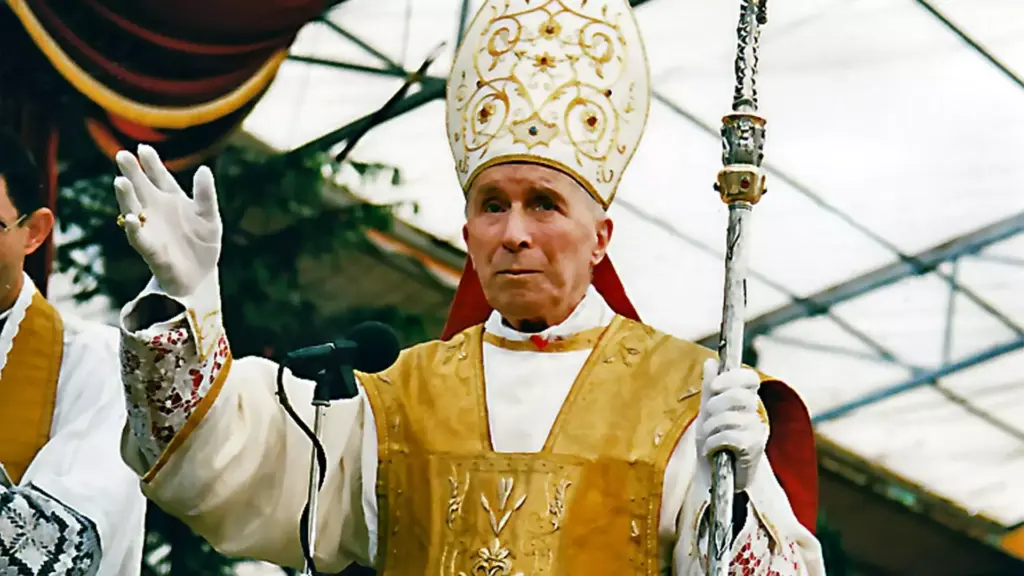
So history, unfortunately, appears to be repeating itself. That date will be the 38th anniversary of the Vatican’s declaration that Archbishop Marcel Lefebvre, together with the four bishops he had consecrated the previous day against the express orders of the Supreme Pontiff, had incurred latae sententiae excommunication. Very probably we will see a similar decision announced immediately after the new episcopal consecrations. Thus, it would seem that nearly four decades of on-again-off-again negotiations between Rome and the SSPX, including years of intermittent doctrinal dialogue and Pope Benedict VI’s lifting of the 1988 excommunications in the hope of facilitating the Society’s return to “full communion” with the Catholic Church, have produced no lasting fruit at all.
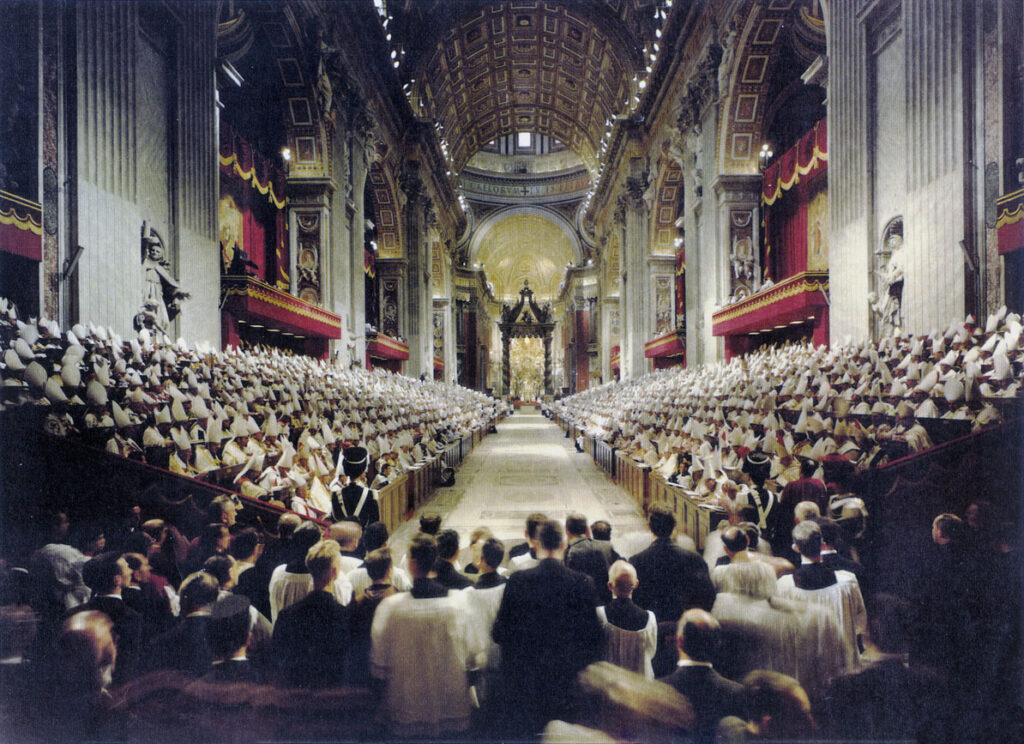
Front and centre in this unhappy impasse is Vatican II’s Declaration on Religious Liberty, Dignitatis Humanae (DH). In spite of many studies over the last sixty years arguing that DH represents a non-contradictory development of Catholic doctrine regarding the religious rights of dissident minorities in predominantly Catholic countries, the SSPX has always insisted that a true doctrinal contradiction exists between the conciliar declaration and traditional Catholic doctrine. Indeed, it would be fair to say that the religious liberty issue remains the single biggest roadblock on the path to reconciliation between the Society and the See of Peter. Hope springs eternal, however, and so, as a small contribution toward helping to clear that roadblock, I shall draw attention here to a number of teachings from popes and approved theologians who lived long before Vatican II that may help dispel these concerns about magisterial self-contradiction.
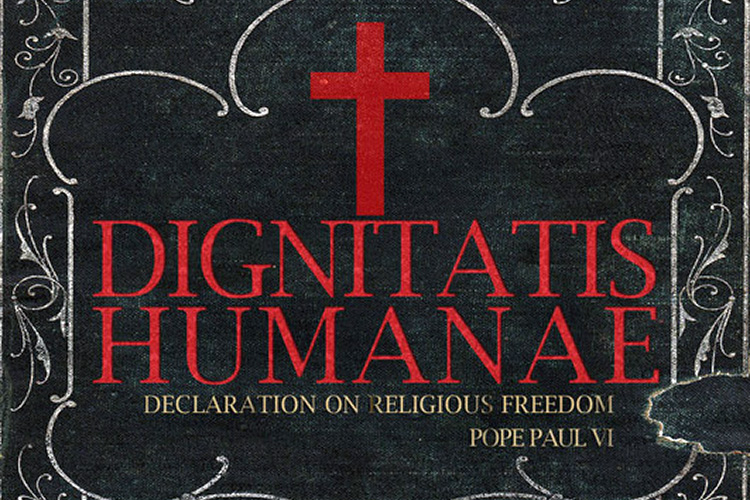
It’s not that the SSPX and their sympathizers reject everything affirmed by DH. In fact, they usually accept three out of the four doctrinal points affirmed in the key article (#2) of the conciliar Declaration, even when they’re applied to non-Catholics, i.e., persons whose religious conscience is erroneous. These non-controversial points are: 1) There is a human right not to be forced to act privately against one’s (non-Catholic) conscience; 2) There is a human right not to be forced to act publicly against one’s (non-Catholic) conscience; and 3) There is a human right, within due limits, not to be prevented from acting privately in accord with one’s (non-Catholic) conscience.
Those three points all have an explicit basis in Catholic tradition. The real bone of contention for the SSPX and other traditionalist critics of the Council comes with DH’s fourth point, which we must admit is not found spelled out explicitly in pre-conciliar Church tradition: 4) There is a human right not to be prevented (within due limits) from acting publicly in accord with one’s (non-Catholic) conscience. The main argument that there is a contradiction here can be summed up in this syllogism:
Major: Traditional Catholic doctrine included this proposition: Under no circumstances is there any right of the human person (i.e., a natural right) not to be prevented by human authority from publicly manifesting a false (i.e., non-Catholic) religion.
Minor: Vatican II’s Declaration DH clearly, though implicitly, denies the above proposition in its article 2.
Conclusion: Ergo, a doctrinal contradiction exists between DH and traditional doctrine..
My essential response would be that while the minor premise is true, the major is false, so that the argument is invalid. For in fact, traditional doctrine (i.e., the magisterium) neither affirmed nor denied explicitly the italicized proposition within the major premise. It was a rigorous opinion favored by some traditional ecclesiastics, such as Archbishop Marcel Lefebvre, founder of the SSPX.
But not all approved theologians before Vatican II were as severe as that. And my purpose in this short essay is not to give a full-scale argument for reading DH in a ‘hermeneutic of continuity’ with Catholic tradition (something I have done in other books and articles), but simply to present some little-known quotations, dating right back to Pope St. Gregory the Great, that show how our Catholic tradition often showed signs of being more open to the public exercise of non-Catholic religions than most traditionalist critics of Vatican II think it was. After all, when one insists that, in certain circumstances, rulers not only may, but must, tolerate the public manifestations of a non-Catholic religion, that strongly suggests it would be unjust for them not to do so. And that in turn virtually implies that, under those circumstances, the non-Catholics in question have a right to be tolerated in carrying out the said public manifestations. And this is essentially what DH makes explicit in the controverted part of article 2 (although it avoids the term “toleration”).
It’s important to clarify here that this recently developed doctrine does not affirm a moral freedom – i.e., being free before God – to manifest publicly, or even privately, a false religion. Catholic tradition unanimously rejects the idea of any supposed “right” to that sort of freedom – a “right” to do what is wrong. And DH also rejects it in article 1, where the Fathers affirm that they are leaving “intact” the “traditional Catholic doctrine” regarding the “moral duty of men and societies toward the true religion and the one Church of Christ”. The Council is not talking about moral freedom, only about civil freedom – a right not to be prevented by earthly rulers – from exercising one’s conscientiously held religion in public and in private. (St. Thomas Aquinas taught long ago that it is not the role of government to criminalize and punish everything that is objectively morally wrong.)
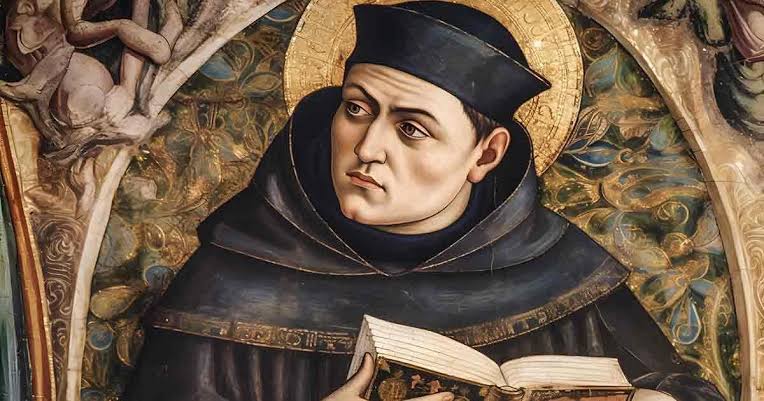
In the rest of this essay we will see some citations from earlier Catholic tradition which, while they do not yet spell out a right not to be prevented by government from publicly exercising a non-Catholic religion, are certainly leaning in that direction, and are quite compatible with the idea – developed and clearly taught by Vatican II – that such a right exists.
It must be admitted that when Catholicism became formally established as the official imperial religion by the decrees of Theodosius I in 380, 391 and 392, State repression of paganism was integral to the Church’s new and unaccustomed legal status. While this intolerance was very much the initiative of the warrior emperor Theodosius himself, Church leaders certainly acquiesced in it (as they did in aberrations such as the presumed right of emperors to convoke and direct ecumenical councils). But as the centuries passed, the Church’s firm and explicit foundational teaching on religious liberty – i.e., that nobody may be forced into baptism and the faith – gradually came to be seen as having wider implications: first for Jews, then for pagans and Muslims, and eventually for baptized non-Catholics. Vatican II’s teaching in DH can be seen as a harmonious development that follows this long trajectory.
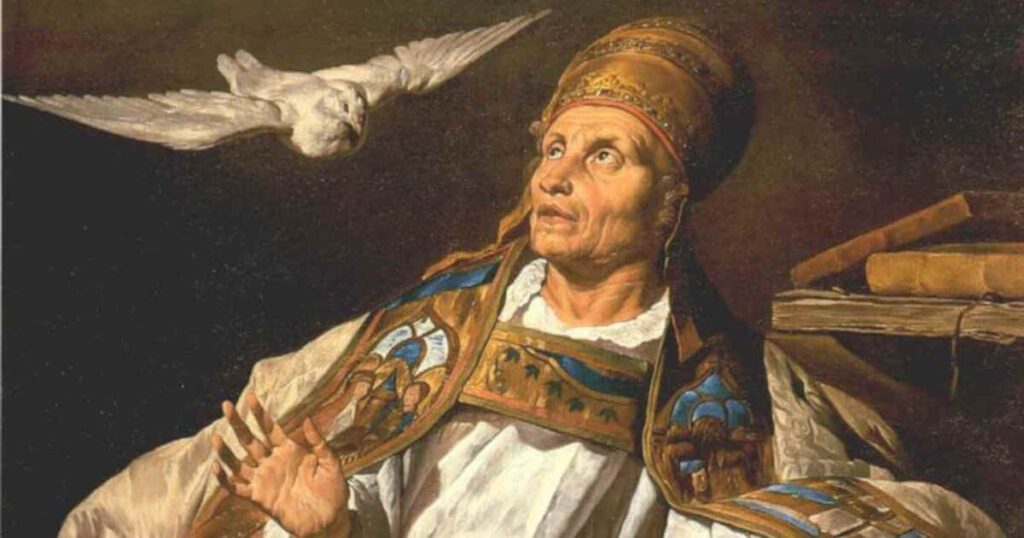
Pope Gregory the Great, Letter to Paschasius, Bishop of Naples, November, 602:
“The Jews residing in Naples are complaining to Us that some [Christians] are unreasonably trying to stop them from carrying out certain religious rites on their holy days, and are seeking to make illegal these festivities which they and their ancestors have long been allowed to observe and celebrate. If this is true, such efforts are evidently pointless. For of what use will it be to prohibit such long-standing customs when that will in no way help to bring these Jews to faith and conversion? And why should we lay down rules as to how they should celebrate their rites when this can do nothing to win them over? Instead, we should act in such a reasonable and courteous way that they will feel prompted to follow us rather than flee from us. By showing them how our teaching can be found in their Scriptures, we will, God willing, be able to convert them to the bosom of Holy Mother Church. Thus, dear brother, may you seek by admonitions such as these to motivate the Jews to conversion in the measure that God permits, and no longer allow anyone to disturb them on account of their ceremonies. Rather, they are to have permission (licentiam) to observe freely all of those feasts and holidays that they have kept up till this time” (Denzinger-Schӧnmetzer [DS], 480). (Gregory wrote in similar vein to at least two other bishops: cf. note to DS 698.)
Pope Innocent II writes in 1065 to Prince Landulf of Benevento, rebuking his “inordinate zeal” in trying to convert pagans. Like Vatican II exactly 900 years later (cf. DH, #11), he appeals to Christ’s example:
“For we read that our Lord Jesus Christ did not coerce anyone violently into his service, but by humble exhortation, leaving to each one the exercise of his own free will, he called back from error those he predestined to eternal life by shedding his own blood, not by judicial fiat.” (DS 698).
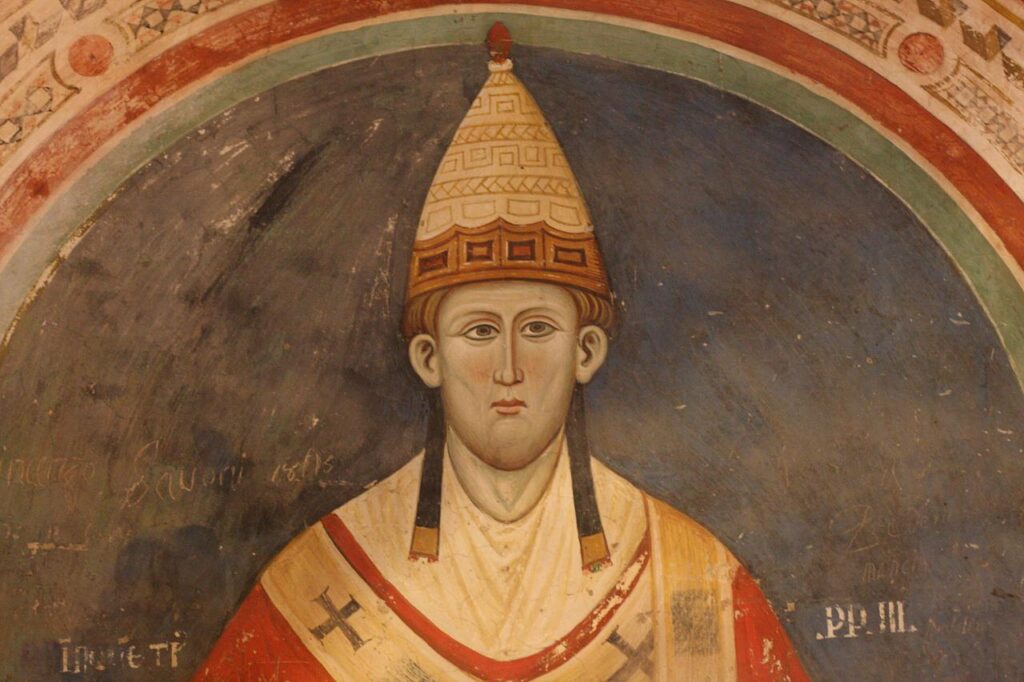
Pope Innocent III, Constitution Licet perfidia Iudaeorum, Sept. 15, 1199. After condemning forced baptisms of Jews, the Pope has this to say about their public acts of worship:
“In the celebration of their festivities, let no one disturb them in any way whatever with cudgels or stones. Nor may anyone attempt to demand or extort any undue services from Jews, that is, other than what they have been accustomed to carry out since earlier times. Furthermore, in order to obviate the depravity and greed of evil men, We decree that no one may dare to mutilate Jewish cemeteries, or to reduce them in size, or exhume bodies buried therein on the excuse of making money. . .” (DS 773). The Pope then declares excommunication for those who violate this Constitution. (He nevertheless adds a rider: “In establishing these protective measures, Our will is to ensure the safety only of those [Jews] who do not in any way presumptuously plot or contrive (machinare) to subvert the Christian faith”.)
Pope Gregory IX, as early as 1233, shows awareness – as do the Fathers of Vatican II – of the need for a certain religious reciprocity – a ‘level playing field’ – among nations of widely differing creeds. In a Brief (6 April, 1233), addressed to the French bishops concerning the attitude of Christians towards the Jews, he wrote: “Christians must show toward Jews the same good will which we desire to be shown to Christians living in pagan lands.” (Cf. Auvray, “Le régistre de Grégoire IX”, n. 1216.)
Pope Gregory X, 1274, taking note of resurgent anti-semitism among Christians, decreed that no one “should baptize Jews by force, injure their persons, take away their money, or disturb them during the celebration of their religious festivals”.
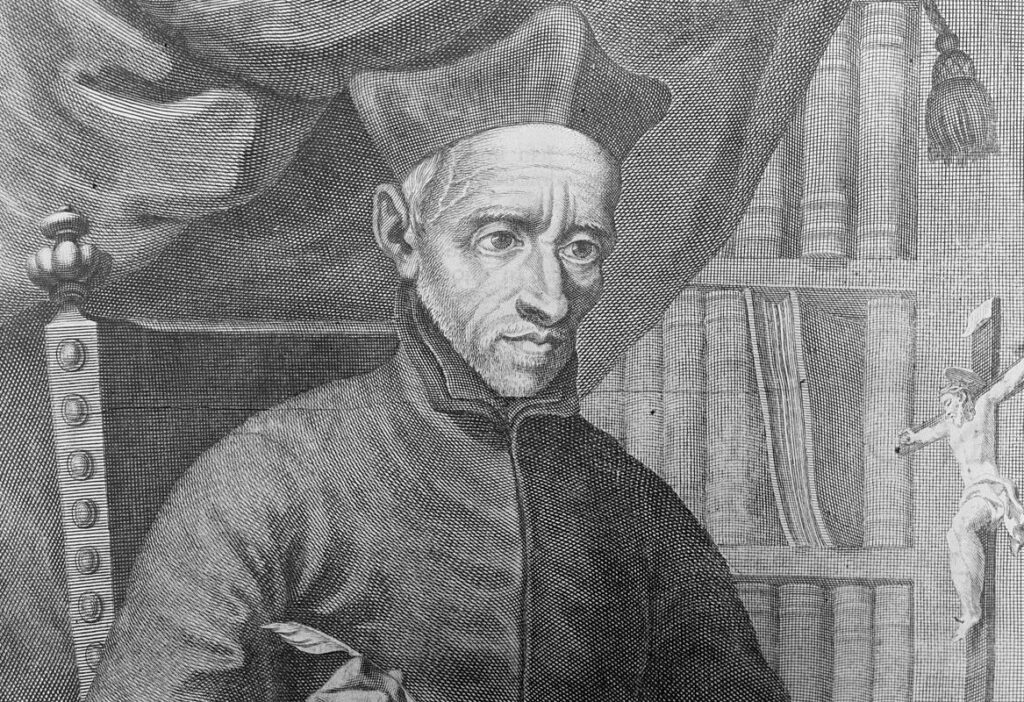
Francisco Suárez (1548-1617), the great Jesuit thinker, a ‘founding father’ of international law, and an early champion of man’s natural rights, builds as follows on the teaching of Pope Gregory the Great that we have already noted, observing significantly that banning non-Christian worship “would involve, to some extent, forcing people to accept the Faith; and that is never permitted.” That consideration will clearly apply to polytheists and animists, not just to the monotheist non-Christians whose exemption from repression Suárez has in mind here. This theologian is heading down a road that leads logically toward Vatican II. And since Suárez is saying that even Catholic rulers must tolerate public Jewish and Muslim worship, it is clear that even more strongly (a fortiori) would he insist that non-Catholic rulers have no right to ban such worship in the interests of promoting or imposing their own false cults or ideologies. This of course was to be a major concern of Vatican II, in the light of contemporary Nazi and Communist intolerance toward religion. We need to remember that Dignitatis Humanae is proposing ethical norms that it hopes will be observed by all governments on the planet, not just by Catholic governments. Here is what Suárez says:
“As regards the religious practices of unbelievers which go contrary to Christian beliefs but not counter to natural reason, there is no doubt but that the unbelievers, even though they are subjects, may not be forced to abandon them. Rather, the Church must tolerate them. St. Gregory addressed himself clearly to this problem regarding Jews, and he forbade anyone to deprive them of their synagogues or to prevent them from observing their religious practices therein. (Lib. I Epistol. 34) . . . The reason is that such observances do not in themselves violate the natural law, and therefore, the temporal power of even a Christian ruler does not confer a right to prohibit them. Such prohibition would be based on the fact that what is being done goes contrary to the Christian Faith, but that is not enough to compel those who are not subject to the spiritual authority of the Church. This opinion is also supported by the fact that such a ban would involve, to some extent, forcing people to accept the Faith; and that is never permitted.”
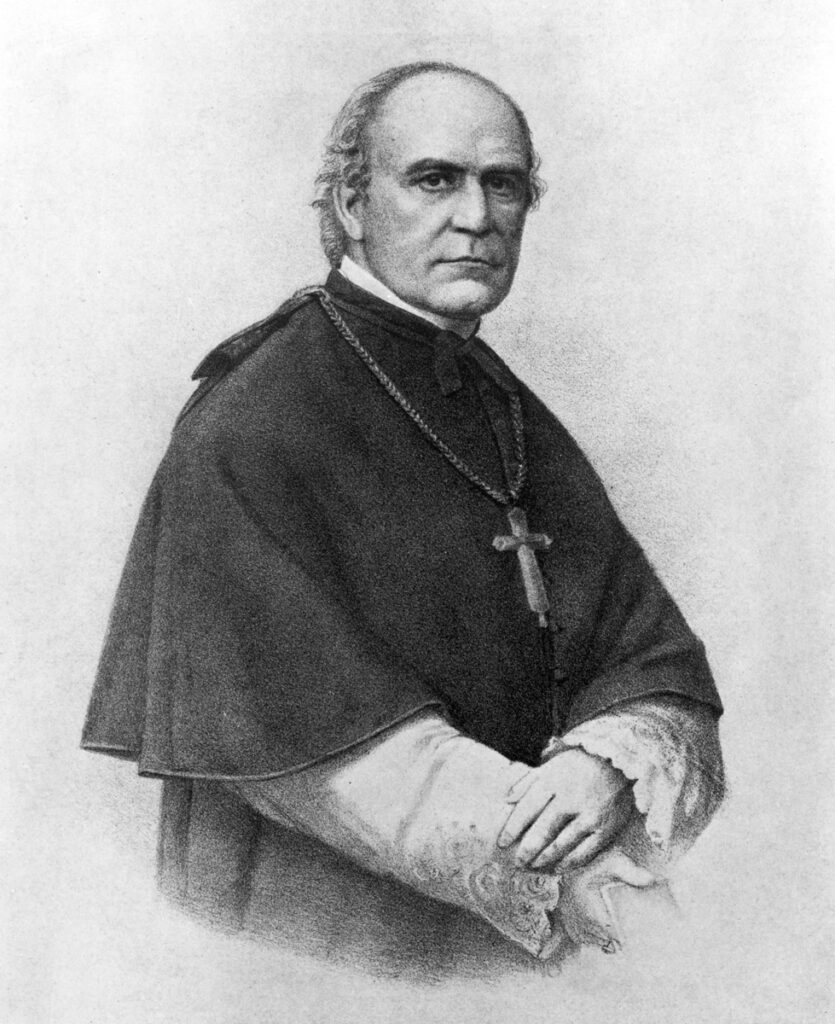
Bishop Emmanuel von Ketteler (1811-1877), was a pioneer of Catholic social doctrine whose works were widely admired (and never censured by Rome) in his own lifetime. Indeed, they influenced Leo XIII’s social teaching in his landmark encyclical Rerum Novarum. He went further than Suárez by arguing that under modern pluralistic conditions, baptized dissidents (heretics and schismatics), and not only non-Christians, must be tolerated as a matter of justice, not just political prudence. DH’s arguments for religious freedom (cf. ##2-3) also presuppose pluralistic societies in which many or most people do not yet possess religious truth, and therefore have the obligation to seek it. According to Ketteler, “[T]reating heresy as a civil matter is no longer legitimate once the unity of the Faith has been shattered. Disunity destroys the essential prerequisites . . . Therefore, within the context of a mixed society where religious unity is lacking, civil rulers have the obligation to protect the religious freedom of everyone (Catholic and non-Catholic citizens), within the due limits of the natural moral law.”
Finally, Oriens readers are referred to footnote 2 to DH #2 for references to statements by the three popes who immediately preceded Vatican II – Pius XI, Pius XII and John XXIII. These continue and reinforce the trajectory of the above citations dating back to Gregory the Great. In short, even when a natural right (within certain limits) of non-Catholics not to be prevented by their government from publicly manifesting their conscientiously held religion is not yet spelled out, this is virtually contained in statements that assert or imply that civil authorities can be obliged in justice – as distinct from mere political prudence – to permit (tolerate) such activities.