

By Fr Thomas Crean
I will penetrate to all the lower parts of the earth, and will behold all that sleep, and will enlighten all that hope in the Lord.
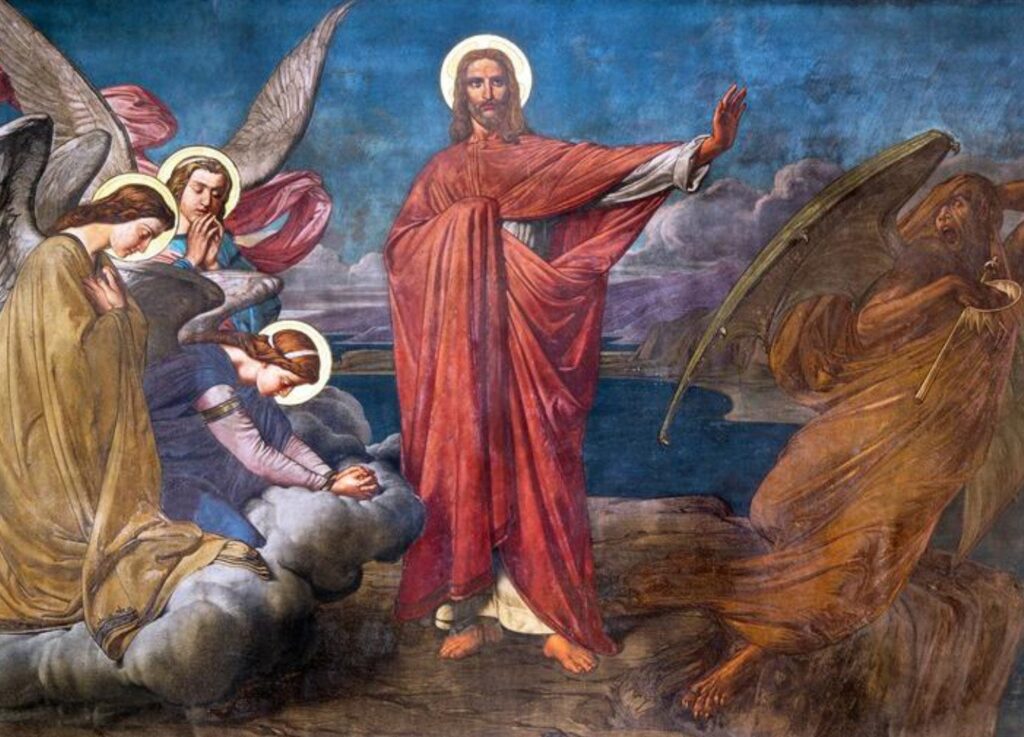
When our Lord expelled the demon that prevented a man from speaking, some people sought to discredit Him, going so far as to say: He casteth out devils by Beelzebub. So Christ with some simple parables teaches the crowd that far from being in league with the devil, He has come to overthrow the devil’s power. When a strong man armed keepeth his court, He says, those things are in peace which he possesses. That describes the position of the devil before our Lord had come to disarm him. He considered the human race to be his possession, on account of original sin. But if a stronger than he come upon him and overcome him, he will take away all his arms wherein he trusted, and will distribute his spoils. Christ here is alluding to Himself. What are the arms of the devil that our Lord takes away? His power to deceive. Remember how before the coming of Christianity, nearly the whole world was worshipping false gods. These arms have been taken away. True, the devil can still tempt us; but that is all. We Christians are Christ’s spoils. None of us needs to commit a mortal sin unless we choose to. Christ has given us the power to avoid them all.
But I want to think about another part of the devil’s goods of which our Lord despoiled him. These are the souls of the righteous men and women who died before Christ came. When these people died, where did their souls go? They couldn’t enter heaven, since Jesus had not yet died on the Cross. The veil of the temple was torn in two only at the moment of His death, to signify that it was only then that the way to heaven lay open. So, where did those righteous souls go? Some of them no doubt had to go for a while to purgatory, just as no doubt many people do today. But even those who didn’t need to pass through purgatory were not yet admitted into the kingdom of heaven: original sin was not yet atoned for. So, although these souls wouldn’t have been actively troubled by the devil, they were still in a way his victims. They were kept in a place of waiting, which Scripture somewhere calls Abraham’s bosom. We also call it the Limbo of the Fathers.
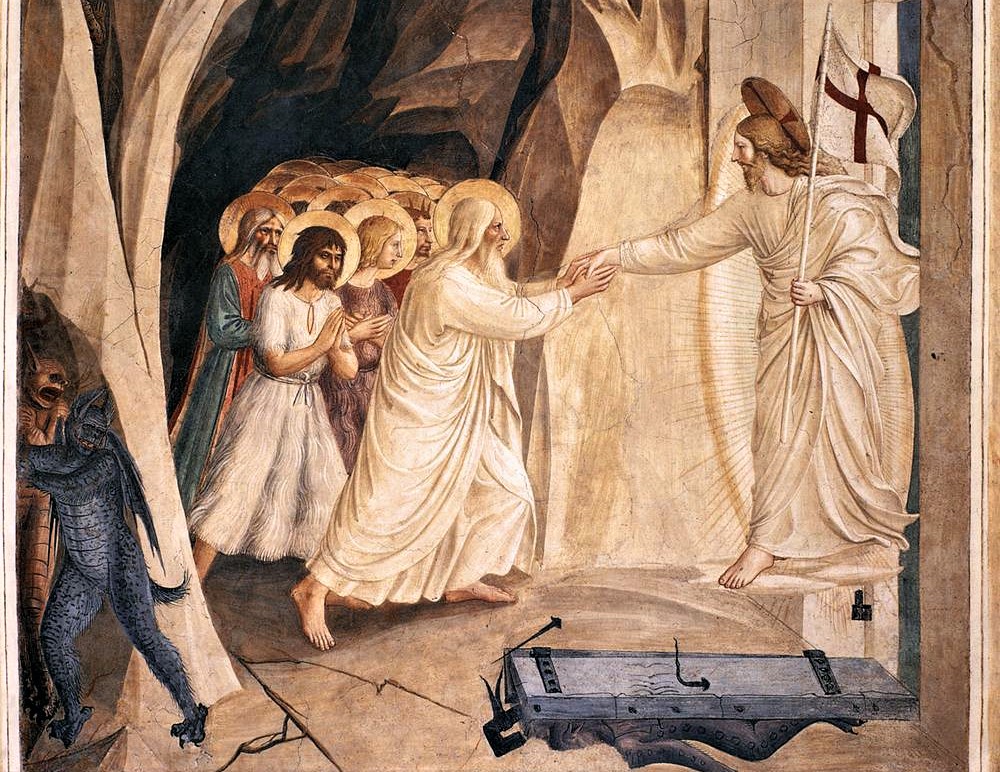
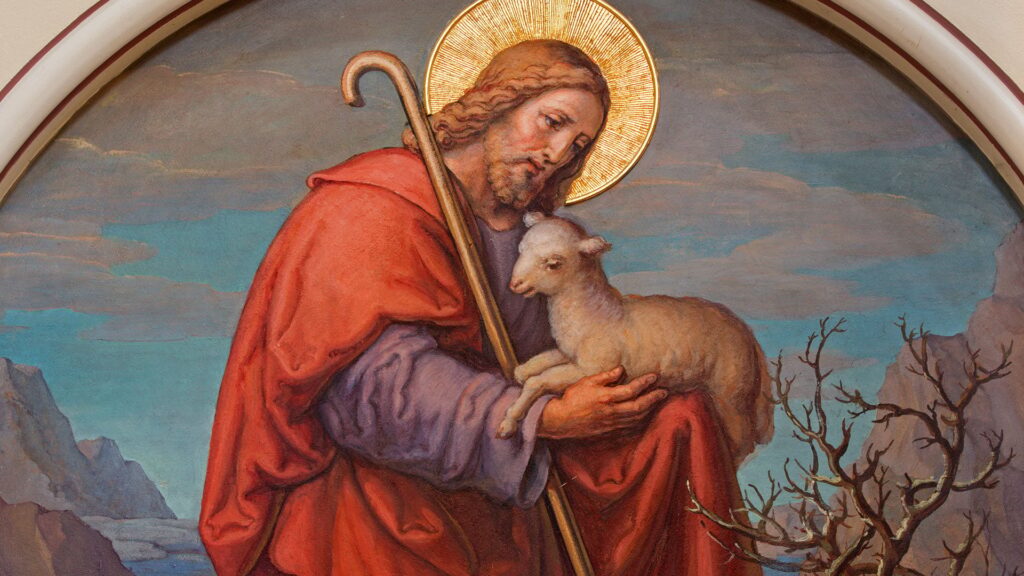
But Christ is the good Shepherd who comes to seek the lost sheep, and so He came to look for these souls too. How do we know this? In the Apostles’ Creed, we say that “He descended into hell.” Hell, here, doesn’t mean a place of torment, but this place of waiting where those righteous souls were kept. How did Christ descend there? Not in His body. Our Lord’s body remained in the tomb from Good Friday afternoon until very early on Easter morning. He descended in His soul. Just as He came as man to visit men on earth, so He came as a soul to visit those souls; and yet He was always God.
Clearly, this is something beyond our imagination. We can’t even imagine what it’s like to be a soul without a body, and perhaps the thought that this will be our own condition one day frightens us. So, Jesus experienced this for us too, to teach us that we need not be afraid.
Why else did He descend among the dead? The New Testament has an answer that may surprise us. It was to preach. St Peter says in his first epistle: The gospel was preached even to the dead. Yet not in the way that it was preached to men on earth. Those on earth were free either to accept it or reject it, to be either with Christ or against Him. But these souls in Limbo were already with Him: there, Christ announced the good news that it was time for them to receive their reward. As He had foretold during His life on earth: The hour is coming when the dead will hear the voice of the Son of God, and those who hear will live.
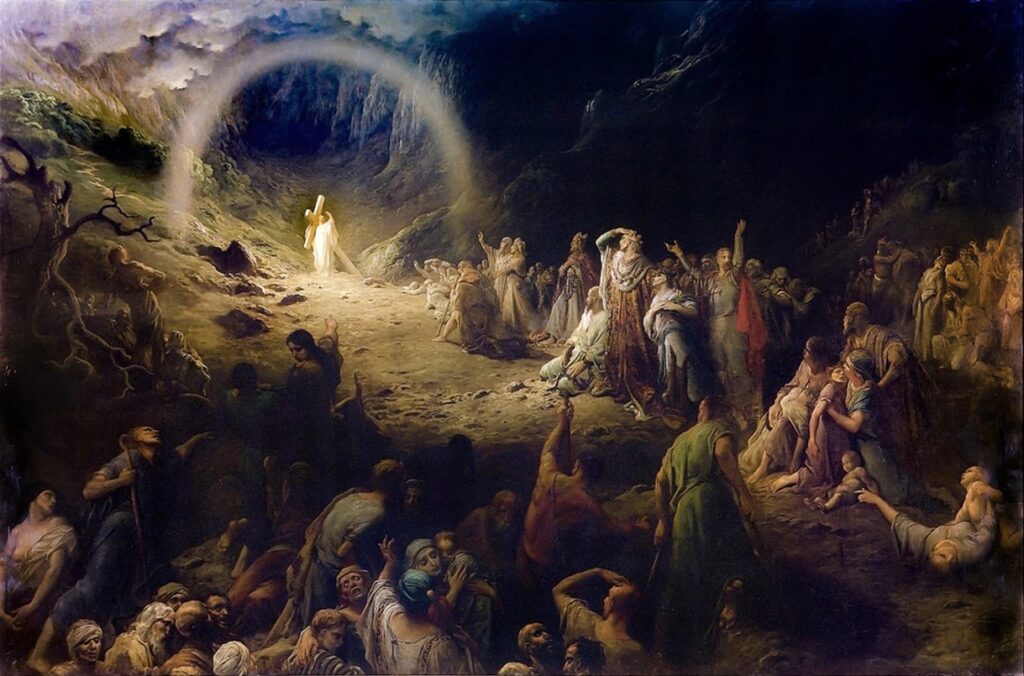
Yet His preaching was personal to each one. After all, if the apostles at Pentecost could speak so as to be heard by many different men each in his native tongue, why should not Christ’s soul preach to a great multitude of souls? Adam would have heard that his long penance was over; Abraham that he could at last inherit the promised land; Tobit, that his sight was to be restored. St Paul summarises this great act of liberation in one phrase: Christ took captivity captive.
May we who still enjoy this life so convert our lives by His grace that we may join all those souls in His company, where with the Father and the Holy Spirit He lives and reigns, world without end. Amen.