
But the one who stands firm to the end will be saved.
Matthew 24:13
Introduction
Traditionalists must perfect the long game. Something that sounds very easy for us to do- given our love of ancient treasures. However, this is easier done when you are not fighting for your survival. Please God we are emerging from the horror of not knowing if your 10am TLM will be suspended, cancelled or moved to the parish outhouse. The long game for many of us, up until very recently, was next Sunday. I cannot say that these days are behind us for good or merely for now. But the breather we are experiencing is welcome relief. And it gives us the opportunity to do a little more long-term thinking and planning in order to build the traditionalist movement across the Catholic world.
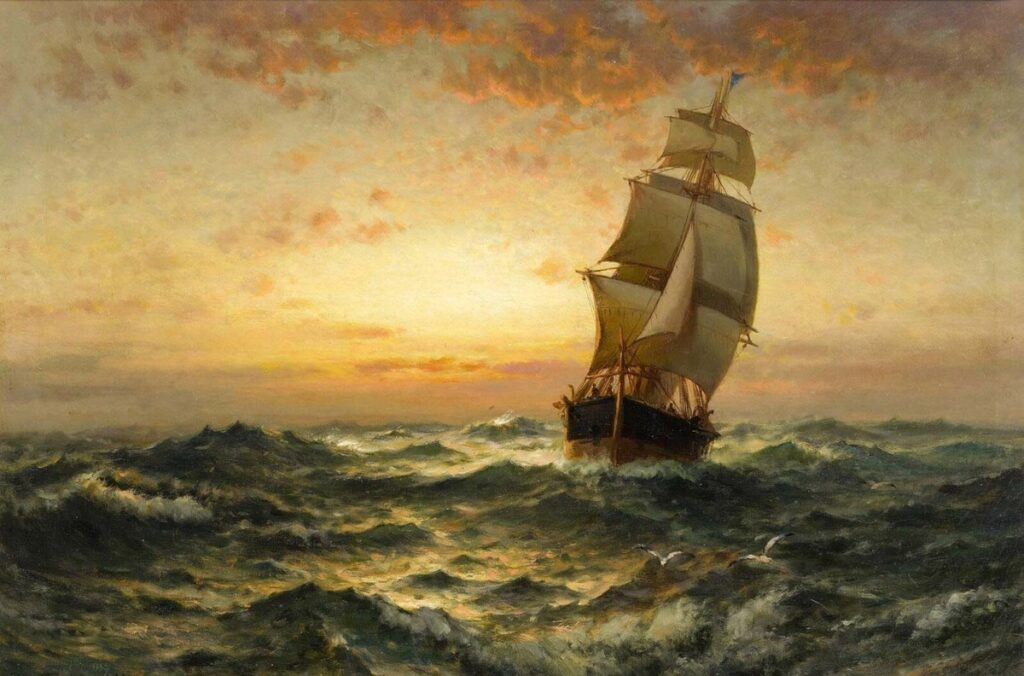
Traditionalism is a movement in the Church. I would argue that it is the movement in the Church at present. This means that we should understand ourselves as such and behave accordingly- with the courage that comes from staying humble and the zeal that comes from embracing the Cross. And like some of the great movements in the Church, ours is not about stability in the Church, but rather trying to get Her children to change their course. And if you know anything about sailing, changing course when battling stiff winds and heavy swells feels like you are about to capsize. It is not for the fainthearted. Over the last several decades, we have become somewhat used to that kind of turbulence.
A new kind of challenge
However, there is a second kind of turbulence that we are going to have to manage if we are to master the long game. And it is a good kind, but one that still needs to be managed well. And that is the challenge that comes from a new generation of traditionalists that are emerging. There is, I think, a changing of the guard underway. It is both inevitable and a good thing- no one lives forever. But there is at present a change in the attitudes and experiences of a young generation who are slowly becoming a numerically significant number in the pews. And they come with energy, zeal and the enthusiasm that traditionalism will always need. But they also come with some baggage- and we oldies have to help them recognise it and teach them how to overcome it. In a very real way, traditionalism is maturing because we have to do the very next thing that our movement requires- we must now learn to hand on that for which we have fought so very hard to preserve.
The first generation of traditionalists are a pillar of all that we are because they fought for the preservation of all the things we cherish. They supported the faithful, they argued with the irresponsible and they endured the unreasonable. We are only a movement because of what they did and how they led the way. They were a generation given over to defence. It was their mindset and their goal. They were single-minded enough to ensure that what was ancient would never be lost, even if many who should have known better thought they could do without it. They fasted on ember days; they taught children their catechism and they rang the bells for High Mass. To paraphrase Hamlet cheekily: there are many more saints in heaven, Horatio, than are dreamt of in your chancery.
Propose and Preserve
There is a younger generation emerging that is different. Preservation is not its focus- at least not as the first generations lived it. They have a different mindset- they want to advance. They are not content just to hang in there– they want to go on the offensive. They don’t just want access to ancient beauty for themselves- they want it to be the norm for everyone. They clearly have no time for guitars, tambourines and kumbaya- but they also don’t have much patience for ‘steady as she goes’ either. They are impatient for renewal because we have been talking about it for so long and they have seen very little. Traditionalists make the studied claim that the liturgy of the Church develops organically- this new generation doesn’t necessarily have the patience to restore it in the same manner. They want action. I think we all understand their desires- we also know that it has to be channelled into the possible, lest it collapse into the absurd.
Nothing of what I write should alarm nor trouble. Traditionalism is always going to be two things- to preserve and to propose. It is both content and process- of making clear where the truth lies and communicating that truth to all nations. This is not some feature of our religion- it is the heart of our religion. A new generation is emerging whose attention is focused on proposing, which is only possible because there was a generation dedicated to preserving. We need both. But there are those moments in the church when the emphasis shifts. And this is one of those moments. We need to make sure that in proposing we do not neglect the preserving. And vice versa. This is never going away.
The only solution
The reason why this new attention on offense is emerging now is because traditionalism has won the argument. The only way forward is the tradition. We need to inform others of the result. We have tried new movements, new evangelisation and old orthodoxies- what they all lacked in some way was the thing that holds it all together- the tradition. It is not enough to insist on the divinity of Christ or transubstantiation if we are not preserving the prayer we prayed whilst we decided these doctrines and the practices we observed whilst figuring them out. Orthodoxy is the end point of the tradition- not its substitute. If you fiddle with the prayers you prayed in coming to the truth, you will eventually start being uncertain about those truths. And here we are.
However exciting or necessary this changing of the guard may be- it is not likely to be wrinkle free. They rarely are. And not all of the wrinkles will be on the oldies. The new generation that is emerging is confident that something more is needed, they are not always as confident as they need to be in the why. There is within this new generation a love for the TLM but not always a solid grounding in the reasons. They know of the disasters that abound and they avoid them like the plague. They are also not deceived by the arguments for a reverent novus ordo celebrated according to the tradition because there simply aren’t that many of those masses to be found. They don’t want to fall for that old three card trick, knowing full well that those who have no truck with the TLM have no interest in ‘reverent’ novus ordo masses either. The writing is on the wall for that narrative because the ones pedalling it have never followed through on it. However, when they are asked directly why the TLM matters- they can be a little flowery in their explanations. And not all of this is due to youth- it is something also in how they have experienced the world. Let me explain.
A few recent moments have confirmed my insight into what this generation has not experienced. So as to not leave you hanging, this generation has not experienced a masculine world of masculine men. This is a very specific problem of our age, and I can find no evidence of it elsewhere in history. The argument is not that this generation has not known good fathers nor good men. My point is not about their family lives, my point is about the world in which their families live. And this matters a great deal. There can only be a balance of the masculine and the feminine in the home when the world itself is authentically masculine. That is, the virtues of men are the order of the world. And yes, this is shameless plug for a return to the patriarchy. But we will explore that little minefield on another occasion.
The first virtue
The first of these virtues is integrity. By first, I do not necessarily mean the highest, I mean that which must come first in time. There can be no authentic masculine virtue if men do not possess integrity of character- it is the quality upon which all other masculine virtues hang. Integrity of character means that you will do what you say and you say what you will do. A world of integrity is a place where all the other virtues can thrive. It is a world of order and purpose where God’s fatherhood can be recognised because God’s intention for creation is made manifest. It is only in that kind of world that Christ’s sacrifice can make sense. Integrity fosters the other virtues in a very specific way.
Without integrity of character, our capacity for reality is diminished. We prefer comforting lies rather than the reality of hard truths. This translates into your average Sunday parish where we only hear infrequently teachings and sermons about sin, judgement and the reality of damnation. It also means that we have a reluctance to listen to them and a diminished capacity to absorb them. Without integrity, we will be unable to emerge from our current chaos. We keep hearing stories of a new spring times and the wonderful success of new initiatives in the Church, yet the harsh numerical reality paints a very different picture. (The recent controversy over the Pew Research Centre’s response to the Bible Society’s claim of a quiet revival in Christianity in the UK is but one example.) Even as traditionalists we too must be careful not to be swept up in the zeitgeist of positivity at all costs. It can be good to be positive, but only when it is rooted in reality.
The ultimate battle in a man’s heart is between sin and virtue. The first battle in his heart is between comfort and sacrifice. The most lethal temptations are the most subtle. The most dramatic always command the most attention, but all sin is boring. The result of a thousand unnoticed preferences we exercise each day for ourselves and our comfort. The sinner gets all the attention, but that is a result of a thousand compromises that go unnoticed. All souls are lost in darkness.
A hollow faith
The reason for this particular failure is because we have hollowed out Christ from Christianity. We tried, perhaps even in earnest, to make Catholicism more accessible to the world. So, we dumbed things down, concentrated on the positive and made Christianity a question of feelings. The result was that we gave the world access to us. We didn’t go out into the world, we invited the world in and it made a home for itself. And now Catholicism is a guest in its own house. All this was because we tried to hide Christ from the world. It did not matter what you believed, it only mattered that you were a good person: but only God is good. But that was then. Today we are trying to hide behind Christ. We use him to justify our self-interest. We want virtue without sacrifice; we want to evangelise but not repent, we want our churches to be full, just not at the TLM. We put on the façade of Christ- not His person. We hide our lack of courage behind our generosity- we want to invite everyone forgetting we cannot accept everything: small is the gate and narrow the path that leads to life. If everyone is coming- they will have to enter in single file. This means some sacrifices need to be made. And someone is going to have to say no.
This new generation yearns for a world where integrity matters. They are going to have to build it. But they will need a lot of help, for they have not seen the thing that they must create. It is far easier to replicate what you see. We follow the course of our life that has been acted out for us- there is a reason why patterns repeat themselves. But the pattern of integrity has been erased from the Christian consciousness. This is not a judgement on them- it is a judgement on the world. And so, the oldies have got their work cut out for them as well.
We cannot build a world of perfect integrity. But we must build a world where integrity matters- even if imperfectly practised. A word of integrity means understanding things according to their reality- not your feelings. This will be a first step in grounding the next generation in the reasons they will need to make traditionalism the norm.
The article last week was published almost 25 years ago. It is a reminder that we have come some way, but not as far as we need. It was a snapshot of where the fight was a quarter century ago. Today we have a new generation emerging that will need some guidance. And that is going to take some patience from us and a lot of trust from them. Please God we will be up to this task. Much depends on our ability to hand on to the next generations that which many of you have fought so hard to preserve.
And this is why traditionalists must learn to play the long game.