
By Fr Thomas Crean
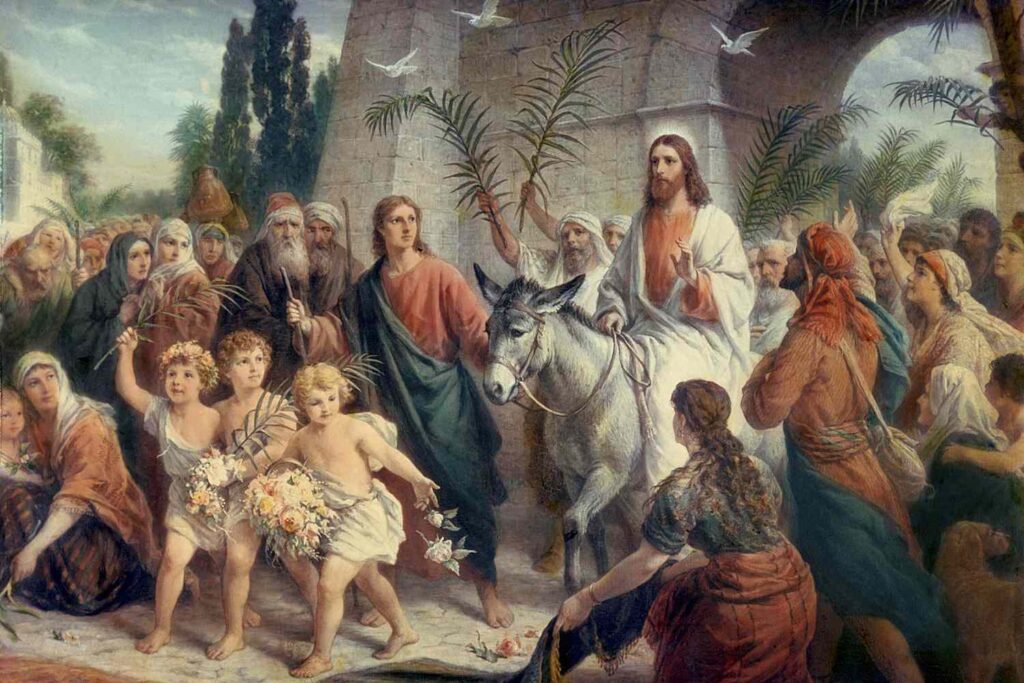
The multitudes that went before him and that followed after him cried aloud, Hosanna for the son of David.
Why is it that when our Lord entered Jerusalem on Palm Sunday, He willed to be acclaimed by the multitudes as Son of David? We know that this acclamation was divinely inspired: for when the chief priests and the scribes complain to Him that the very children in the temple were crying out Hosanna to the son of David, He responds by quoting the verse from the psalms: Out of the mouths of infants and of sucklings thou hast perfected praise. So, to call Him ‘son of David’ was not just to say something true, but to utter perfect praise.
Yet why was this? King David, after all, had not been without faults. The most famous of these was not just a fault but a double crime: he had taken the wife of Urias the Hittite, and arranged for him to be killed by the Ammonites in war. I am always touched by how the Holy Ghost has arranged that this great wrong done to Urias should be recalled by the faithful every year, in the genealogy of Christ that we sing at Christmas matins, where Bethsabee, the ancestress of our Lord, is named simply her that had been Urias’s. David, of course, had repented of that deed, thanks to the prophet Nathan, and has left us psalm fifty in memory of his contrition. But even after his repentance, Scripture records another fault that he committed, albeit of a more obscure kind, in numbering the people for a census; this causes a plague to be sent upon the land. And apart from those things, think of how many people he had killed in war. True, David is never blamed for that by God, but it did mean that he was not a fit person to build the temple to the Lord, who is a God of peace before being mighty in battle.
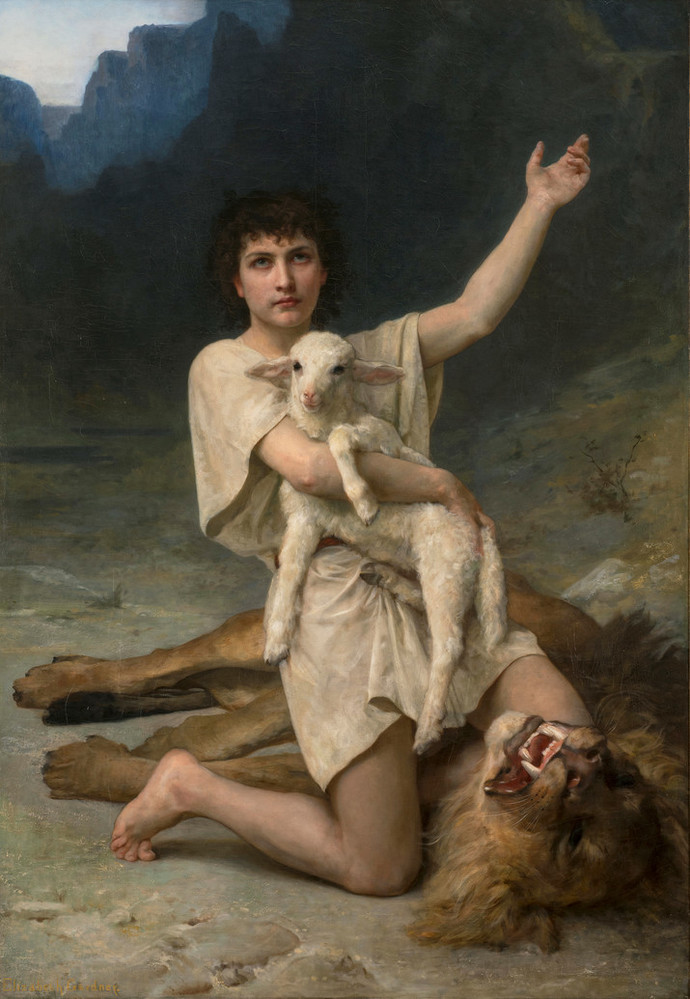
And yet Jesus Christ is hailed, and happy to be hailed, as son of David. Why was this? I can think of a few reasons why the phrase was fitting. For one thing, David, alone among the kings of Israel, had literally fulfilled the office of a shepherd, before coming to the throne. Now, to call a king ‘the shepherd of his people’ was a common metaphor in the ancient world, inside and outside Israel: but only David had actually gone out into the fields to do that lonely and dangerous job. How vividly he describes his experiences to Saul: Thy servant kept his father’s sheep, and there came a lion, or a bear, and took a ram out of the midst of the flock: and I pursued after them, and struck them, and delivered it out of their mouth. The title ‘son of David’ thus suggests to us that although our Lord became incarnate in order to reign, He did not wish to go straight to His royal throne. He wished to enter into the kingdom of God through many tribulations.
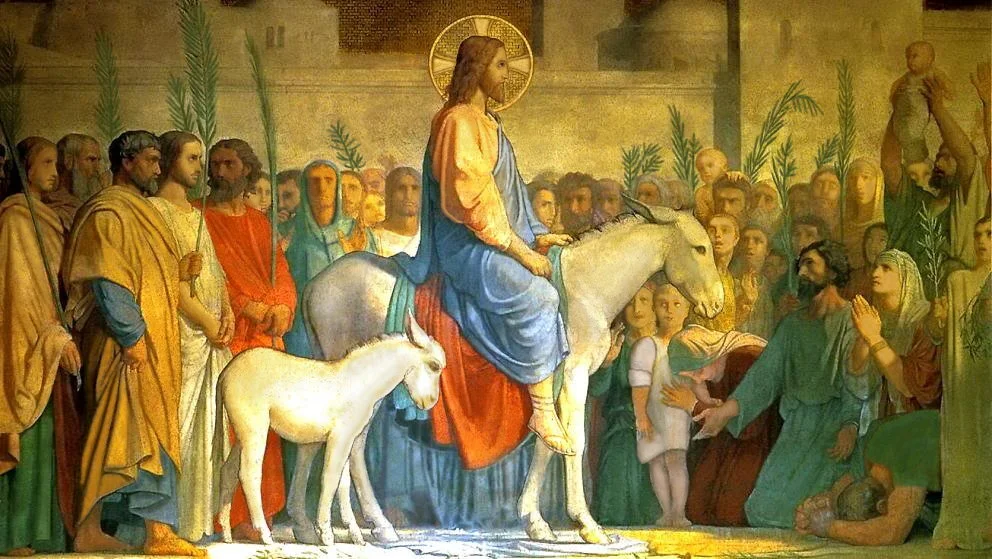
Another point of comparison is that David was not only king in Jerusalem over the twelve tribes, but included even gentile nations under His sway. He defeated the Philistines and Edom and Moab, and made them pay tribute. We even read that David put garrisons in Syria of Damascus, and the Syrians became servants to David, which is rather as if Belize or El Salvador today should station its troops in Washington DC and make the Americans pay them tax. All this prefigured, of course, the way in which our Lord in the new covenant will rule over the Gentiles no less than the Jews. The Fathers of the Church tell us that this is also the symbolic meaning of the two different animals upon which He rode, successively, when entering Jerusalem. The elder animal, accustomed to the yoke, represents the Jews, while the younger one, on which no one had yet sat, is the Gentiles.
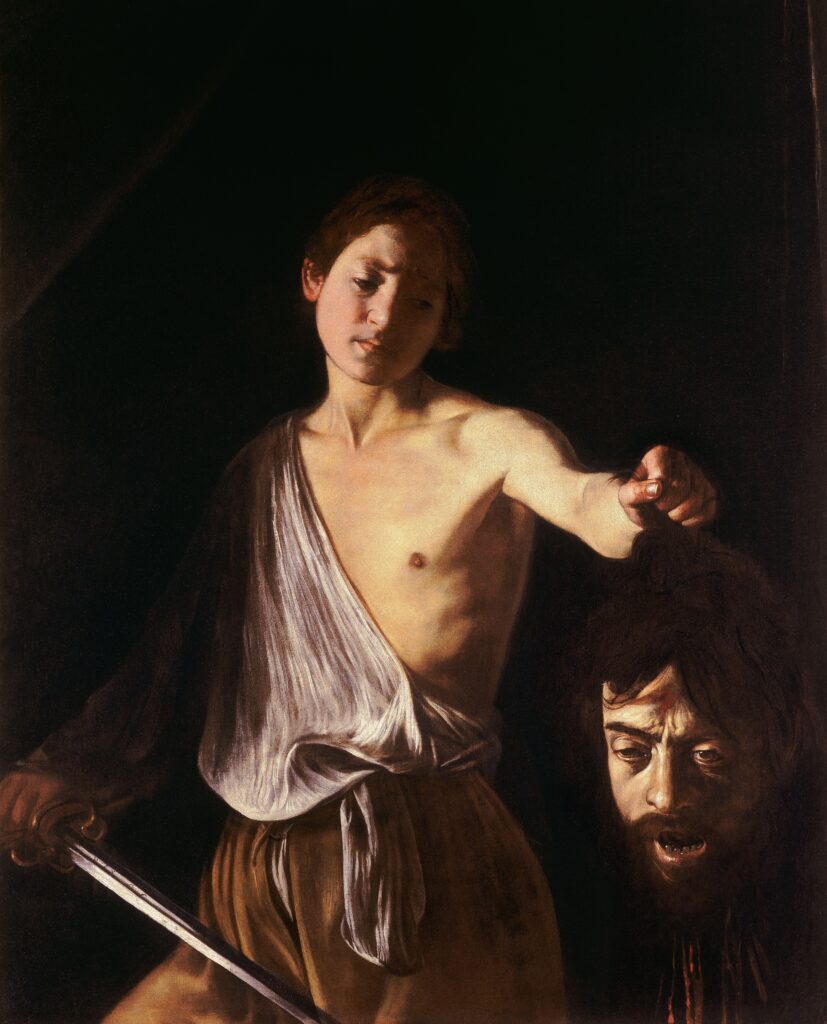
And a third reason why this title of ‘son of David’ was fitting is David’s victory over Goliath. It seemed like an impossible feat, if ever there was one. A shepherd boy against a gigantic, battle-hardened warrior. How Saul and his officers must have watched David walk toward the giant with feelings of hopeless pity. I wonder if they could even bear to watch the fight. The bible tells us that Goliath despised him. And yet we know who emerged victorious. Well, Jesus Christ, according to Isaiah, was one from whom men hide their faces, despised, and yet He overthrew the prince of this world in single combat.
But finally, perhaps the simplest reason why our Lord liked the title ‘son of David’ is that it was to David, alone among the kings of Israel, that God had promised with an oath, that the Messiah should come from his seed. We read of this in the psalms: I have sworn to David my servant, Thy seed will I settle for ever; and again: Once have I sworn by my holiness: I will not lie unto David. Jesus Christ, then, accepted the title ‘David’s Son’, to show that God was keeping that promise. More than that: He was sent into the world to show that He is Himself the God who always keeps His word.