


Last month, we began to break down the Oath Against Modernism that Pope St. Pius X prescribed for all clergy to take before ordination. We saw that the human intellect is capable of discovering the existence of God and that this is the door through which the soul can achieve communion with Him through faith. Having established that the existence of God can be demonstrated, today we turn to the second part of the Oath, which concerns God’s capacity to make Himself known to the world.
The Oath Against Modernism states: ‘Secondly, I accept and acknowledge the external proofs of revelation, that is, divine acts and especially miracles and prophecies as the surest signs of the divine origin of the Christian religion and I hold that these same proofs are well adapted to the understanding of all eras and all men, even of this time’.1
Up until modern times, such a statement would have been superfluous. If God exists, He can reveal Himself, and if He can reveal Himself, He can make it clear that the message is coming from Him and no one else. We can therefore have certitude that He is speaking. But then we had the modern epistemological crisis, which essentially locked man into the phenomena of his own experiences and somehow convinced him that he could not aspire to know anything beyond them. From there, it was a quick step to denying the ‘surest signs’ of God’s intervention. This, in turn, led to many modern exegetes denying everything miraculous in the Sacred Scriptures.
The Oath, therefore, is directed against all those who, under the influence of subjectivist theories of knowledge and the rationalist refusal of miracles, deny that one can ‘prove’ God has spoken to humanity and revealed a religion by which He is to be served. It is what is traditionally called ‘apologetics’, that is to say, the rational defence of the grounds for our faith. If God exists, He is perfectly capable of making it clear that He is speaking and that we should listen when He does. This, in turn, immediately takes religion out of the realm of private judgment and sentiment in which Modernism wants it to remain and transfers it into the realm of the objectively verifiable.
The Burden of Proof
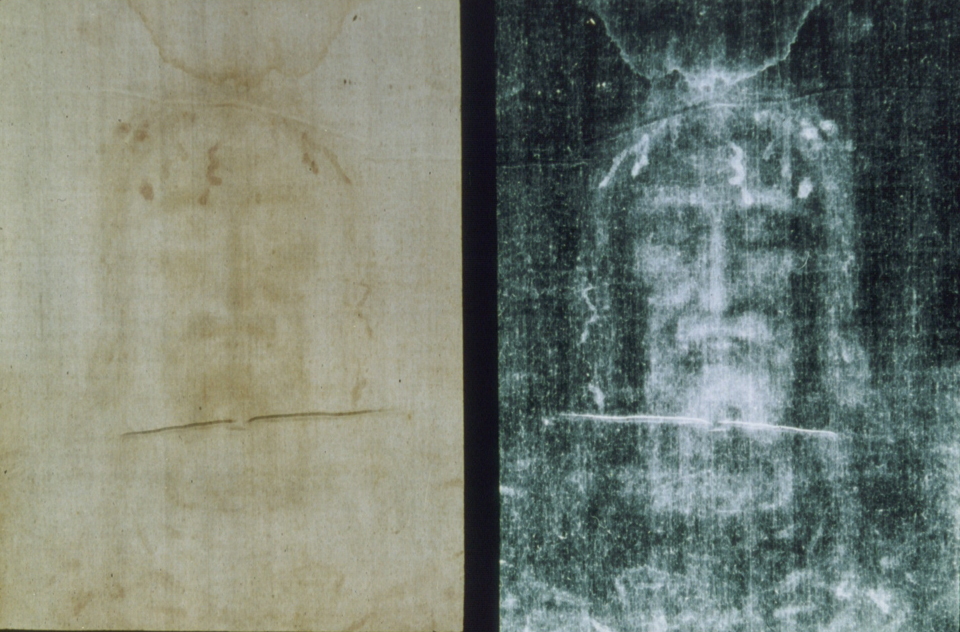
Many people today, even in the Church, become uneasy when we express ourselves in this way. I remember many years ago, an erudite gentleman who came to give us a talk on the Shroud of Turin, convinced as he was that it is truly the burial cloth of Jesus Christ. At the end of the talk, one of the monks mentioned the fact that the Shroud was proof of the truth of the Gospel, and therefore a great tool for apologetics. At this, the gentlemen immediately and persistently reneged. For him, there can be no ‘proofs’ of the faith other than an inner conviction that what we believe is right. Well, there you have it. Modernism in its purest form. Faith comes from inside, from deep down. If I want to believe, I believe. If I don’t, well, I don’t. There is nothing more anyone can say about it. It’s easy to see how such a mentality leads directly to the end of the Church’s missionary thrust and, ultimately, to the end of the faith itself, which is essentially the assent we give to God’s word. It is equally apparent how it puts an end to any serious dialogue with other believers. The Catholic Church used to be full of men and women who could argue their faith with the greatest conviction and persuasion. Today, such people are few and far between because we have been infected by the Modernist spirit of ‘my faith is my business, your faith or lack thereof is yours’.
From the perspective of the Catholic Church, however, the grace of faith comes to us thanks to the preaching of the Word of God that came coupled with verifiable events that took place in real history and that prove it is truly the Word of God that we believe, and not the word of man, our own or anybody else’s. God gave us proof not only of His existence, but also of His activity in the world and the way He wants to be worshipped and served.
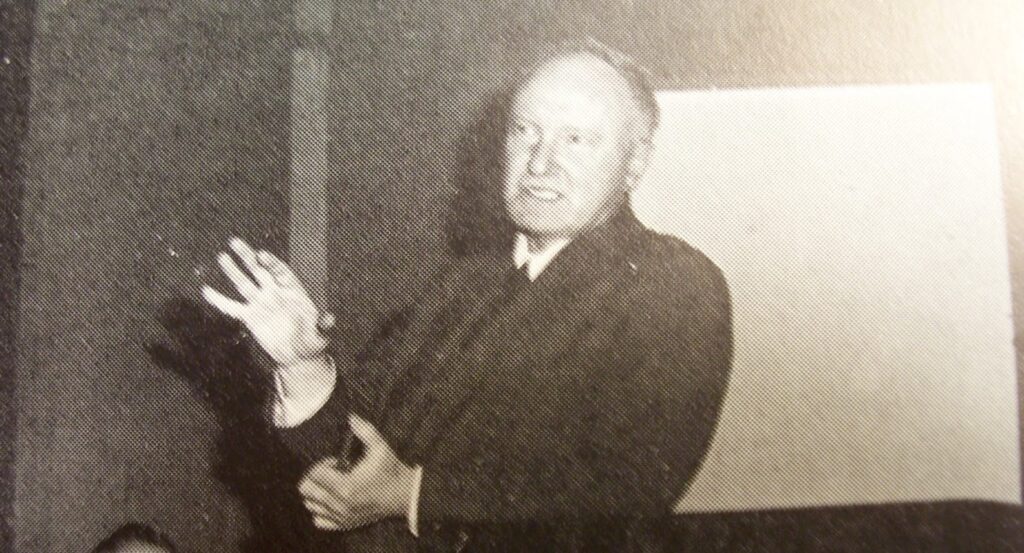
A quick glance at the Bible reveals this as a common feature of the two major moments in the history of revealed religion. When God chose Abraham and His descendants as His people and entrusted to them the task of preserving the primitive revelation and providing the future Messiah who would bring it to its completion, He did so by means of stupendous miracles that have remained graven in the memory of not just the Jews but of all peoples. We are referring essentially to the plagues of Egypt (Gn 7-13), the opening of the Red Sea (Gn 14), and the dividing of the Jordan River (Joshua 3-4). Throughout the Old Covenant, other miracles, less grandiose but nevertheless clearly contrary to the laws of nature, were performed on a regular basis by prophets, the greatest of them being Elijah (cf. 3 Kings [1 Kings] ch. 17 and ff.).
There is also a special category of miracle called prophecy, namely, the announcement of a future event that reveals itself to be true. Indeed, only God knows the future, so if someone makes a precise prediction that comes true, especially when current events seem to run contrary to what is prophesied, such a prediction is miraculous.
So It Was Written, So It Was Done
The prophecies of the Old Testament began at least a millennium before the time of Christ and ended three centuries before His coming. They were preserved with great care in the Synagogues by means of the Sacred Scriptures. They announce a Messiah, a Saviour whose kingdom would spread over the entire world and would have no end. This Messiah would be born of a Virgin (Is 7:14) of the family of David at Bethlehem (Mc 5:2) at a time when the sceptre of royalty would have been taken from the tribe of Judah (Gn 49:10). The date of His coming was prophesied with admirable precision by the prophet Daniel (9:24-27). These prophecies concerning the time of the Messiah’s coming were well-known to the Jews, who, because of them, were expecting the Messiah at the time of Our Lord. This is confirmed by the fact that when John the Baptist appears in the desert, preaching and baptising, the Jewish authorities send a delegation to ask whether He is the Christ (cf. Jn 1:19-28). Furthermore, the Jews were not the only ones expecting the Messiah, as is shown by the Magi’s visit to Bethlehem (Mt 2:1-12). This latter point is in no way surprising when we consider the prophecy of Balaam (Numbers 24:17) according to which a star would rise out of Jacob.
The prophets had foretold not only the coming of the Messiah but also many details of his life. He would be meek and humble like a lamb led to slaughter (Jer 11:19); preceded by a precursor who would preach in the desert (Is 40:3), sold for thirty pieces of silver (Zc 11:12), struck by blows, derided, covered with spit (Is 50:6); his hands and feet would be pierced, his garments divided, his tunic cast for lots (Ps 21:17-19); he would be counted among thieves and buried (Is 53:12), but without experiencing the corruption of the tomb (Ps 15:10). Jesus Himself was clearly conscious of this fact, for when He speaks to the doctors of the law, He is constantly referring to prophecies well-known to His listeners: ‘Examine the Scriptures: they speak of me’ (Jn 5:39). Some have suggested that Christ could simply have adapted Himself to the Scriptures in order to be considered the Messiah, but it doesn’t take great intelligence to see that several of the prophecies did not depend upon His human will, for example being born of a virgin in Bethlehem, His cruel execution and rising from the dead.
The number, variety and manner of Christ’s miracles manifest a superhuman power that belongs to the Master of nature alone. They are quite diversified – healing of all kinds of illness, multiplication of loaves, calming of storms, raising of the dead, knowledge of the secrets of hearts –, all accomplished with the greatest ease; they defy every law of nature, and bear no constant feature (they are accomplished sometimes by a simple word, sometimes by a touch, sometimes at a distance…). It would seem that the evangelists were at a loss for words to express the overwhelming events they were witnessing on a daily basis. St Mark conveys something of the awe with these words: ‘Whithersoever he entered, into towns or into villages or cities, they laid the sick in the streets, and besought him that they might touch but the hem of his garment: and as many as touched him were made whole’ (Mk 6:56).
Christ Himself affirms that His miracles are irrefutable proof of His divine mission: ‘The works that I accomplish bear witness that the Father sent me’ (Jn 10:25). They were so obvious and undeniable that the enemies of Our Lord were reduced to putting forth the absurd proposition that He held His power from the devil, which accusation Our Lord easily refutes (Lk 11:15-20). We might add that His miracles cannot be attributed to devils for two essential reasons: first of all, because the devils do not possess such mastery over nature. Devils can perform prodigies, but they cannot perform miracles in the strict sense. For example, while they could seem to heal a disease, what they are doing is really acting on the symptoms to make it appear as if they were gone–demons do not heal, which is why it is foolish to go for a cure to people who dabble in the occult. The truly miraculous remains beyond their pale (e.g. they cannot make a dead man rise as Jesus did on three occasions). The second reason is that hiding behind demonic powers would mean collusion with the devil. But in the life of Jesus, there is no fraud or anything in favour of sin or evil doctrine. His life was so irreproachable that He was able to say to the Jews: ‘Which of you shall convince me of sin?’ (Jn 8:46). On the contrary, the elevation of His teaching and the uprightness of his moral conduct are acknowledged even by the adversaries of Christianity.
Just Find the Body!
More than any other miracle, Jesus’ own resurrection proves the divinity of His mission. He had publicly announced this event far in advance on several occasions (e.g. Mt 12:38-40). The historical reality of the Resurrection is undeniable. All we have to do is establish that He really died and that He was really seen alive again after His death. As for His death, Our Lord actually underwent three distinct forms of capital punishment: the Roman flogging, the crucifixion and then the piercing of the Heart. After He was buried, his enemies sealed the tomb and set an armed guard of Roman soldiers for whom the penalty of sleeping on duty was death. His tomb was found empty the third day following His death, without anyone ever being able to find any trace whatsoever of His body. The Jews bribed the soldiers who had seen an angel come and open the tomb so they would keep their mouths shut and tell a concocted story (Mt 28:12).2 As for the apostles, far from being gullible, they were very slow to believe and did not give in until Jesus Himself appeared to them, made them touch His flesh and bones, and even ate with them (Lk 24:39-43). The apparitions of the risen Jesus were numerous. He even appeared to 500 people at one time. The apostles presented the resurrection of Christ as the great motive of credibility of the Christian faith; in witness to it, they performed miracles and underwent martyrdom.
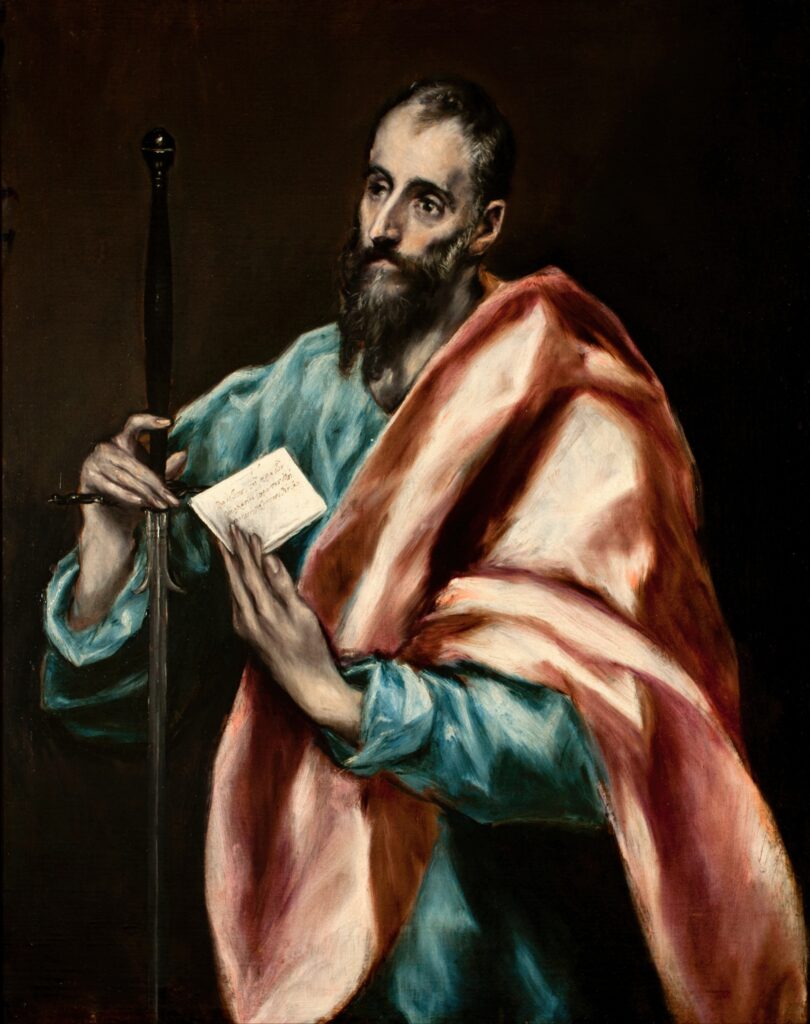
The Resurrection is the cornerstone of the Christian faith, in that all you have to do to debunk Christianity is to disprove that the Resurrection took place. If Christ did not rise, we have no reason to believe in Him. In the words of St Paul: ‘If Christ be not risen again, your faith is vain: for you are yet in your sins’ (1 Cor 15:17). This is why so much effort was put by the rationalists, especially in the 19th century, into disproving the Resurrection. However, they found themselves up against an insurmountable historical fact: no one has ever been able to give any clue whatsoever as to the whereabouts of the body of Jesus. Think about it. It’s so simple: just find His body, and Christianity is over! Is it all that hard to find a body that everyone had seen crucified and buried? Bodies don’t just disappear. Hard as it is to believe, the ultimate impossibility of disproving the fact of the resurrection actually led some rationalists to resort to what has to be one of the most ludicrous attempts at debunking Christianity ever concocted. They suggested that Christ had actually never existed at all. For this, they tried to lump the Gospel into the category of myth. Christ was no more real than Jupiter or Hercules.

Don’t Outsmart Yourself!
When it comes to history, however, there is no historic person from 2,000 years ago whose existence and life is as well documented as that of Our Lord Jesus Christ. We have documents that are more abundant and more certain about Jesus than about Alexander the Great, Socrates, Julius Cesar, Vercingetorix, or any other great man of ancient times, whose existence no one would dream of denying. The manuscripts in our possession are very numerous, and the most ancient among them are copies made very close in time to the composition of the original. While the profane history taught in universities today is based on manuscripts dating from more than 1000 years after their originals, we have complete collections of the entire New Testament gathered only 300 years after Our Lord, and fragments that go back to the first century. No one doubts the existence of Julius Cesar, and yet his existence has by far fewer credentials than that of Jesus. Therefore, the existence of Christ cannot be denied or even doubted without falling into a most egregious and inexcusable error.
Backed up against yet another wall, the rationalists then went on to say that the New Testament books were written, not by apostles, but by their disciples of the third or fourth centuries, attempting thereby to insinuate that what we have in the Gospels are not historical accounts but rather the daydreams of people who lived several generations later and wrote down what they imagined could have happened. In addition to the fact that more recent scholarship leads to a very ancient composition of the Gospels (c. 65–100 A.D.), there is the unbroken testimony of all the Christian churches going back to the very first centuries, that the apostles themselves (Matthew and John) or their immediate collaborators (Mark and Luke) themselves consigned the story of Jesus to parchment. So then, an effort was made to establish that the apostles were simply mistaken and were just conveying their own thoughts, and not what really took place. This was further abetted in the 20th century by such scholars as Rudolf Bultmann, who based his work on the false principle that since miracles cannot happen, they didn’t. He then proceeded to eliminate everything miraculous from the Gospels. This ‘demythologisation’ of the Gospels, while based on a priori rationalist bias, convinced few but intellectuals who were so immersed in their fancies that they did not realise the utter stupidity of the project – professing belief in an omnipotent God, but refusing Him the capacity to intervene in history. These words of Our Lord come to mind: ‘At that time Jesus answered and said: I confess to thee, O Father, Lord of Heaven and earth, because thou hast hid these things from the wise and prudent, and hast revealed them to little ones’ (Mt 11:25).
The fact of the matter is that the gospels and epistles were written by eyewitnesses to the events. ‘We cannot not say what we have seen and heard’, the apostles tell the Sanhedrin (Acts 4:20). Furthermore, they reveal details that are not to their credit, such as the denial of Peter and the failure of all the disciples to stand by Our Lord in His passion. They highlight how the Lord upbraided them so severely for the very unholy spirit of competition among themselves. They narrate public and important events of which most of the witnesses (both friends and enemies) were still living when the Gospels were written. ‘These things were not done in a corner,’ says Saint Paul in the court of King Agrippa (Acts 26:26). Finally, they all died for bearing witness to the truth of what they had written.3
Opening Our Eyes
We must conclude that the Gospels are historically true. In other words, the miracles Jesus Christ performed actually happened. So why? This brings us back to the Oath against Modernism. Quite simply, the miracles are proof of His divine mission. If someone comes and says they are sent by God, you expect them to prove it. Our Lord did that almost every day of His public life, and in the most varied ways, and ultimately came back to life after His death in order to ward off any possibility of mistake. This is God’s intervention in our world. His miracles make it clear that He is truly present and that what Jesus taught is true. We cannot deny this without being irrational. It also has consequences on how we evangelise and seek to convert souls – for evangelisation is all about conversion –, we must always refer back to this astounding intervention of God in our history. The miracles prove that God has come and that what He teaches us through the Church is true. God Himself has chosen this path, and if we want to be credible witnesses to His truth, we must always return to what He has revealed. We cannot do better than God did.
The insistence of the Oath on the fact that the miracles and prophecies ‘are well adapted to the understanding of all eras and all men, even of this time’ is meant to debunk the Modernist contention that faith comes from an inward movement – vital immanence – for which any external sign is insufficient and which has so distorted the faith of so many Catholics today that they are not concerned with whether or not people come to the faith. Since faith comes from the inside, they think, if they don’t have it, then they’re not meant to. ‘I’m not a religious person’, we hear. Or, ‘I don’t get anything out of going to church’, or even (as it once happened to me): ‘I’m not a God-botherer’ (as if people are bothering God when they pray…. Really ? Any excuse goes!).
It is against this mentality that the Church affirms the external proofs that any person properly using their reason should be able to recognise. If they do not, then far from thinking that they are fine the way they are, the ancients would consider that such souls are resisting grace, and if they persist, will not be saved. When the apostles encountered such resistance, they did not give up and leave people to their own consciences, and think they would be saved anyway. Let’s have a look at them in action. In Antioch in Pisidia, before the resistance of the Jews, Paul and Barnabas said boldly: ‘To you it behoved us first to speak the word of God: but because you reject it and judge yourselves unworthy of eternal life, behold we turn to the Gentiles’ (Acts 13:46). In Corinth, before a similar resistance, Paul shook his garments and said to them: ‘Your blood be upon your own heads: I am clean. From henceforth I will go unto the Gentiles’ (Acts 18:6). And at the very end of Acts, the mission to the Gentiles derives its ultimate driving force from the refusal of the Jews, which, far from leaving them content with the Old Testament as if the New did not apply to them, actually ends in a severe condemnation of their disbelief: ‘For the heart of this people is grown gross, and with their ears have they heard heavily and their eyes they have shut, lest perhaps they should see with their eyes and hear with their ears and understand with their heart and should be converted: and I should heal them. Be it known therefore to you that this salvation of God is sent to the Gentiles: and they will hear it’ (Acts 28:27-28).
The sad reality is that people – Jews and Gentiles alike – do reject evidence, and in doing so, they do reject God’s grace. It is our duty to point it out to them when they do, just as it is the duty of any father to tell his children when they are wrong, even if his warnings go unheeded. The words of the prophet Ezechiel remain relevant today: ‘If, when I say to the wicked, Thou shalt surely die: thou declare it not to him, nor speak to him, that he may be converted from his wicked way, and live: the same wicked man shall die in his iniquity, but I will require his blood at thy hand. But if thou give warning to the wicked, and he be not converted from his wickedness, and from his evil way: he indeed shall die in his iniquity, but thou hast delivered thy soul’ (Ez 3:19).
There is none so blind as he who will not see. The difficulty that most people don’t want to talk about, but which will be a major point of questioning at the Final Judgment, is that acknowledging the miracles of Christ entails an obligation to believe in Him, and subsequently to live according to His teaching. Most people simply do not want to do this. Christ knew His teaching would have demands on us. This is why He really left us no option but to either believe and trust that His grace will help us follow Him and be saved, or to be a fool and be damned. It is sad because in reality, the miracles are there, like footprints of Almighty God, showing us the path that we must tread.
- The Dogmatic Constitution Dei Filius of the First Vatican Council, ch. 3, affirmed: ‘In order that the obedience of our faith might be in harmony with reason (cf. Rom 12:1), God willed that, to the interior help of the Holy Spirit, there should be joined exterior proofs of His revelation; to wit, divine facts, and especially miracles and prophecies, which, as they manifestly display the omnipotence and infinite knowledge of God, are most certain proofs of His Divine Revelation, adapted to the intelligence of all men’. ↩︎
- In passing, this is not the only prophecy Our Lord made. He also foretold the destruction of Jerusalem 40 years in advance (cf. Lk 19:41-44). ↩︎
- Contrary to what is sometimes said, that all our witnesses are Christians, we do have non-Christian historians confirming the events narrated in the Gospels. The Jewish historian Flavius Josephus (born in 41 or 42, and who was living when Jerusalem was destroyed by the Romans in 70), tells of the existence of Jesus and the extraordinary feats He accomplished. The Greek philosopher Celsus at the end of the 2nd century cites the miracles of Jesus as historical facts, even though he thought Jesus was an impostor. The Roman historian Tacitus tells us that in the year 64 there was an immense multitude of Christians in Rome. Several other authors such as Suetonius and Plinius of the same period acknowledge the existence of Christ. ↩︎