

I am perhaps late to the party. However, the Solemnity of the Annunciation this week provides an occasion to reflect on the recent document: Mater Populi Fidelis Doctrinal Note on Some Marian Titles Regarding Mary’s Cooperation in the Work of Salvation. This document stirred up a hornet’s nest amongst traditionalists. And this is to be admired: you mess with my Mother; you get my fury. Some commentary at the time was a little too hysterical to be effective, and thus drowned out the more theologically rich and robust objections, which deserve our time and consideration. I hope this essay, in the light of the great Solemnity we are celebrating, may bring some clarity to the subject.
The Marian mistake
All mistakes regarding the nature, role and dignity of the Blessed Virgin Mary stem from one particular category error: that is, to treat what is pious as dogma and to treat what is dogma as pious. Even though these two may be two distinct moments of error, they are not two different kinds of error. And that is because piety stands in relation to our nature as dogma does to history. Let me explain.
Piety and human nature
Authentic piety engages the whole person: it floods the senses, enlightens the intellect and quickens the will. Piety is strictly linked, although not exhausted by, human nature. Piety captures in our nature something that we cling to in truth. We eat St Anthony’s bread; we bless ourselves with Lourdes water; we pray the Stations of the Cross on our knees and we recite the Leonine prayers after Holy Mass. These pious devotions engage something of our human nature according to the truths that we believe in and hold dear. They bind our nature to truth by expressing that truth through the human condition. We offer prayers of thanksgiving after Mass because we owe a debt of gratitude to the sacrifice of Christ on the Cross. We eat St Anthony’s bread because what is given from God must become part of who we are. We bless ourselves with holy water because it is a reminder of our baptism, the redemption it caused and our continual need to live under God’s mantle. Piety expresses in and through human nature something of the truths that have been revealed to us. What is variable in them is variable according to our nature, what is unchanging in them is invariable according to revealed truth. For example, the prayer of the Hail Mary can and must be translated into various languages (variable according to our nature), but what is translated cannot be re-written (invariable according to revelation). When we fail in an act of piety, we only lose the grace attached to it; when we fail in the truth it represents, we lose salvation.
Dogma and history
Dogma, on the other hand, engages history in a like manner to how piety engages human nature: all dogma makes sense of some historical reality. There is an ever-present temptation in Catholic theology to treat dogma as something Platonic- that all the truths of revelation pre-exist in a heavenly realm that descend to earth as they are revealed to us. Its appeal is obvious: Platonism appears to be an effective way of guaranteeing the objective realism of those truths. Aristotle (and St Thomas) were quick to point out the errors internal to Platonism. One of the major errors, even if a world of eternal truths seems like a way to guarantee their objective reality, is that it fails to relate those truths to the knower. Much like the soul according to Aristotle (and Thomas) is not the mover of the body, thus dogma is not divine truth “dropped into” our intellect. Let me give you an example of what this means for dogma so then I might argue for why Mary Mediator of all Graces not only makes theological sense, but is a dogmatic necessity.
Dogma relates to the knower because it is an explanation of some historical event or moment that has happened. It relates to the divine because that explanation captures a truth of the inner Life of God. It is revelation because that truth is necessary for our salvation. All revealed truth is mediated through history from God for our salvation. Every dogmatic truth we hold dear is the explanation of some historical reality that has taken place. Now, upon first hearing, this may seem intuitively incorrect. Let me give you an explanation of why this is not so.
An example
The Catholic doctrine of the Most Holy Trinity seems like a ‘Platonic’ truth of revelation. This truth, amongst all revealed truths, is clearly one that predates not only the coming of Christ, but creation itself. God is Father, Son and Holy Ghost: co-eternal, co-equal and un-confused from all eternity. This is what the doctrine teaches and it is undeniable. Even though the triune God exists outside of creation and beyond time, that truth as revelation does not. The truth as revelation is not ‘Platonic’ because it is revealed (inter alia) by the historical reality of the Incarnation.
The dogma of the Incarnation was defined by the Council of Chalcedon in 451: Christ is fully God and fully human, having two natures “without confusion, without change, without division, without separation.” This dogma makes sense of an historical reality: the coming of Christ in the flesh at the Annunciation. And this historical reality grounds the revelation of the Trinity. If God has become flesh in time, then this reveals something of the inner nature of God- that there is some multiplicity in the Godhead.1 The historical event of Pentecost and the revelation of the Holy Ghost will ground that multiplicity as triune.2 Every dogma in the Church is grounded in some historical event in the world- including the revelation of the Trinity. All truths of revelation are mediated by history, although they are not limited by history. They do not descend from heaven Platonic-like. This means that the title of Mediatrix, if it is ever to be doctrine, must be the explanation of something historical, and not merely pious practice.
Not one thing but many
Every Marian dogma- Immaculate Conception, Perpetual Virginity, Assumption etc- is the explanation of two things: the first, the underlying historical reality, and the second, how that historical reality sheds light on the coming of God in the flesh. Every Marian dogma is Christological in its essence. Although clearly not yet a dogma, this applies directly to the question of Mary the Mediatrix of All Graces.
However, the title of Mediatrix requires an extra step, something I think is largely overlooked in the Congregation’s document. And because it is overlooked, the document draws, I argue, some erroneous conclusions. The extra step required, is that the title of Mediatrix cannot be understood without reference to the dogma of the Immaculate Conception, which in turn cannot be understood without reference to the dogma of the Incarnation. The historical reality of the Mediatrix is itself mediated by the dogma of the Immaculate Conception. The title ‘Mediatrix’ requires an extra theological step to get us to where we need to be. And that step is missing. Let me explain.
The Immaculate Conception
Thomas Aquinas posed certain reservations about the Immaculate Conception primarily on the grounds of Christ’s universal role as redeemer. In the Summa Theologiae (III, q. 27, a. 2), Aquinas argued that if Mary had been conceived without original sin, she would not have required redemption by Christ. This, in his view, would undermine the universality of Christ’s salvific mission, a central tenet of Christian theology. Aquinas held that all human beings, as descendants of Adam, inherit original sin and thus require redemption. If Mary were exempt from this condition from the very moment of her conception, she would stand outside the economy of salvation, contradicting the principle that Christ is the sole saviour of all humanity.
A similar objection can be posed to the title ‘Mediatrix of All Graces’. If she were the mediator of all grace, then by necessity she would need to be the mediator of the grace of her own Immaculate Conception. On that reading, she would be mediating to obtain something on behalf of herself, a sticky problem in itself; before she actually existed, an impossibility. She would be conceived miraculously under her own mediation. That not only sounds wrong, it also sounds plain loopy. We will come back to this at the end.
John Duns Scotus responded to the problem of the Immaculate Conception with a nuanced distinction that became decisive. Scotus agreed with Aquinas (and St. Paul) on the necessity of Christ’s universal redemption but proposed that redemption could occur in different modes. Specifically, he introduced the idea of “preventive” or “preservative” redemption. According to Scotus, Mary was indeed redeemed by Christ, but in a more perfect way: rather than being cleansed from sin after contracting it, she was preserved from ever contracting it in the first place.
Scotus’s famous formulation- potuit, decuit, ergo fecit (“God could do it, it was fitting that He do it, therefore He did it”)- captures his argument. God, being both omnipotent and eternal, can preserve Mary from original sin not by operating outside the merits of Christ, but by applying those merits from the ‘position’ of God’s eternity. It was fitting, Scotus argued, that the mother of Christ be entirely free from sin. Therefore, it is reasonable to conclude that God granted this privilege. Crucially, this preservation was still dependent on the merits of Christ’s future sacrifice, applied to Mary in advance. But this ‘temporal anomaly’ of before and after only exists from our side of eternity- not God’s. Thus, Christ remains the universal redeemer, but Mary’s redemption is uniquely pre-emptive rather than restorative. This distinction laid the intellectual groundwork for the eventual dogmatic definition of the Immaculate Conception by the Church in 1854.
So, how does the above shed any light on the dogmatic nature, if any, of the title of Mediatrix? And how does it solve our own problem of Mary being the mediator of her own Immaculate Conception?
Mediatrix
The Marian title of Mediatrix takes the historical (material and temporal) reality of Mary’s motherhood very seriously. In fact, I would venture to say that not only does the title necessarily flow from, but also stands in support of her maternity. It sheds much necessary light on the historical reality of Mary as Mother of the Lord.
We know that Mary’s motherhood was a natural motherhood infused with supernatural grace. Although the Church has never defined this precisely, the Fathers and Doctors of the Church take this to mean that whatever pertains to the order of nature was preserved in Mary’s motherhood, expect for that which was the exclusive domain of Grace. For example, Mary conceived as a virgin according to the Holy Spirit, an act of grace, but the processes of her motherhood, for example her pregnancy, proceeded according to nature. Thus, Mary is the mother of Christ’s flesh, with all those natural bonds and realities that pertain according to nature. And Christ’s flesh, His human nature, is eternally and perfectly (hypostatically) united to His divinity. This is why Mary has the title: theotokos. She is the mother of the whole Christ, even if she is not the origin of His divinity. Thus, whatever is in Christ’s flesh according to nature, is according to her person as mother. She is the natural origin of Christ’s human nature: his flesh and blood.
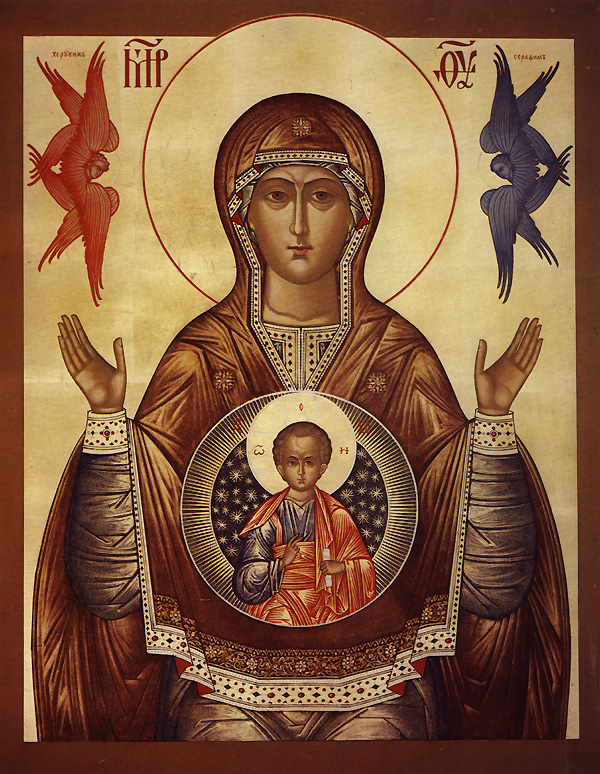
Scripture and Tradition are unfailingly clear that all grace has its origin in God (John 1:16-17; 2 Cor 9:8). And both are equally clear that all Grace is related to Christ’s coming in the flesh (John 1:3; Rom 5:15; 1 Cor 1:4; Eph 2:7) and merited by the shedding of His blood on the Cross (Eph 1:7; Col 1:19-20). And Mary, in so far as she is His mother according to nature, is the mother of His flesh and blood. And if she is the mother of His humanity according to nature by an act of grace, she stands in a unique position as mediator of grace; for what Christ merits in the sacrifice of His flesh and blood is sanctifying grace for us (Rom 3:24-25). If Christ had no human flesh and blood, He could make no sacrifice and no grace would have been obtained. And this is where we begin to see where the origin of the title Mary is Mediatrix of all Graces; for she is the mother of the whole Christ.
A note on mediation
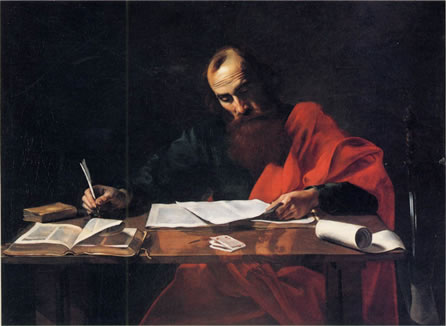
One of the texts used to deny the title, Mary Mediatrix of All Graces, comes from St Paul’s first letter to Timothy 2:5. St Paul is very careful to state that: there is one God and only mediator between God and men- the man Christ Jesus. What is curious to note is St Paul’s phrasing: the man Jesus Christ.
A mediator is a third thing that stands between the two things it mediates. It is in some ways dissimilar to those two things, but in some ways similar. A mediator’s task is to restore some kind of relationship that has been damaged. Thus, a mediator must in some way represent the parties it mediates and yet maintain a certain distinction from them- it must be sufficiently related to; but not co-extensive with the parties. This is true regardless of whether the dispute is legal, familial or religious. If the mediator were entirely unrelated, then he would have no stake in the relationship. For example, if I have no stake in justice, I cannot mediate a legal dispute. Or if the mediator were indistinct from one party, then he would only be an advocate of that party and not a mediator between the parties.
St Paul
St. Paul describes the Lord as the μοναδικός μεσίτης (sole mediator) because only the man Jesus Christ is both fully God and fully man and thus able to restore the relationship between God and men: only that which is in some way related to both parties can restore the relationship between those parties. Thus, the man Jesus Christ- whose humanity is hypostatically united to His divinity- is the sole mediator of all grace between God and man. Only Christ saves, because only Christ can restore the relationship between God and men.
Now, Mary is mediatrix not because she stands between God and man, as though she were a cause of grace; and neither does she stand between Christ and us, as though she were an origin of grace. Rather, Mary is a Mediatrix of All Grace because she participates in Christ’s merits in a most perfect way: she is the instrumental cause of Christ’s flesh and blood, which is the instrumental cause of grace in us, because it is hypostatically united to the Divine Nature, the principal cause of all grace. Mary is not the origin of grace, that is God’s exclusive domain; she is the origin of Christ’s human nature, that which both causes and merits grace for us, instrumentally. Thus, Mary has always been an instrumental cause of grace precisely because she participates in Christ’s human nature: she is the origin of Christ’s flesh and blood through an act of grace. Mary mediates all graces because she mediates all of Christ’s flesh- His human nature. If Christ did not possess flesh and blood, then no sacrifice could be made and no grace could be merited. What grace Christ merited was only merited accordioning to his flesh hypostatically united to His divinity.3 Mary mediates all grace because she is the material origin of that flesh according to nature, but the mother of the whole Christ by an act of grace.
A note on definitions
There is a philosophical problem in the document regarding definitions. Under the section Mediatrix in paragraph 25, the document gives an inadequate definition of mediation:
On the one hand, we cannot ignore the fact that the word “mediation” is commonly used in many areas of everyday life, where it is understood simply as cooperation, assistance, or intercession. As a result, it is inevitable that the term would be applied to Mary in a subordinate sense (emphasis mine).
The document, as a work of theology, needs to provide robust definitions. To synonymise ‘mediation’ with ‘intercession’ is problematic. Certainly, intercession and mediation are linked, but they are not coterminous.
Intercession operates within an already established relational framework. The intercessor does not alter the underlying structure of the relationship but seeks favourable outcomes within it. That is, intercession does not reconstitute a relationship, but rather leverages a relationship that is itself sound. For example, when Christ intercedes at the right hand of the Father (Rom 8:34), He already has a perfect relationship with the Father. When Christ mediates, He does so as both perfect God and perfect man in order restore our relationship with the Father. The two are intimately linked, but they are not synonyms. Definitionally, mediation entails representation with transformative efficacy; intercession entails representation with persuasive intent. The former addresses estrangement at its root; the latter negotiates its consequences. Functionally, while all intercessory acts presuppose some form of mediation, not all mediation entails intercession.
And this is where we return to the fundamental category error of all Marian errors: what is dogmatic is treated as pious and what is pious is treated as dogma. Mary intercedes for us when we in piety makes prayers and petitions through her maternal intercession, which in turn presupposes her mediation because of her unique participation in the life of her Son. We can, at our own expense, fail to pray asking her intercession and we will have forfeited all grace that comes from her intercessory prayer. However, when we reject her mediation, we reject a truth that saves.
Mary through time
We must also understand that Mary being the origin of Christ’s human nature does not limit her role to just the Annunciation or Christmas. Mary always was and is His mother. But the fact that she participates in Christ’s human nature, the cause of grace, means that wherever Mary is, she is participating in what her Son is doing. Mary is never a bystander, but a unique participant in all those moments of His life: from the wedding at Cana to His public execution and resurrection all the way to Christ’s kingship and dominion over all creation. Mary is never simply present; she is a participant in a most extraordinary way wherever Her son is present.
Final Point: The Immaculate Conception
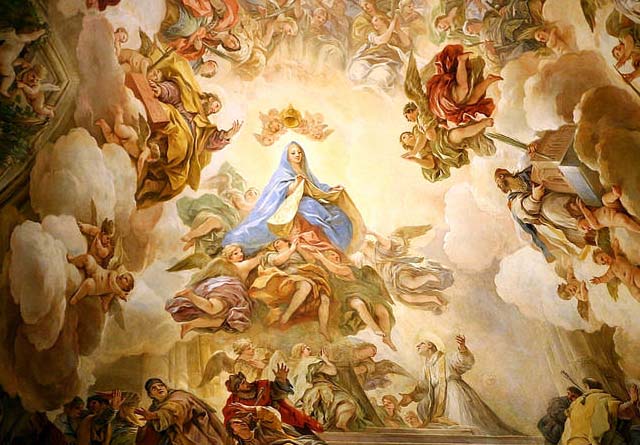
Which leads us back to the original objection: how can Mary mediate the grace of her own Immaculate Conception? The first is to understand that Mary mediates grace from Christ’s sacrifice to sinful humanity- not herself. Mary does not mediate for herself but for us- Mary is not storing up treasures in heaven for herself. That is the first part of the objection. The second part however still requires a little more work. The grace of the immaculate Conception is a grace that can only be merited from the sacrifice of Christ, for Christ is the sole redeemer of all humanity. This is unshakeable principle of our faith. And if Christ merited it, then Mary participated in it. But Mary does not participate in grace as principal, for that is God’s exclusive domain, rather she mediates grace as instrument- which is itself a grace. That is, what God causes principally and Christ merits sacrificially, Mary receives as is befitting her title as the she who is Full of Grace. Mary does mediate the grace of the Immaculate Conception to herself but participates in it via the merits of Christ. It is God’s free and eternal act that bestows this grace on her. She is not the origin of grace, but the instrument through which God has chosen to make the cause of the grace present to the world. She is mother of grace the same way she is mother of God- not as the origin or source of either, but the mother of He who is the origin and the cause of all grace. What Mary receives, God has caused; and in what Christ merits, she participates.
Conclusion
To study our Lady well and to know her doctrines is to delve deep into the reality of Christ. To know her is to come to know Him, as only a Mother knows her Child. There are many reasons for the modern obsession for down-playing the role of the Blessed Virgin Mary. None of them give witness to the truth, edify souls or honour the Tradition. Our first step to true devotion is not to diminish the dogmatic truths of our faith, but to embrace them in genuine acts of filial piety.
- If anyone is interested in the theological and philosophical development of the doctrine of the Trinity and its importance for Western Civilisation, the articles Rome and Her Fathers and Rome and Augustine will give you a basic introduction. ↩︎
- This is the historical foundation for what will become the dogmatic formulation and declaration of the Most Holy Trinity: first at the First Council of Nicaea (325 AD), and subsequently expanded and refined at the First Council of Constantinople (381 AD). ↩︎
- Aquinas will specify that Christ’s humanity is not simply a tool like a hammer or a screwdriver, but rather an instrumentum coniunctum, uniquely capable of transmitting divine power. ↩︎