

One of the best commentators on Catholic events is Phil Lawler. He is a sound critic and an astute observer of many things Catholic. He thinks deeply about the issues under examination; and although I do not know him personally, his articles read like a man who prays about what he writes. This alone places him in a rather rare category populated by very few individuals.
So, it is with not a little hesitation I begin this article by announcing a rather firm disagreement I have with one of his recent pieces: Why I am not (quite, yet) a Traditionalist: Part II (see article here). To be entirely honest, my objection is not to his article alone, rather my target is also the somewhat dismal account of what traditionalism really is that has been given by traditionalists. This statement is more confession than condemnation.
I would argue that Mr Lawler’s point that what ultimately matters is that the Holy Sacrifice of the Mass be celebrated reverently and that this celebration produce a salvific effect on the human soul, is entirely correct. But correct only in so far as it is the tradition that determines what ‘reverence’ actually means and what effects it has on the soul. Reverence is neither a feeling nor an impression- something I imagine Mr Lawler would firmly accept. Reverence is a conclusion to a process that is ultimately defined by what has been handed on from the Lord to His Church; and from His Church to Her faithful. It is not a product of committee meetings, synodal discussions or personal preferences. Reverence is a kind of standard- but one that has to be determined over and above what I, or anyone else alone for that matter, may consider reverent. Reverence is not my preference for Latin, ad orientem worship or any list of other things that are closely associated with the term. Reverence is something decided by a higher authority than the Latin schola or the parish youth group. The question then becomes: decided by whom and according to which criteria? This is where I continue to disagree with Mr Lawler.
A short personal story
I think traditionalists have made a mistake over the years. I can remember many conversations with those who made impassioned pleas with me to learn the TLM. They told me I would fall in love with it; I would be uplifted by it and that I would be even blown away by it. My reply was invariably: but what if I am not? Does your argument for the TLM really rely on how I may feel after I have learned it? Surely there must be some other objective criteria that you can point to in order to persuade me? Many then pivoted to descriptions of the TLM as being the ancient rite, the true rite, the timeless rite, the unchanging rite. All descriptions that seemed true to a point. However, the argument that lost my willingness to take the issue of the TLM any further always came back to this: what many may abandon, we prefer. Many traditionalists made the argument that they simply preferred the TLM over the vernacular. They loved its chanting, its imagery and its grandeur more than whatever was being offered in their local parish. And this is where I left them. For if the question of the TLM is one of simple preference: then who cares who wins? If the only difference between the TLM and the Novus Ordo is simply my preference versus yours- then there is nothing at stake. There is nothing to lose. Certainly, it may be of great personal loss to me if it were to disappear- and to many others too; but nothing other than my preference would be lost to the Church, to the world and to souls. And this is entirely NOT the argument that traditionalists should make when they talk about the TLM.
The reason why we have painted ourselves into this corner is that we have placed too much attention on the M in TLM and have completely ignored what the T actually means. We have put ourselves in a weaker position because we have concentrated on the M, which we have turned into an R. By not developing a deeper theology of the Tradition, we have made the TLM a question of taste for its rubrics (R) and one of preference for its adherents. I do disagree with Mr Lawler’s position; because I believe it is a fruit of our lack of effective apostolate on the part of our movement. Let me explain.
The question at the heart of every doctrine
At the core of every well though-out doctrine is a question. It is a question sometimes hidden from view- other times staring you in the face- that gives that doctrine its identity. Every doctrine that reaches for the truth is trying to answer a question at its core. Catholicism, a divinely “thought-out” doctrine has a central question at its core too. And this question, that for the last several generations we have either been ignoring or attempting to answer by ourselves, has caused the Church to flounder and wander for the last several decades.
Let me use Judaism as an example to explain what I mean. I will then turn my attention to Catholicism. At the heart of Second Temple Judaism was a question that occupied the thoughts, writings and prayers of the religious authorities of the time. It was into this world view and religious culture that Our Lord found Himself in the first century. This question provided the context for many of His teachings and it came up repeatedly in His interactions with His fellow Jews. It was also the source of His eventual bitter disagreements with them. The question at the heart of Judaism is this: what does the law require? There are various ways you can formulate that question; but they all lead back to this one idea: what does the law say? For the law determines how you are to live your life and whether or not you are right with God. That is why so many of the disputes with the Jews were over exactly what the law said. Eventually the final break with Judaism will be occasioned by the realisation that the Lord was introducing a New Law- for He was a New Law-Giver.
The question at the heart of Catholicism
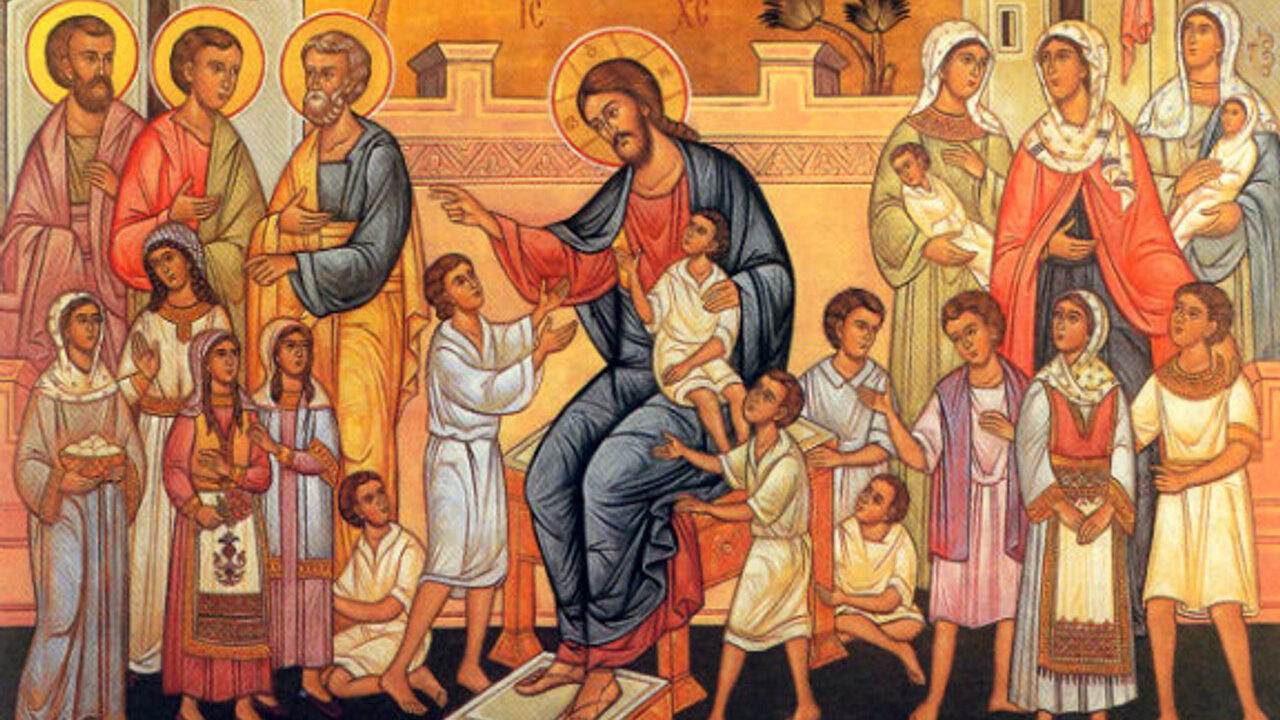
The question at the heart of Catholicism is derived from the Jewish question of law. But our question is ultimately determined by what the New Law-Giver commanded His apostles to do: go you therefore… and teach ye all nations, everything I have taught you (Mt 28:19-20)1. This is known as the Great Commission. However, at the heart of this commission lies a special problem, which is the basis for the question that lies at the heart of Catholicism. This question defines so much of who we are and gives form to so much of what we do. And the question is this: what must be handed on? This is the question that stands at the core of Catholicism. For although the Great Commission seems fairly simple- teach them everything– it is anything but straightforward. For example, we know that the Lord observed perfectly the Mosaic law- its legal, ritual and moral precepts. And in the process taught us to do the same. But we are not bound by the Mosaic law in its legal and ritual precepts. (This is the question that occupied the Apostles at the Council of Jerusalem.) So, in order to teach men everything He taught us, means first to decide what must be handed on to them. This is why this question stands at the heart of Catholicism: for it is the question that allows us to fulfill our mission. So, how do we decide what must be handed on?
What must be handed on and what must be left behind
In order to be faithful to the Great Commission, the Church must decide what must be handed on and what must be left behind. This question defines so much of what Catholicism is and what Catholicism does. Therefore, if traditionalism is to have a future- which of course it does despite whatever fool thing you and I may say and do- then we have to make the case that the TLM is the very thing that must be handed on to future generations, for it is one of the most precious things that has been handed to us. We do not hand on the TLM because we like Latin, prefer chant or favour certain propers and collects. We love the TLM because we are duty bound- at the very core of our Catholic being- to hand it on. It does not just make us happy- it makes us Catholic. Handing on the TLM (and the entirety of the Tradition) is what makes us right with God, because it is what fulfills His command to hand on everything He taught us. To be a traditionalist then, is not just about where you go to Mass on Sunday; it means to have made up your mind about what must be handed on to future generations.
This brings into sharp focus my principal point of difference with Mr Lawler. My disagreement with him is the same that traditionalists have with many other Catholics- we simply disagree about what must be handed on and why. It is not about preferences, tastes or sensibilities- no matter how beautiful or noble these may be. We are a theological movement, not a romantic one. Let the point of our dispute be clear so that our discussions may bear fruit: Traditionalists understand themselves to be duty bound to hand on the entirety of the Church’s Tradition; and the TLM is an essential, but certainly not an exhaustive, part of what that must be.
If I were to sum up my last series, it would be this: if the Church is to be renewed in this generation, then we must decide what must be handed on to the next. And the only way to know what must be handed on, is to know what has been handed to us. And why. And I spent twelve months teaching you what I believed this to be and why I believed it to be so. This challenge or problem is not new to the Church. It won’t be solved by our generation for all generations to come. Ours will simply be another lesson in a long line of lessons about how to be faithful to Catholicism’s core question: what must be handed on (in order to be faithful to the Lord’s commission). But in whatever directions this may go, it won’t actually be a lesson until we know what treasure has been handed to us, so that we will know what treasure we must hand on to those who come after. And until we figure this out, we will continue to wander and flounder, as we are doing right at this very moment.
Process and content
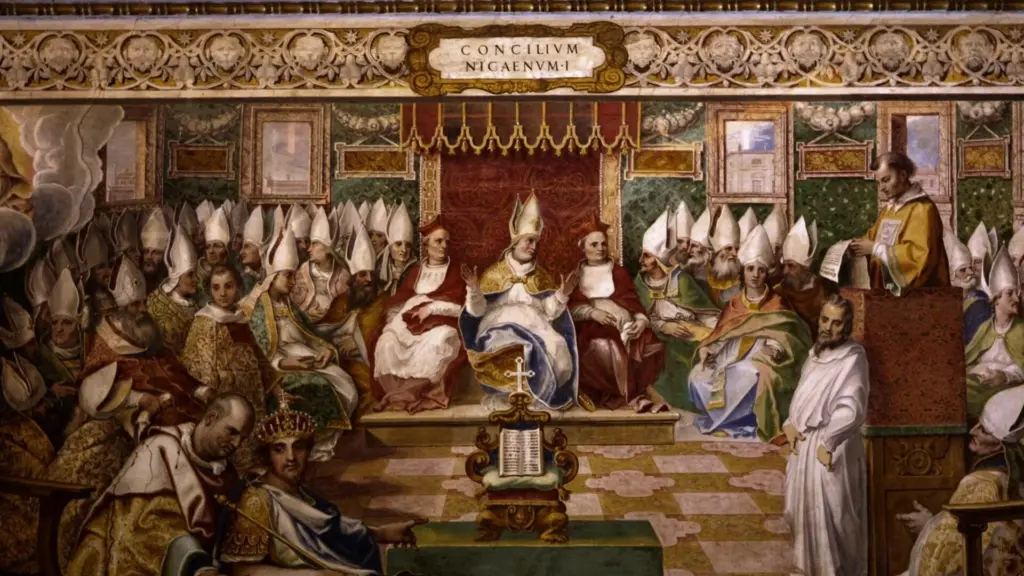
But herein lies another point so precious for us to make and important for us to learn: we must also participate in the same process that the Church has laid out for us. For it’s the same Church that will decide exactly what will be handed on- but it will do so according to the contributions we make and the arguments we bring. Just as homoiousios was left behind but homoousios was embraced. Just as the Shepherd of Hermas was left out of the canon but the Apocalypse was kept. Let us too, have an argument over whether the TLM should be embraced and the Novus Ordo left behind. But let us do so as Christian gentlemen. Sure, another Nicolas might need to slap another Arius in the face; and another Irenaeus may have to argue forcibly in a loud voice against another group of heretics- but the point that Catholicism makes is clear, that in order to know what to hand on, sometimes you have to have an argument, and sometimes that argument will be heated. But we are arguing a point for a purpose. And this means killing off the personal, which means letting go of the preferential. This is not about us.
So, the liturgy wars may have been bitter- but they are necessary. They could have been prosecuted better- certainly. But at their heart is an attempt at answering Catholicism’s’ core question: what must be handed on. As traditionalists, we don’t think that it should be the Novus Ordo. How the Church will ultimately square this circle, that answer may lie well into the future. But it won’t actually be an answer until we have had an argument. So, let us argue. But as Christian men and women animated by Christian doctrine and Christian sentiments. And then let the Holy Spirit figure it out.
As for Mr Lawler- I am praying he finds his way to be a traditionalist (entirely) not because he prefers the TLM, but because he is convinced that it is his God-given mission to hand it on. If he continues to do what he is doing, I imagine this won’t take long.
- The other commandment was to love one another as I have loved you. This is intimately related to the Great Commission, which I will develop in a later article. ↩︎
One Response
Very well explained Father Solomon. God bless you.