
By Fr Thomas Crean (St Dominic’s – 15th June, AD 2024)
Blessed art thou among women.
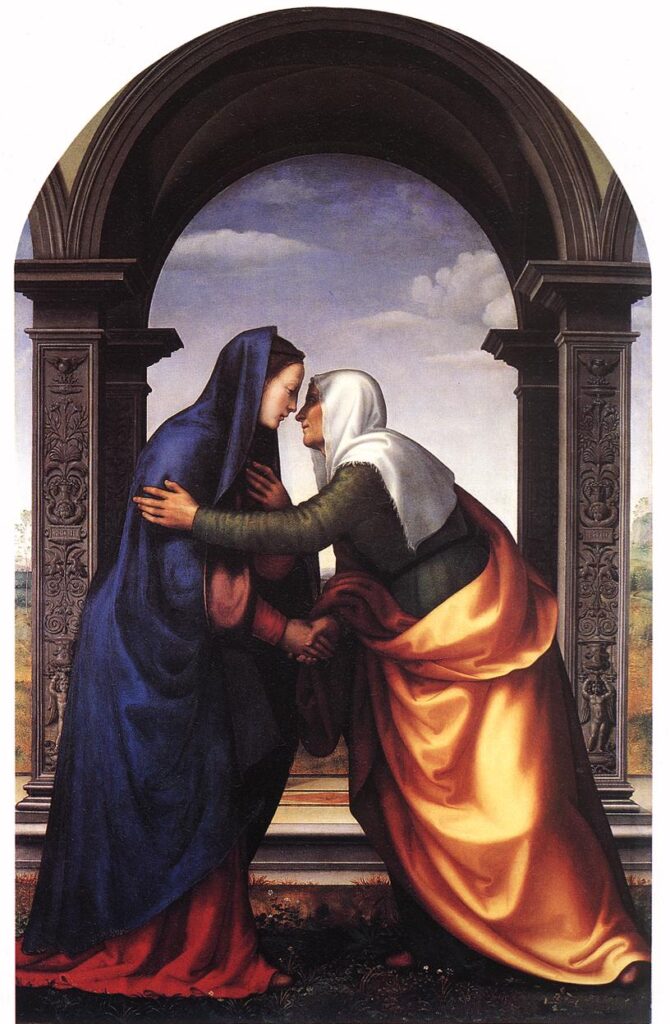
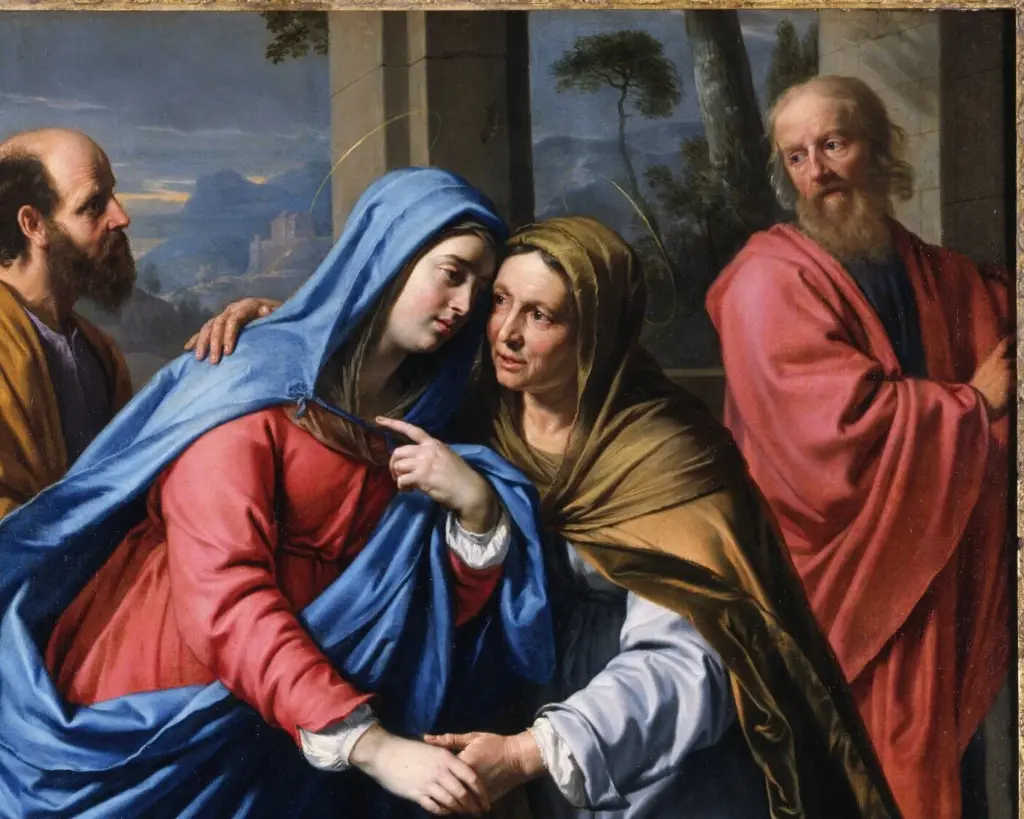
The words that I have just quoted are certainly among those that are most familiar to all Catholics. How many thousands of times, perhaps hundreds of thousands of times we must repeat them during our lives. Blessed art thou among women. We heard them spoken this morning to our Lady in her house in Nazareth of Galilee, by the angel Gabriel. This afternoon, let’s how recall how these same words were spoken to her in the south of the country, in the house of Zechariah, by her kinswoman Elizabeth. Mary had gone there to help Elizabeth, who was with child. In just over a week, we shall be celebrating the birth of that child, St John the Baptist – the nativity of St John is one of the great feasts of the calendar. But for now let us cast our minds backwards, back to the house of Zechariah, to a day in late March or early April some nine months before our Lord was to be born.
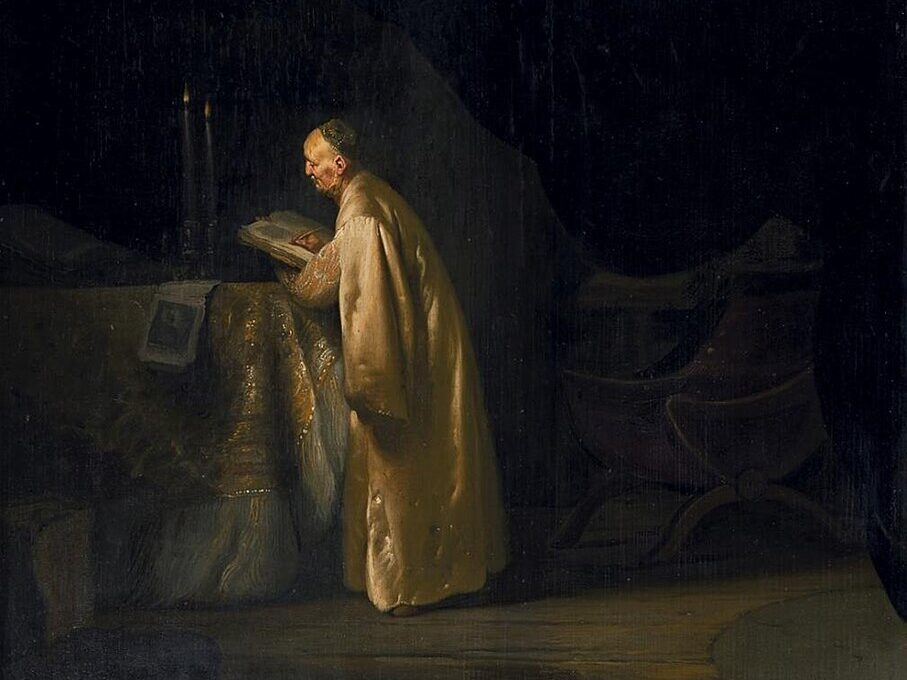
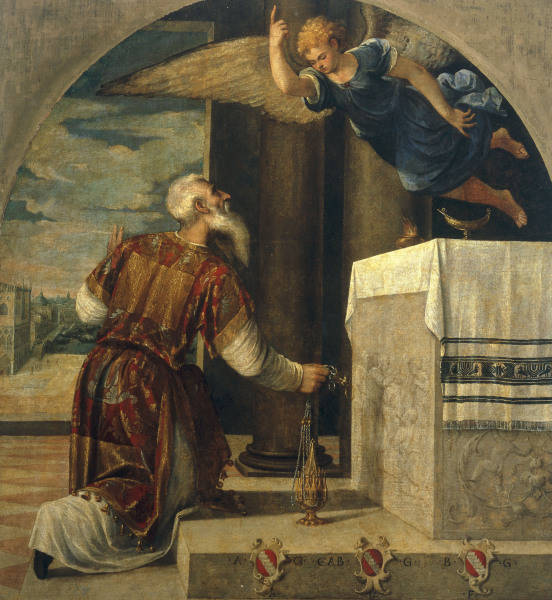
Who was Zechariah? He was a priest: one of the priests of the old Law. There were many priests in Israel, but only one place where sacrifices could be offered, the temple in Jerusalem. So it was a great day in the life of a priest like Zechariah whenever it fell to his lot to go from his home up to Jerusalem to burn incense in the holy place. Such a day, in fact, might occur only once in the life of a priest. Zechariah’s day to burn incense in the temple at the hour of incense had arrived just six months earlier. As he stood on that late summer day in holy seclusion before the golden altar, he had been rewarded for his virtuous life by a vision of an angel, but Zechariah’s happiness had been turned into sorrow when he hesitated to believe in the good news that the angel brought him. It seemed too good to be true: would his elderly wife Elizabeth really conceive a child at last? And would that child really would go before the Lord in the spirit of Elijah, to make the people ready for the coming of the Lord their God? Pious Jew though he was, Zechariah had doubted, and had required proof; but instead, the angel Gabriel had first reproved him, and then struck him dumb. Since Zechariah had not welcomed the divine words into his heart when he heard them, human words were taken away from his lips, at least for a time, that is, until the day when the prophecy of the angel was to be fulfilled. Behold, says St Gabriel, thou shalt be dumb.
And thus it was that the house of Zechariah the priest, in the hill country of Judah, became a house of silence.
Now, silence comes in many forms. There is a silence of fear, when we should like to speak, but do not dare. There is a blessed silence of contemplation, when words seem unnecessary, so greatly are we absorbed in love. And there is a sullen silence, which belongs to those who refuse to speak, out of resentment or slowly smouldering anger.
The silence in the house of Zechariah was none of these. It was, rather, a penitent silence. He grieved over his sin of unbelief. He admitted the justice of what had befallen him, that he could no longer speak. Speechlessness is a hard lot for anyone to bear, but for a priest, charged with praising God on behalf of the people, it meant a special suffering. He could not recite the psalms aloud, or any daily prayers; he could still move his lips and tongue, but try as he might, he could make them produce no sound.
His wife, too, was silent. Why should she speak, when her husband could no longer answer? She would not speak to reproach him, since that would have been unkind, and Elizabeth, like Zechariah, was a good and holy person. Her silence also was penitent. Not that Elizabeth had committed any sin; nor, perhaps, did she quite understand what her husband had done wrong; but she perceived that he was expiating some fault, and she longed to expiate it with him. And within her, also, the child lay silent. Autumn came and went and gave place to winter, and silence still possessed their house.
Was not the house of Zechariah an image of the nation; an image of Israel itself? The last of the prophets, Malachias, had died centuries before. Ever since then, the voice of prophecy had been hushed. It was as if Israel itself had become mute; as if some angel had said to Israel: Behold, thou shalt be dumb.
Then into this silence one spring day comes the Virgin of Nazareth, from the hills of Galilee. She entered the house of Zechariah, says St Luke, and greeted Elizabeth. Mary greets her cousin; she breaks the silence. And by this spontaneous greeting full of love, yet full of respect, too, as from a younger woman to an elder, and full of sympathy also for the sorrows of Zechariah’s household, it is as if a spell is broken and the gloom lifted. The winter is past, the rain is over and gone.
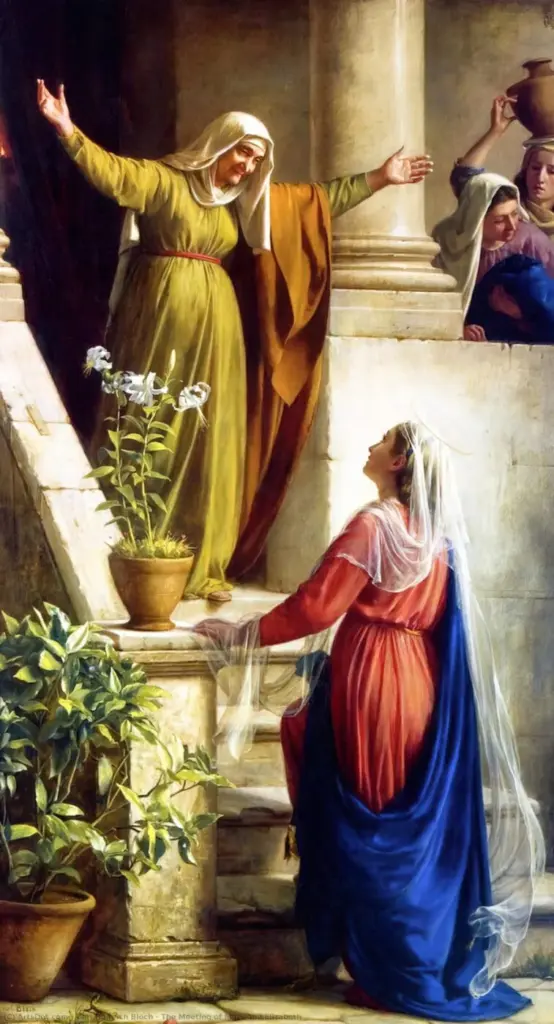
What happens next? St Luke tells us: Elizabeth is filled with the Holy Spirit. Elizabeth, as I have said, was already a virtuous woman, versed in the law of her people, but now it is granted her to speak inspired words. Blessed art thou among women, she cries out to Our Lady in a loud voice. Why does she use that phrase, Blessed art thou among women. It is the same one that St Gabriel used at the Annunciation? Since the Holy Ghost placed these words on the lips of both an angel and a woman, He must surely intend that we scrutinize their significance.
There are two places in the Old Testament where these words or very similar ones occur. They are used on two occasions that are certainly very different from this meeting of our Lady and St Elizabeth, but nevertheless let us not be afraid to study them and see what light they shed upon this encounter.
The first time we encounter this phrase, Blessed among women, is in the Book of Judges. This Old Testament book takes us very far into the past, to a time when the children of Israel had not long taken possession of the promised Land, and were engaged in a desperate struggle to vindicate their right to it, and to defend themselves against their enemies. At one point, we read that a certain Canaanite king is grievously oppressing them, until finally Israel decide to fight back. The Canaanite king sends his best general into battle to crush the revolt. This general’s name is Sisera. Israel repulses his attack, and Sisera is forced to flee, no doubt intending to regroup his forces and return. As evening falls, he turns aside to rest in the tent of a local nomad, who is neutral in the fight. But the nomad’s wife, a woman called Jael, is on the side of Israel. While the exhausted general is asleep in her husband’s tent, Jael takes a great tent-peg and a hammer and drives the peg through Sisera’s skull, nailing his head to the ground. And when the leader of Israel’s army arrives on the scene and sees how unexpectedly the enemy of Israel has been crushed, he exclaims: Blessed among women be Jahel, and blessed be she in her tent.
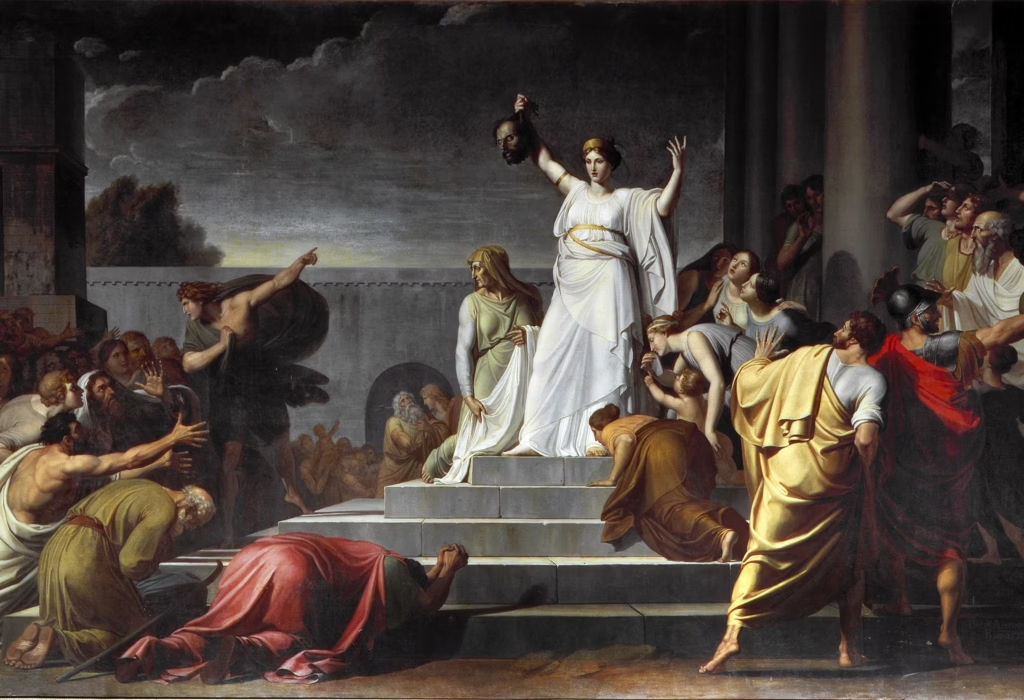
The second use of this phrase in the Old Testament comes hundreds of years later, though still long before the birth of our Lord. This time it occurs in the Book of Judith. Israel is again threatened by a terrible king, and again a mighty general leads a hostile army against God’s people. This time, the general’s name is Holofernes, and he is besieging a city called Bethulia. Judith, a beautiful and wealthy widow of Bethulia, steals out from the city by night and enters the enemy camp, accompanied by no one but her maid. There she finds General Holofernes in his tent, who sees her and immediately lusts after her. But she so manages things that he drinks himself into a stupor, and then, when he is snoring on his bed, Judith unties Holofernes’s own sword from the bed’s head. Scripture says that praying to God for strength, she struck twice upon his neck and cut off his head. When she is safely back inside her city, Judith shows the head of Holofernes to her fellow citizens, and the ruler of the city cries out: Blessed art thou O daughter, by the Lord, above all women upon the earth.
What have these gruesome events to do with the gentle maiden of Nazareth? Whatever was written, says St Paul, was written for our instruction. And speaking of various of the adventures of the Israelites in the Old Testament, he says, All these things happened to them in figure. If first Jael and then Judith destroy the head of an enemy who threatens the very survival of their people, this was to prefigure Mary. We know how God said to the serpent in the beginning: I will put enmities between thee and the woman. She shall crush thy head. But Sisera and Holofernes were figures of the evil one; Jael and Judith were figures of the woman who crushes his head. The are called blessed among women, not absolutely speaking, but in a certain respect, because in their own time and place because they saved God’s people from earthly and temporal disaster. But our Lady is blessed among woman of all times and all places, because it was thanks to her that the human race was saved from final ruin.
How did our Lady do this? In two ways. First she brought Jesus, true God and true man, into the world. And then she stood by the Cross at the Passion, as He expiated our sins, and she sacrificed herself with Him in her heart. As Judith struck twice with a sword at the neck of the tyrant, so Mary twice wields against the devil the word of God, sharper, says St Paul, than any two-edge sword. When does she wield it? Once to the angel, when she says: Be it done to me according to thy word. Already, since she knew the Scriptures, she foresaw that her Son must suffer. Then a second time on Mount Calvary, she wields this same sword, when she renews her consent to God’s will and to those same sufferings. As she stood beneath the Cross of our divine Lord and watched Him suffer more than anyone else before or since, must she not have prayed like Judith, saying: Strengthen me, O Lord God, at this hour?
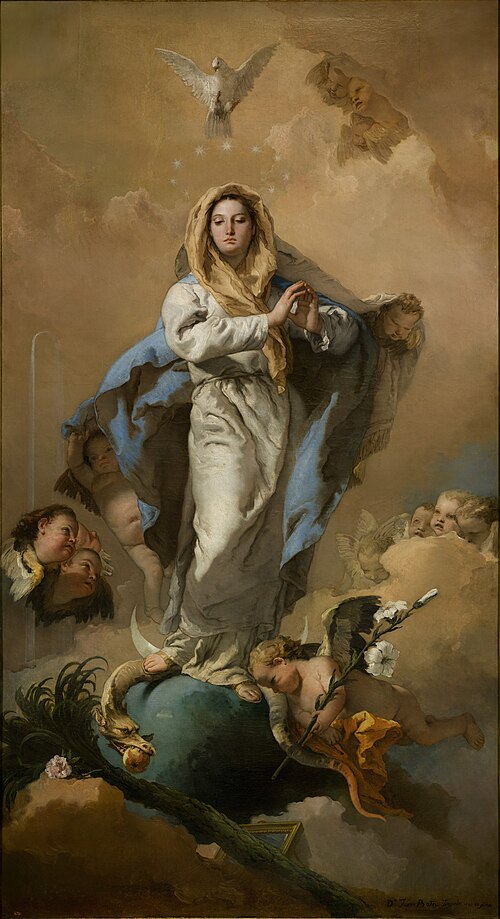
See what deep meaning is contained within Elizabeth’s words, Blessed art thou among women. And it is through Mary’s greeting that they were spoken. Her greeting has broken the silence that reigned in the house of Zechariah, and has released again the springs of prophecy in Israel. For is it not only Elizabeth who is filled with the Holy Spirit and prophesies. Her son, also, St John, prophesies according to his state. It came to pass, says St Luke, that when Elizabeth heard the salutation of Mary, the infant leaped in her womb. He cannot speak, but he can leap. Is this merely some natural movement? No: it is a prophetic one. Elizabeth declares as much to her kinswoman: Behold, as soon as the voice of thy salutation sounded in my ears, the infant in my womb leaped for joy. John is prophesying, declaring that the Bridegroom is near. Later, when he becomes a man, he will explain it: John answered and said: the friend of the bridegroom, who standeth and heareth him, rejoiceth. And Zechariah, too, is healed. His tongue is unloosed; he also, says St Luke, was filled with the Holy Ghost and prophesied. He speaks words that holy Church repeats each morning: Blessed be the Lord God of Israel, because he hath visited and wrought the redemption of his people. How our Lady must have been glad to see this old priest reach the end of his time of penal silence and praise the God of Israel once more.
And finally, what of us? In our lives, are there any silences that should be broken? Are there any sins that we have buried in our memories and not confessed, because we are ashamed of them? Are there any people for whom we are responsible, people who have turned away from the right path, who have stopped coming to church, perhaps enter invalid marriages or immoral relationships, and to whom we say nothing? Do we perhaps, by remaining silent, become sharers in their sins, when we could encourage them in love to return to the Lord? Or are there other people, not under our responsibility, but friends or neighbours or colleagues, who are without Christ and the sacraments, to whom we might be able to speak about our hope of eternal life? For this hope is certainly not meant for us alone. If there are any such silences, let us ask our Lady to break these too. As we say with St Gabriel and St Elizabeth, Blessed art thou among women, let us ask her to intervene in all our lives, she who is a mother in Israel, the mother of the Word of God.