
George Weigel in Opposition to Scripture and Tradition
Many readers know of George Weigel. Most readers may not know of his article published on June 17 in First Things, which makes some rather fatuous claims about the doctrine and theology of the SSPX. It is articles like these that do not advance the cause of Catholicism. But they are in the majority- at least for now.
Two claims against the SSPX
In his essay, Weigel makes the claim that the Society is guilty of two doctrinal errors, both of which appear in its Declaration of Faith to Pope Leo. The first, that the Society indulges an exaggerated version of Extra Ecclesiam nulla salus akin to the condemned position of Fr Leonard Feeney. Thomas Mirus has an excellent article rebutting that claim and rebuking Weigel for such a false characterisation. I recommend you read his Substack.
The second, is that the words: “Our Lord Jesus Christ … rendered the Old Covenant definitively null and void” are a denial of Catholic doctrine. Weigel claims that Paul would have been ‘shocked’ by such a statement, citing Romans 9:4 and 11:28-29 as evidence. He also cites as authorities for his position both Augustine and Aquinas (without references); as well as the Church’s teaching against Jansenism and the teaching of Blessed Pius IX in Quanto Conficiamur Moerore. However, the coup de grâce for Weigel’s is delivered by the Society itself: “the denial of even a single truth of the Faith destroys faith itself and renders radically impossible all communion with the Catholic Church.” In Weigel’s’ world, that is sufficient evidence to de-legitimise the Society’s project by using the Society’s own words against it. QED
Leaving aside the confusion as to whether he is accusing the Society of rejecting the unity between the Old and New Testaments (the heresy of Marcionism) or rejecting the salvific efficacy of the Old Covenant (Catholic doctrine) or both; to accuse the Society of material heresy by associating it with condemned positions (Feeney) is something akin to this Journal accusing Weigel of being a universalist in sympathy with John Smith; or worse, the recent comments by the Archbishop of Detroit. I imagine Weigel would be as “shocked” as St Paul at learning he believes that not eating bacon is just as efficacious as Holy Mass. Such dishonesty has no place amongst the learned.
If you don’t know- don’t say
There is a reason non-theologians should not write on theology. And Weigel’s article is an example of why. At Oriens we have written before on the need to have a rigorous and serious debate about the doctrinal claims of the Society. We recently published the writings of Fr Brian Harrison- a staunch defender of the doctrinal continuity of Dignitatis humanae and the Church’s traditional teaching. He is one of the most rigorous and articulate defenders of the hermeneutic of continuity between the documents of Vatican II and the Church’s Tradition. (We are willing to print a learned article from any priest in the SSPX arguing why that position is incorrect- if such an opportunity arose.)
Let me address two pressing points that emerge from the Weigel article. The first, the charge against the Society of material doctrinal error as regards the abrogation of the old Covenant. And the second, that the perennial teaching of the Church is in opposition to itself.
An act of faith; not an academic work
Without doubt the words of the Society lack the theological nuances that they themselves would more than likely hold. I do not speak for the Society (or even to the Society); but their declaration is not a work of systematic theology, but rather an act of faith. So, we should not expect that declaration to have all the necessary distinctions of a detailed academic work. For example, by declaring the Old Covenant null and void, I do not think for a moment that the Society would believe that murder, theft and adultery are perfectly acceptable acts in which a Catholic may indulge. For if we wish to be precise to the point of being uncharitable, the covenant given on Sinai- which included the Ten Commandments- would be null and void according to their words. But to arrive at that conclusion is to maliciously interpret a statement in a way that was never- not could it ever be- intended. However, that is not the end of the question; merely its beginning.
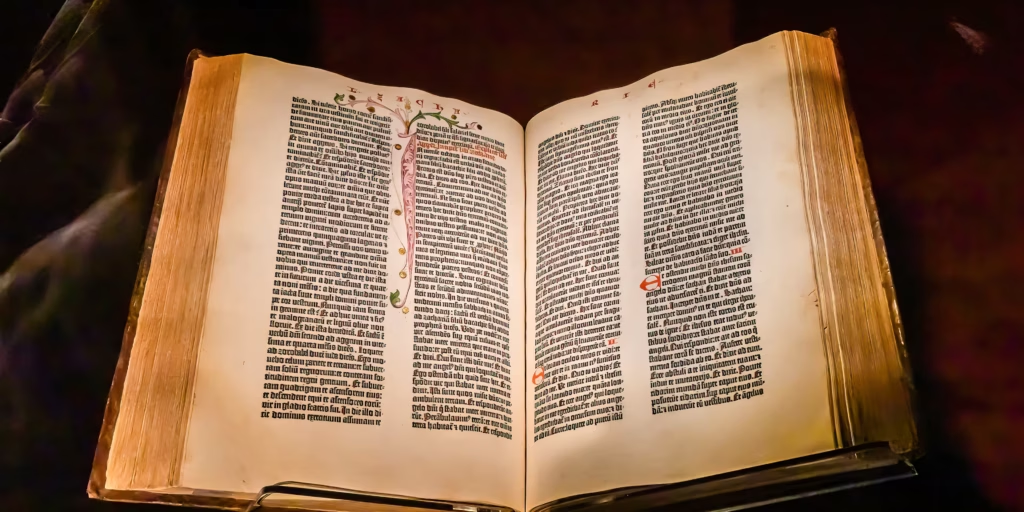
The danger of the Bible without Tradition
Cherry picking scripture quotes- especially in St Paul- is fraught with danger. For every Romans 9:4 and 11:28-29 that Weigel quotes, he ignores 2 Corinthians 3:7-14; Galatians 3:19–25; Galatians 4:21-31 and even Romans 7:4–6. We are not protestants who are limited to throwing ‘bible darts’ at each other. And we don’t decide who is right by tallying up who has the greatest number of verses in his favour. Catholic theology needs to consider all of Sacred Scripture and cannot pick and choose those quotes it prefers simply because it suits. Even if it is to pot a group as detestable as traditionalists.
Let us deal with the arguments as Weigel suggests them. But let us deal with them in the light of the Church’s tradition- not an ideologized Vatican II.
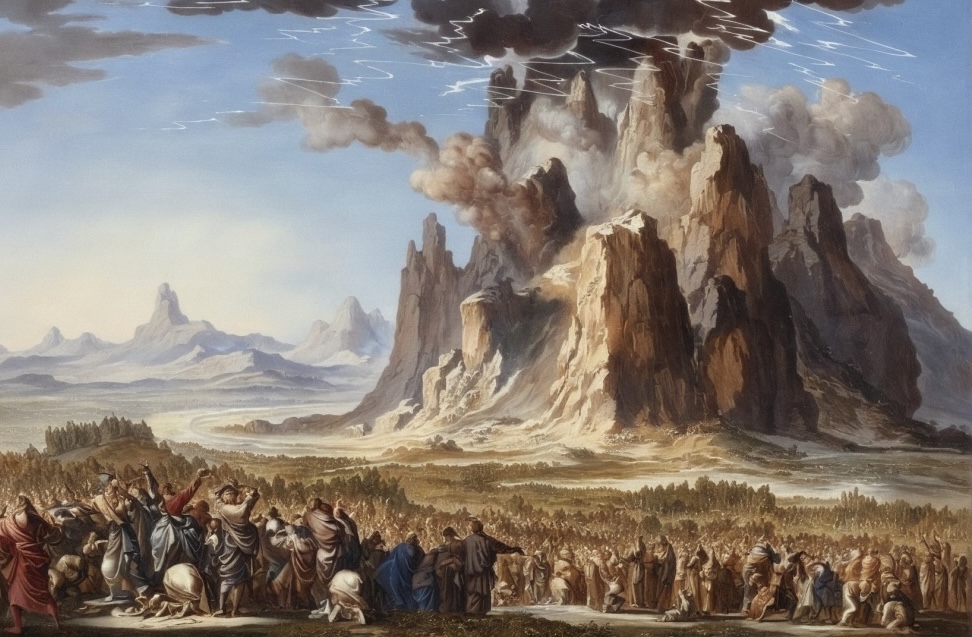
Covenant is complex
The idea of covenant in the Old Testament is complex. Not only are there different types of covenants (grant and treaty), there are also numerically distinct covenants as well. There is quite clearly a covenant formed between Adam and God in the Garden. There are also covenants with Noah, Abraham, Moses and David. Even Paul speaks of covenants in the plural (Romans 9:4). So, when we say that the Old Covenant is null and void- to which covenant do we refer? Or are we referring to all of them? The fact that Catholicism has always cherished the Old Testament as it contains the seeds of Her own founding means that null and void needs some nuance.
Just how to view the Old Covenant has been a question with which the Church has wrestled since its founding. From the very start, it would seem that the first Jewish converts to Christianity saw themselves in continuity with Ancient Israel. Even the apostles continued frequenting the synagogue (Acts 13:14-16; Acts 17:2-3:;Acts 18:4; 19:8). But the question at the heart of the question is whether the customs, rituals and observances of the old dispensation are salvific. Does Judaism continue to save? Which is a question that is distinct from whether or not the Jews can be saved. But the Church, in Her wisdom, offers clarity on both.
Scripture in the light of Tradition
Since Scripture alone is not uniform on the subject and no theologian is free to ignore any part of Scripture he does not find convenient; and neither can he accuse the Scriptures of outright contradiction. The systematic theologian must find ways of working with revelation as it has been revealed by harmonising what may even first appear as discord. In order to do this, we should turn to no less a mind than Aquinas.
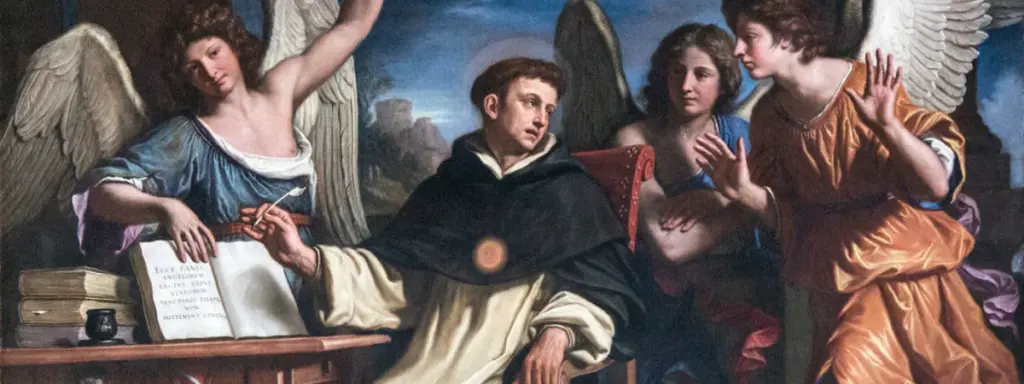
Aquinas making sense
In his writings, Aquinas differentiated between the moral, ceremonial and judicial precepts of the Old Law (ST I-II.99-105). The moral law as Aquinas taught is eternal. The covenant of Sinai included a re-presentation of the natural law that is written on the human heart. That law was reaffirmed by Christ and was binding on all Christians- indeed on all men (Matthew 5:18). However, even the concept of moral law in the Old Testament is far more complex than just “thous shalt not…” And this depth and complexity informs the Church’s understanding of the Old Covenant. Thus, Aquinas teaches that even the moral law is nuanced: that there are certain injunctions contained in the Old Covenant that were binding because of Israel’s special vocation as the chosen people (ST I-II.98.5). And these injunctions have been abrogated, modified or transformed in the light of the New.
An example of the law being modified is the moral requirement to observe the sabbath. This commandment exists on two levels. The first, is the duty that exists in nature (natural law) to honour God with some part of our time; and the second is the covenantal injunction to honour God at a specific time. Thus, the Church, as the vessel of the New Covenant was bound to keep the natural law, but had the authority to change the sabbath from the last day of the week to the first. This is the law modified.
An example of a law abrogated is the law of circumcision. Paul himself was very clear in Second Corinthians and Galatians that those Christian Jewish converts who wished to impose circumcision on the gentiles were in error, even though Paul made an exception for Timothy given his Jewish parentage (Acts 16: 1-3). This was a law that no longer bound because it no longer saved.
A last example Aquinas gives is the power of the New Covenant to transform the Old: even though the Old Law is preserved in the New, its incorporation transforms it. For example, the moral law to love God and our neighbour predates Christianity, but it still binds Christians. Aquinas makes the point that even though the two Greatest Laws are materially the same in both covenants- spiritually they differ greatly. The obligation to love God and our neighbour binds the Christian in a way that it does not bind the Jews because of the indwelling of the Holy Spirit. This is confirmed by the words of Jesus when he says that even if a man looks at a woman (coveting) he has committed adultery. Even though both the Old and the New have the same Ten Commandments, the obligation owed by Christian surpasses the commitment required in the Old Covenant. Same material commandments- very different spiritual consequences.
Thus, the SSPX, who argues that the Old Covenant is definitely null and void, can only be referring to the legal, ceremonial and cultural prescriptions of the law. Which opinion, FYI Mr Weigel, is that of Augustine (Against Faustus — Book 19 (especially chapters 11–16); On the Spirit and the Letter (chapters 24–27); Letter 8; Letter 149), and Aquinas (who follows Augustine), that the Jewish rites have no salvific efficacy- even for the Jews.
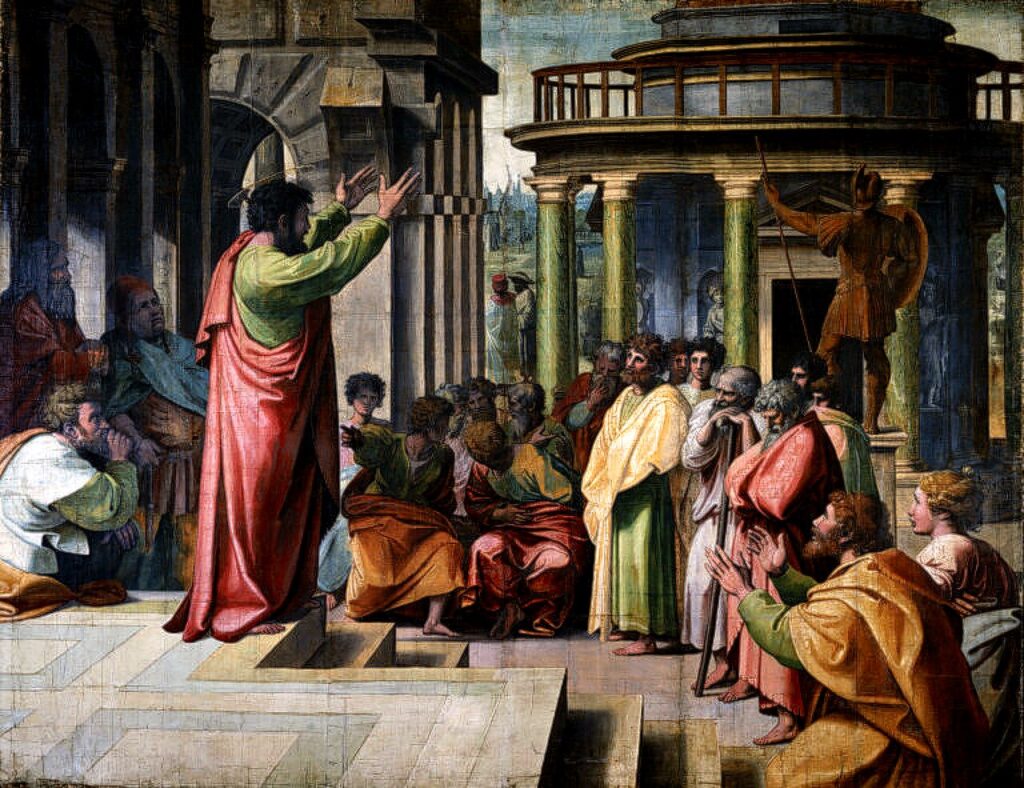
Even if a mother should forget her child
It is however clear from St Paul, that God has not turned His back on His people. Paul’s insistence that the promises of God remain valid cannot mean that Israel is already saved by adherence to the Sinai covenant. Rather, in view of His promises to them, God has a special providence over Israel. How exactly He will effect that salvation has not been revealed to us.
However, it is unthinkable that in the light of Romans that Weigel quotes, that Paul would be proposing salvation for Jews apart from Christ. Paul spent most of his apostolic life evangelising his fellow Jews. This was not out of nostalgia- but necessity. In the same moment that Paul mentions God’s abiding love for Israel, he says: That I have great heaviness and continual sorrow in my heart (Roman 9:2) because of Israel’s unbelief. Paul then goes on to say: For I could wish that I myself were accursed from Christ for my brethren, my kinsmen according to the flesh (Romans 9:3). These are not the words of a man who causally accepted the refusal of the Jews to acknowledge their Messiah as though there were another avenue for their salvation.
If there be but one way in which the Old Covenant is still ‘valid’, it is in the abiding love of God for His chosen people. But even that- as certain as it is true- is likely indistinguishable from the hope that I have as a Catholic in the New Covenant, that God will not abandon me either- even when I stray far from His grace.
Weigel may have certain reservations about how the SSPX is going about its business. As do I and many other traditionalists. He may even have disdain for what they want to achieve. Which I do not. But none of that is a license for open season on the Society thinking that no one will defend them because everyone should see things the way he does. Simply because you don’t like something is no excuse to make up false accusations. There are already enough bureaucrats ready to do that.