
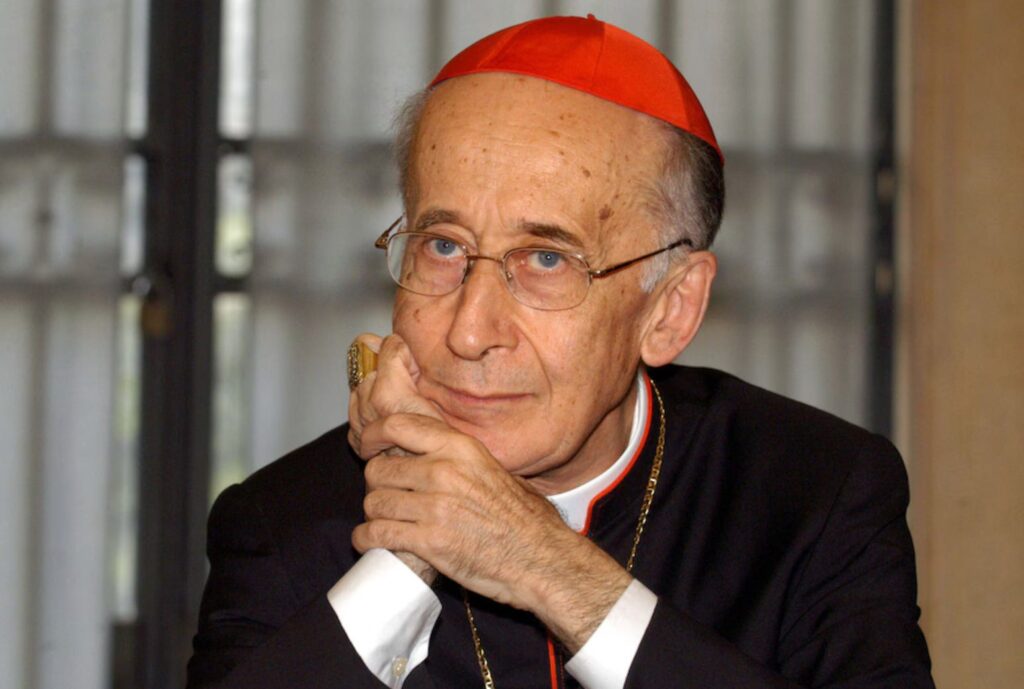

On June 16, 2026 Cardinal Ruini entered his eternal rest at the age of 95. That may not be a name familiar to many English-speaking Catholics. As English speakers, we can be a bit spoiled for news. Once we have heard what is happening in the US, UK, Australia and Canada we think we have heard all the news from ‘the world’. We are also notorious for not learning other languages well. And so, we don’t much bother with the news from Italy unless it appears in an English-speaking outlet. That is actually a problem. Much Church news we get often refers to some aspect or other of “the Vatican” which is just shorthand for something that is far more nuanced and complex that we do not fully appreciate. And it requires a little linguistic familiarity with Italian to understand it. But that is not the reason I write about the death of Cardinal Ruini. His life has something to say to traditionalists.
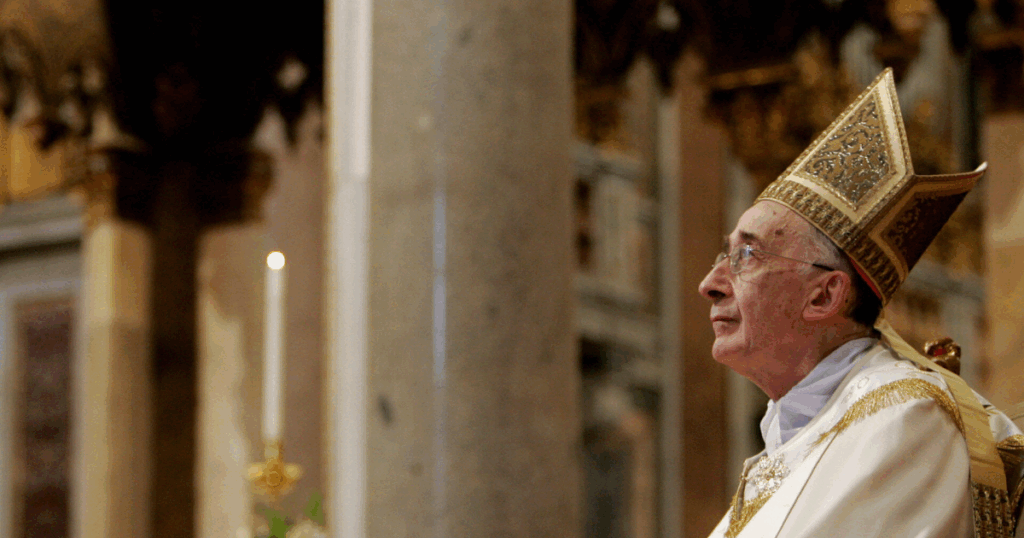
Who was Cardinal Ruini?
He was the Cardinal Vicar for the diocese of Rome from 1991 until his retirement in 2008. Rome, being the Pope’s own diocese, actually has a cardinal who effectively runs the day-to-day administration and pastoral care of the diocese. It’s an unusual arrangement for an entirely singular situation in the Church. He also ordained me to the diaconate and was part of the cohort of bishops who ordained me to the priesthood. I knew him personally and had an enormous amount of respect and personal devotion to him. But that is not why traditionalists should care.
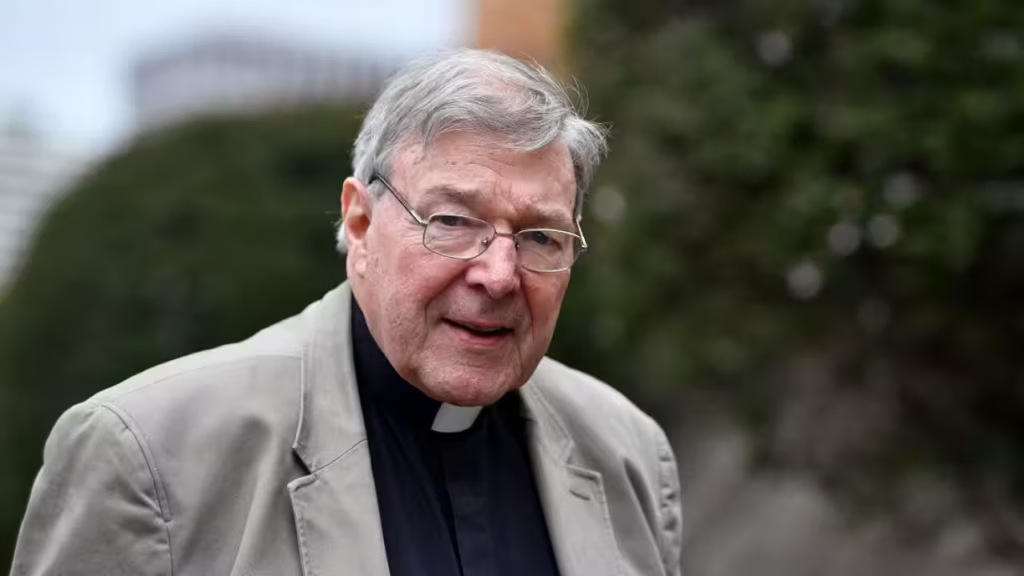
If I were to give you a summary of who he is for an English-speaking audience I would say that he is the Italian version of Cardinal Pell. Now, having said that, I could imagine both men raising an eyebrow in my direction. I know they were comrades in arms. And I know that they got along personally very well too. But they were also very different men in many ways. But they were profoundly similar in ways that matter. And those ways that matter- should matter to us.
A short story
But before we get into the meat of the question, let me tell you a light-hearted story about them both.
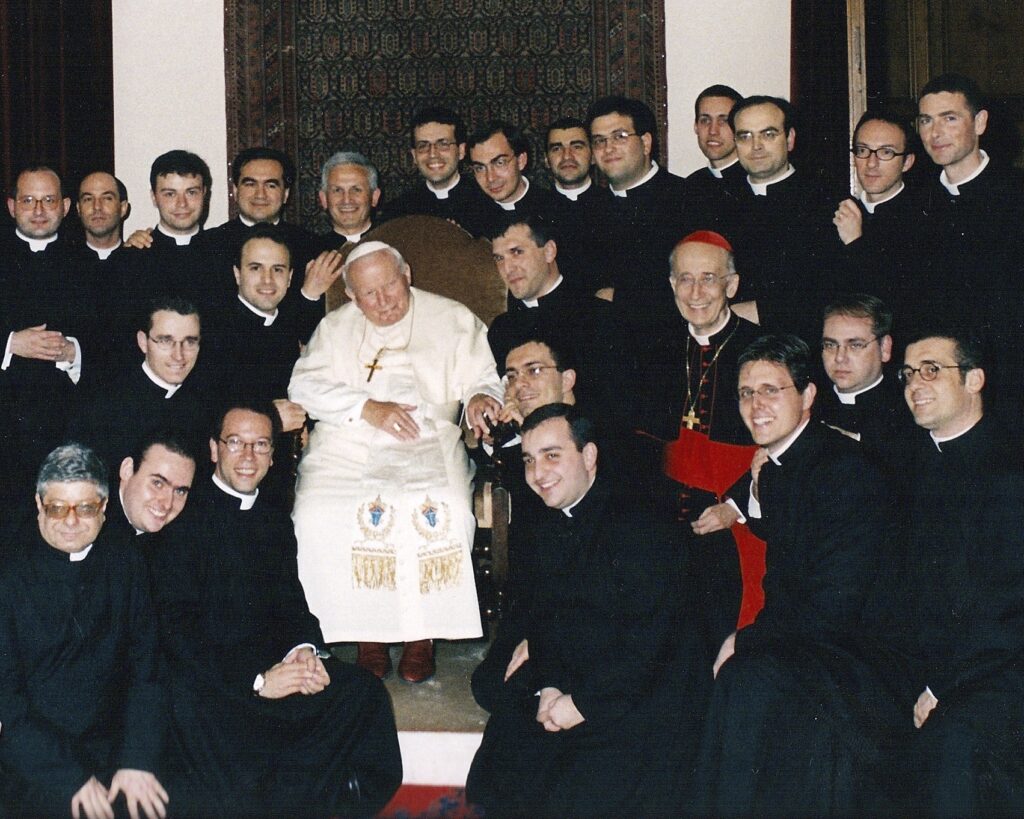
I am almost certain that I was present the first time Ruini and Pell met. During the Great Jubilee in Rome, whilst helping out as a seminarian, I was walking with Cardinal Ruini on the Via della Conciliazione when I saw then Archbishop Pell walking towards us. He had brought a large contingent of young people from Melbourne for World Youth Day. As it was an oppressively hot day in the middle of August, Pell was wearing very sensible, yet decidedly ‘non-clerical’ attire. Ruini was in full cardinal’s splendour. I remember thinking at the time- this is going to be interesting.
I asked Ruini if he wanted to meet the Archbishop of Melbourne because he was walking down the street ‘incognito’. Ruini immediately said yes and asked me where he was. By that time Pell had seen me and began walking towards us. He came over and greeted Ruini. I am afraid I do not know the content of their conversation. Because if there is one thing a seminarian knows, is that when two heavyweights in the Church meet up- you make yourself scarce. And then you try and look busy.
I am not sure if that was actually the first time they had ever met; but Pell certainly knew who Ruini was. Ruini did not think he had met Pell before, but did know of him. Once they had finished exchanging pleasantries, I rejoined Ruini and he asked me: “sono tutti alti in Australia?” (is everyone tall in Australia?). “No”, your eminence I responded- “just Catholics.” He thought that was hilarious. Ruini was about the height and size of a jockey, whilst Pell was a football player (AFL) in his youth. And so was I- but playing a very different kind of football (rugby). (The difference between the two sports is a bit like the difference between the splendour of a TLM missa cantata (rugby) and the chaos of a Jesuit youth mass (AFL). That’s just an illustration for all our international trad readers.)
Some years later, I had an opportunity to remind Pell of that meeting. He said that he remembered it well and that he felt a little under-dressed for the occasion. “You actually looked homeless” was what I said to him. Pell roared out loud with laughter at my comment. And then made me carry his bags to the car. The two of them certainly had a sense of humour.
Although both men shared a great sense of humour and a great deal of patience with upstart young clergy; what they really shared was great moral courage. And they both had the battle scars to prove it. And that is what matters most. And this is where the life of Ruini and his legacy begins to speak into the heart of traditionalism.
Ruini and traditionalism
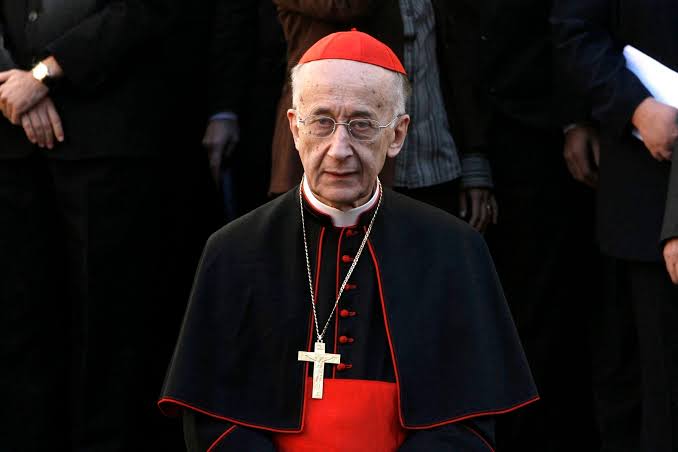
Ruini himself was not a traditionalist as we would understand the term. But he certainly was a fellow traveller. He always saw traditionalists as allies in the doctrinal and cultural wars being fought in the Church on whom he could rely for orthodoxy and common sense. But he did not see the TLM as an integral part of those wars. I will have more to say on that later.
After the publication of Summorum Pontificum, he immediately established the personal parish of SS. Trinità dei Pellegrini in Rome as the parish of the Priestly Society of St Peter. He was very warm and welcoming and effective in making it happen. If you had Ruini in your corner, you generally had an ace up your sleeve. This was despite the fact that he gave more than one interview saying that he thought the vernacular was integral to the liturgy. Aside from those interviews and comments he made that I heard directly, I can find no more in-depth exploration of the topic. Although I never spoke to him about the issue, I do know that he would have had more things to say, for his was a very acute and penetrating mind. There are two things to consider here.
The first, despite his own theological and pastoral understanding of the issues, he never let that thinking stimy good things that were happening in the Church. Ruini could put himself aside in the support of something that was good- even if he were not entirely convinced. As traditionalists, we need to embrace this intentionally. To be fair, I think we have improved in this area. It is however a reminder to be acutely aware of what actually matters, and mindful of what is truly important: let the good flourish where God wants it to grow. It will all redound to the success of our mission in the end. Yes, we do like obscure arguments about candlesnuffers- but always in good spirits and not as a means of drawing souls to our apostolate.
The second thing. I imagine Ruini’s reluctance towards the TLM had something to do with the fact there was no one around him and at his level with arguments to convince him. Ruini had a sharp theological mind and so rubrical minutiae were never going to persuade him to the cause. He is a reminder that our apostolate needs, in order to be effective, some serious intellectual heft. I can only imagine how much further our movement would be if we had someone like Ruini as an advocate. And there must be a future Ruini out there waiting for a solid argument- a fight even- that will to bring him to our cause. So… get learning… You may be the one who wins him over.
Ruini and the culture
Where I learned most from Ruini was the profound relationship between the Church- Catholicism more broadly- and culture. It took me some time to figure out the profound depth of this connection and both its supernatural and natural origins. Without doubt, it was his keen insights that set me off on a multidecade learning tour of why culture matters. Not just to the Church’s presence in the world, but to the salvation of those who belong to Her. Although not an idea I learned from him, he certainly understood that culture is part of the Church’s remedy for our sinful nature.
What I did learn from him was a very keen insight- the truth needs a place. Given our physical existence, we need things that are true to also be associated with the physical. It is not enough to know that God loves us as an ideal- we have to both express and experience that love in our bodies. Hence the sacraments. It is not enough to have the idea of salvation- God had to become flesh in order that we experience something tangible of that salvation. And this is why Ruini fought so hard to ensure that the Church was not irrelevant to the secular world. And this is the basis for his fight to have the Church as a presence in the civic culture. If the Truth needs a place- then the Church has to have a visible and tangible presence in the world.
As a staunch advocate for the Church’s role in civic society, Ruini wanted to make sure that the Church did not wander into irrelevancy. Because during his lifetime, it was marching towards precisely that. He saw with great clarity that the encroaching secularisation of the culture was not just a threat to our comfort- it was a threat to the eternity of those swept up in it.
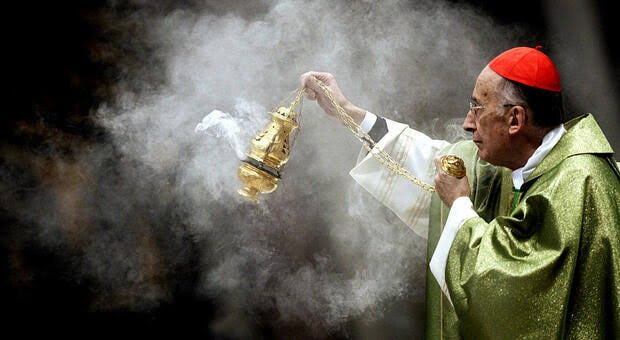
There is one story that highlights just how hard he fought for the culture. Ruini’s leadership during Italy’s 2005 referendum on assisted reproduction stands as one of the most significant victories for Catholic social engagement in modern Europe. Faced with proposals to liberalise laws governing IVF and embryonic research, Ruini engaged in a very high-profile campaign to ensure more bad laws would not be enacted.
Having learned from the Italian referendum on abortion, he engaged the bishops of Italy in a tactic to ensure that history would not repeat itself- he courageously urged Catholics and other citizens to abstain from voting. Italian referenda require a turnout of at least 50 percent to be valid: abstention became an effective means of defending the existing protections for human embryos.
Now, the courageous thing was not just the proposal, but that he stuck his head above the parapet and allowed himself to be shot at. It is hard sometimes for English speakers to appreciate just what a sensitive and touchy topic it is in Italy when the Church gets involved in things political. I won’t wade into the argument, but it really touches a nerve for so many and for so many different reasons. But whatever its origins, it takes real courage to so openly advocate for political action as a cleric in Italy. I can even remember at a clergy conferences some of the senior clergy being openly critical of him.1 It takes some courage to stand against those who oppose you, it takes real courage to stare down those who are supposed to be close to you. But this he did. And admirably.
Despite the public (and private) campaign against him, the result vindicated Ruini’s judgment. Turnout reached only about 26 percent, far below the required threshold, and the proposed reforms failed. Ruini not only had won the argument, he showed that the culture was not the property of a political ideology. The culture of Italy could be Catholic again. And many hated him for it. It taught me that for our religion to thrive, culture is not a luxury, it is a necessity. As traditionalists I think we understand this implicitly- we just have to find a way of taking our intuition and finding it a place in the material world.
Ruini and traditionalism’s future
I think Ruini’s enduring legacy will be his example and blueprint of moral courage for the clergy. He was very much in the style of Bellarmine, Cajetan and Borromeo. Italy has produced some incredibly impressive cardinals over the years. But they, like both Ruini and Pell, were all men willing to be punched in the face.2 And we don’t have too many of those men these days. We don’t necessarily have a preponderance of bad men- just comfortable ones. And that is a problem.
If the truth needs a place and the Church needs a culture- then traditionalism needs a champion. I think this is where a significant part of our prayers and sacrifices need to focused. I have said this before. Ruini’s passing is just another reminder. We just need one prelate in a significant see to give our cause an institutional presence and to make our case from a pulpit with some conviction. Despite the damage and turmoil of Traditionis Custodes, it has placed the question of the TLM and traditionalism more broadly, at the centre of the Church. We are on the Church’s radar- for both good and for ill. Yes, we are no longer invisible; and yes, they can use that visibility to shoot at us. But you never take more flack than when you are over your target. Despite the difficulties, and there are many, I do believe that our mission is not just to hang on for dear life on the fringes; but to march right into the heart of the Church and re-establish the entirety of Her Tradition. However, all this takes much moral courage and some intellectual rigour. Two things for which we have been screening seminarians for the last several decades. It is going to take a miracle.
I know many of us are fighting just to make sure there’s Mass next Sunday. I also know many trads are trying to raise a tribe of children. And so, our priorities are the priorities of ordinary Catholic life. And they are good. But we don’t want the immediate to oppress the urgent. Offer some of your sacrifices and sleepless nights for that intention. It may look like a miracle to you and me. To God Almighty, it’s hardly a challenge.
I can only imagine what our movement would look like with a Ruini leading the charge. I, just like everyone else, have no idea what the future holds. I can only hope in what the Lord may provide. I pray He raises up another one like him for us.
REQUIEM aeternam dona ei, Domine, et lux perpetua luceat ei. Requiescat in pace. Amen.
- If any priests (or laity) are reading this and are thinking of clergy conferences they have experienced; with a handful of old cranks sprouting a few lines from the 60’s. This is not one of those conferences. A Roman clergy conference can over 1000 priests in attendance, many of whom have jobs in the curia or the pontifical universities. They may not be on our side, but they are not men you can just ignore. Some of the arguments were quite heated- Ruini never flinched. ↩︎
- There is a story of Borromeo being actually shot at by some Italian monks (I guess someone overcooked the pasta that day). Borromeo made many enemies because he tried to reform corrupt religious orders and enforce stricter discipline among clergy. In 1569, members of the religious order known as the Humiliati plotted to kill him. While he was praying in his private chapel in Milan, a lay brother named Girolamo Donato fired an arquebus at him. The bullet struck Borromeo, but he survived with only a minor injury, which many contemporaries regarded as miraculous. The attack led to the suppression of the Humiliati order by the pope. ↩︎