

Having examined the first three articles of the Oath Against Modernism, namely those which concern the existence of God, His intervention in our history by means of His revelation that we are able to know with certitude, and the establishment of the Church under St Peter and his successors, we come now to the fourth point, which concerns Tradition.
The Oath continues: ‘I declare that I am completely opposed to the error of the modernists who hold that there is nothing divine in sacred tradition; or what is far worse, say that there is, but in a pantheistic sense, with the result that there would remain nothing but this plain simple fact–one to be put on a par with the ordinary facts of history–the fact, namely, that a group of men by their own labour, skill, and talent have continued through subsequent ages a school begun by Christ and his apostles’.
Any astute student of Church history knows how central the concept of Tradition is to the Catholic faith. Its existence and importance are contested by no one, not even her enemies. The difficulty resides in having a proper understanding of what Tradition is and what purpose it serves.
Sola Scriptura or Sola Traditio?
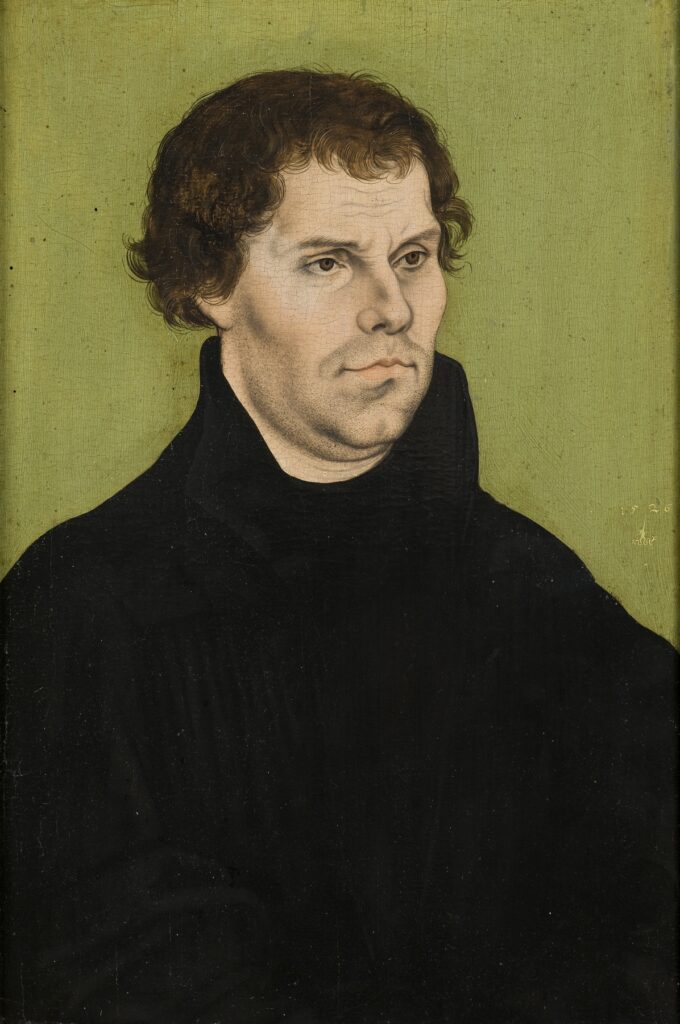
The sixteenth-century Protestant Reformers rejected Tradition as one of the sources of God’s revelation. The battle cry of Sola Scriptura (along with Sola Fide) had a clear and obvious meaning: as Christians, our only guide is the written word of God as contained in the Bible. The great minds of the Catholic Counter-Reformation had a rather easy task before them in refuting this theory, since it contained at least two aporias its authors seemed to be oblivious of.
The first is: how are we to know which books of the Bible are inspired? Who tells us so? It can’t be the Bible, for that would be using the Bible to prove the Bible, which is circular reasoning of no value. The Catholics replied, as St Augustine had already done a millennium earlier, that we would not believe the Bible is God’s word if the Catholic Church did not tell us so. In other words, there has to be an authority instituted by God to teach with God’s own power, which books exactly are the revealed Scripture and therefore part of the Bible.
The second glaring problem with Sola Scriptura is that Scripture itself teaches that there is more than the written word. St Paul wrote emphatically to the Thessalonians: ‘Brethren, stand fast; and hold the traditions which you have learned, whether by word, or by our epistle’ (2 Th 2:15). The distinction made by the apostle is unambiguous and allows for no other solution than that there are unwritten objects and practices of our faith that have been handed down and that must be kept. Therefore, they are just as much from God as the written word itself; they are part of God’s revelation.
Given this reality, namely that Holy Scripture came into existence only years after Our Lord had ascended into Heaven, and that its content is based on what the apostles handed down to the very first generation of Christians, one can actually speak of Sola Traditio rather than Sola Scriptura. The Church can live without Scripture – as she did during the decades before the composition of the New Testament –, but she cannot live without what was handed down, the Tradition. Scripture is only part of what continues to be handed down from generation to generation. Furthermore, if Scripture exists at all, it is because it is part of the broader content of what was bequeathed to the Church by Christ and the apostles.
It might be asked: what kind of unwritten Traditions was the apostle referring to when writing to the Thessalonians? St Basil (330-379) gives a non-exhaustive list: making the sign of the cross, turning towards the East to pray, the prayers that accompany the consecration of the Mass, the blessing of baptismal water and that of holy Chrism, the triple plunging or infusing of water at Baptism, the renunciation of Satan and his angels…1 ‘On what written authority do we do this?’ he writes. ‘Is not our authority silent and mystical tradition? … Does not this come from that unpublished and secret teaching which our fathers guarded in a silence out of the reach of curious meddling and inquisitive investigation? Well had they learned the lesson that the awful dignity of the mysteries is best preserved by silence. What the uninitiated are not even allowed to look at was hardly likely to be publicly paraded about in written documents’2. Most tellingly, St Basil gives us here one of the main reasons for which certain things, though essential to the faith, were not consigned to the written text: they needed to be preserved from the curious meddling of enemies of the Christian faith who would use them to distort it and to cause trouble.
Which Boat Are You In?
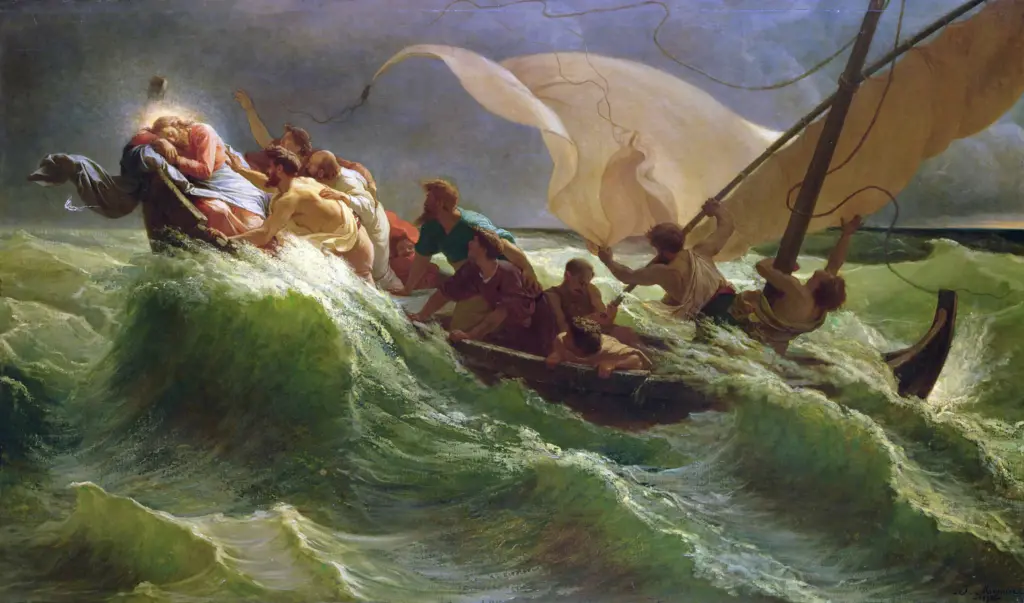
The arguments of the Counter-Reformation theologians were most effective in establishing that the Catholic Church is perfectly correct to cleave to many practices and beliefs that are not explicitly contained in the Bible. But by the 19th century, another problem had arisen. Within the Church herself, it was not that Tradition was being rejected, but that Tradition was being redefined in such a way that it was no longer the guarantee of fidelity with the past, that is to say, with what had been handed down (tradere means to hand down), but became instead a vague continuation of a group of believers that might very well unfold into something quite different from what it was originally. For this new brand of Christian, what was important was to stay in the boat, even though the boat might be heading in an entirely new direction – and as often turns out, is actually a different boat. For the novel theory, what was vital was not the content of Tradition, but rather being in some way the heirs of that primitive Tradition, even if we understand it in an entirely new way.
This is where the concept of the ‘Living Tradition’ came into play. The expression has a Catholic sense, and it means quite simply that all those things that were handed down, either by word of mouth or in the Scriptures, are living parts of the Revelation that will never die. But many came to oppose this ‘living tradition’ to a so-called ‘static or dead tradition’, a handing down of particular actions (such as making the sign of the cross) which of themselves would be dead but only have life because Christians of a certain period find them useful. True to the Modernist style, this has shifted the point of focus from God’s Revelation to the believer himself and has thus created a great deal of confusion in modern Catholicism, with some Catholics having little concern at all for any number of traditional observances.
This corruption of the concept of Tradition had several causes, among which evolutionary theory was one. If one species can evolve from another – as Darwin postulated without proving it and as is still the case today almost two centuries later – then the promoters of the new concept of Tradition saw no problem with the theory that one can be quite ‘traditional’ even if the content of our faith is radically different from that of the first generation of Christians, or if one explicitly approves things which Christians have always rejected (such as sodomy or divorce and remarriage). What matters for them is not the content of the faith, but the continuity of the subject.
The idea is also inspired by the modern concept of a people, and it actually finds an adequate model in, for example, the case of Great Britain. This country has maintained the royalty and its prestige, but has deprived it of almost all its power. No one would object that the British people are the descendants of those for whom the monarch ruled by divine right and held all the power in the kingdom. While there is a fundamental difference in the way authority is understood, modern Brits are still Brits. So, think a number of Modernists, modern Catholics are still ‘Catholic’ even if they reject the Pope’s authority or deny any of the Church’s dogmas or usages, because life goes on, everything evolves, and we are still part of the movement that began in the first century of our era. Our grandparents believed in the Real Presence of Christ in the Eucharist; for us, it might be only a symbol of His love for us. But it doesn’t matter, because ‘we are Church’…. This frame of mind has deeply affected many of today’s Catholics, and it leads of itself to oppose modern Catholicism to traditional Catholicism, whereas Catholicism by its very nature is traditional: it cannot exist without what has been handed down, both in Holy Scripture and by word of mouth from generation to generation.
Small or Large, All the Same
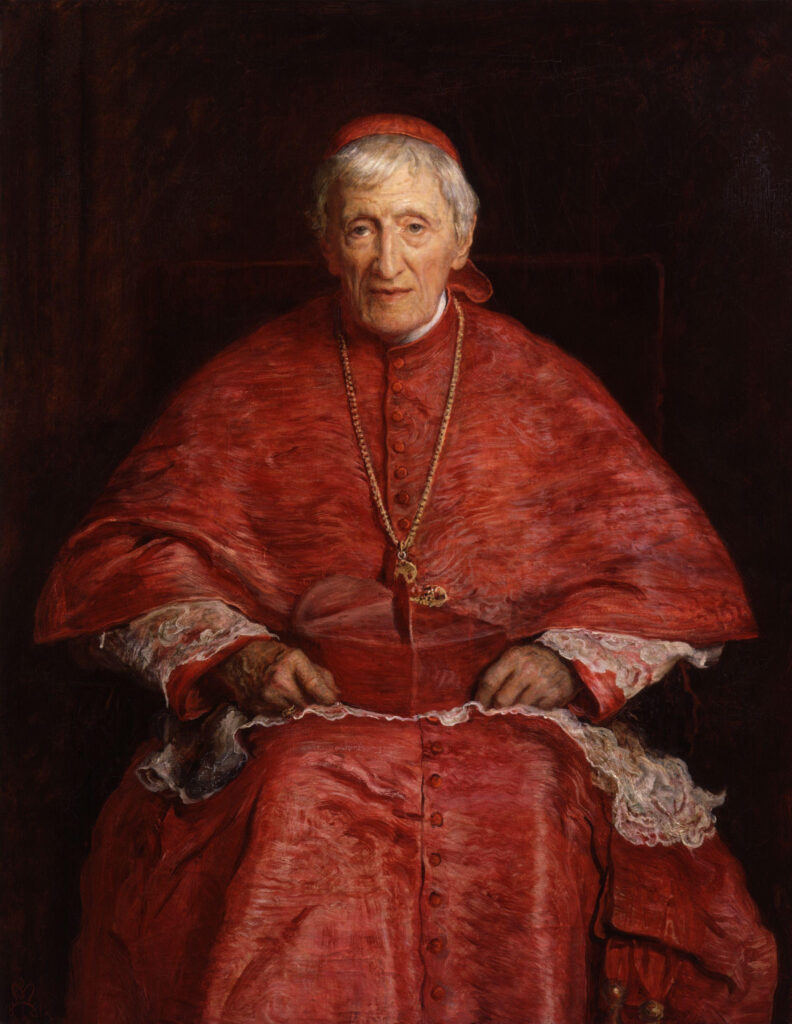
It was essentially this distorted view of Tradition and doctrinal development that St Pius X was reacting against in the Oath. He was not the only one. Indeed, it had been one of the life labours of the recently deceased and future saint and doctor of the Church, John Henry Newman, who had admirably argued his way into the Catholic Church, while in the process developing one of the most qualified achievements in explaining Tradition: that the reality of the Church is such that it grows and develops while remaining the same. Newman himself had been deeply inspired by St Vincent of Lérins, whose Commonitorium remains, to this day, the most fundamental text in understanding the concept of Tradition. ‘Small are a baby’s limbs, a youth’s are larger, yet they are the same’, he wrote.3
The whole point that both Vincent and Newman were making, and which has come to be Catholic doctrine, is that the Church develops throughout history, ever deepening her knowledge of Divine Revelation, but always remaining the same and never contradicting anything that went before. This allows the Church to deepen her understanding of what has been handed down, without in any way changing or abandoning what is essential to the deposit of faith and the practices bequeathed to us by the apostles.
The ultimate meaning of the Commonitorium is this: Christ handed down to the apostles a body of beliefs and practices that they in turn handed down to their successors and so on until our day. What we believe is what they believed, even if we may have a more intricate understanding of parts of it. This being said, one must be cautious when speaking of the apostles themselves, since being the direct recipients of the revelation of Our Lord Jesus Christ, their understanding of the faith and its implications was certainly deeper and more vast than anyone’s who has come since, even if all the points that we would be aware of were not explicitly taught at the time (such as the primacy of Peter’s successors or the doctrine of the Immaculate Conception of the Blessed Virgin).
To take an example, it is easy to demonstrate that the first generations of Christians believed that the consecrated Bread is truly the Flesh of Jesus Christ, but as the centuries went by, the devotion of the faithful led to more and more elaborate forms of veneration for such an august mystery. Such, in a nutshell, is what is meant by the development of doctrine and practice in the Church. If you had asked a second-century Christian if he believed in transubstantiation, he would not have known what you were talking about, since the word did not yet exist to explain the transformation of the bread into the Body of Christ. But if you had explained to him what it means, he would have agreed wholeheartedly. A medieval or Renaissance Catholic might have had different ways of honouring the living presence of Christ in the Eucharistic mystery than their second-century ancestor, but they both believed the same mystery, for they shared the same faith that was handed down from the very beginning by the apostles and firmly declared by the teaching authority of the Church. This is what it means to be part of the Living Tradition.
The Challenge Before Us
At the end of this all too brief summary of what Tradition means for the Church, let us conclude by saying that today we face a double challenge. Ad extra, vis-à-vis our Protestant brethren, we must hold firm and continue to teach that Scripture is only part of the Apostolic Tradition, which includes many other things handed down orally by the Apostles themselves. Ad intra, to ward off the confusion that followed the Second Vatican Council, we must seek to enlighten those Catholics who have a muddled idea of what the Living Tradition means. It is incumbent upon us to help them understand that our Tradition can only be living if it keeps alive the all the features of what Christ Himself taught the apostles: ‘Teach them to observe all things whatsoever I have commanded you’ (Mt 28:20). What was handed down is as important for us as it was for them, nor may it be set aside under any pretext whatsoever. If we fail to do this, we are doomed to die like the branch that has been cut off from the trunk. Those dead branches will be collected and thrown into the fire, and they will burn (cf. Jn 15:6). But the tree will live on and ever produce new branches to replace those that have fallen.
- To St Basil’s list, we might add the following: the fact that infants should be baptised, or that it is not necessary to give the Holy Eucharist to infants in danger of death, or that the baptisms performed by heretics are valid, or that there are only seven sacraments of the New Law… None of these are contained in Sacred Scripture, but have been consistently held in the Church from the beginning. ↩︎
- St Basil the Great, On the Holy Spirit, 27:66, in The Nicene and Post-Nicene Fathers, Vol. VIII (The Christian Literature Company, 1895), pp. 41-42. Emphasis added. ↩︎
- St Vincent of Lerins, Commonitorium, 23, 4. ↩︎