

Introduction
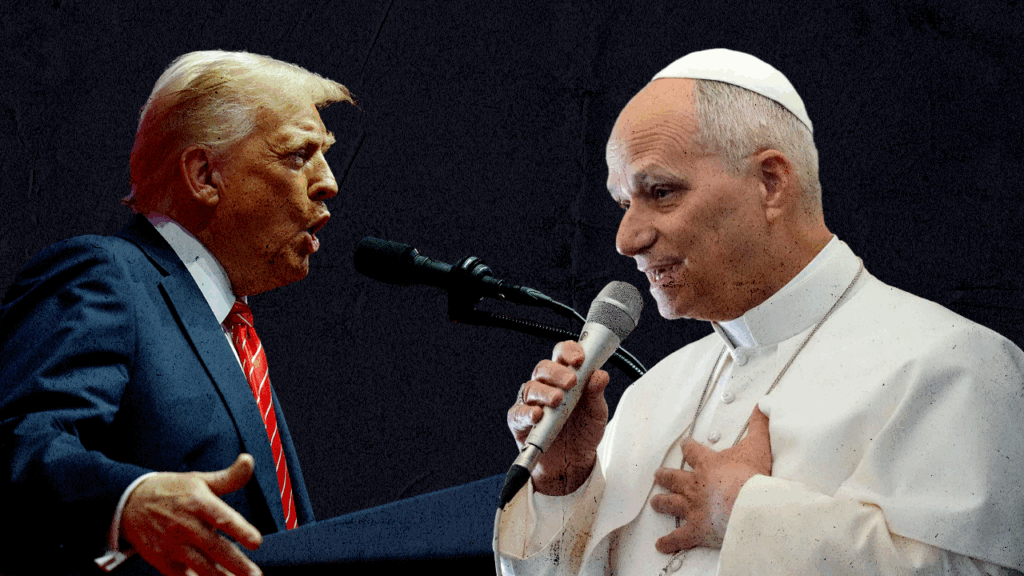
The current conflict between Pope and President should be characterised as a clash of traditions. Or, to be more precise, a lack of Tradition.
Much commentary on the issues between President Trump and Pope Leo, focuses on the US Government wanting war versus the Catholic Church fighting (ironically) for peace. Not entirely untrue, but largely unhelpful. The temptation in any conflict is to make it tractable by making it simple. Some conflicts are not amenable to such reductions. This is one such conflict. At its heart is a theology absent of tradition and a politics bereft of theology. Although this topic is in the headlines, it is one that traditionalists care about and about which they want some guidance. What I offer in this essay is food for thought. I am not an expert in the Church’s teaching on just war theory, but I do appreciate that there is great freedom of opinion and that people of good will can disagree about certain aspects of this situation and still be well within the grace of God. That notwithstanding, traditionalists have been warning that a conflict of this kind was inevitable.
Lose the tradition and lose your way
Much work of the traditionalist movement has focused on the liturgy. And rightly so. For all the reasons that we know so well: once the principles that underpin the true worship of God are undermined, thus the institution dedicated to offering that true worship loses its way. As you worship, thus you prosper. Or perish, as the case may be.
That prediction has been playing out before us for the last several decades. And a certain aspect of it is being played out in the conflict between Pope and President. Let me explain.
Anchor of the world
The world needs the Church to be an anchor. Certainly, that can make the Church look like a wet blanket. For example, when everyone is getting “hyped-up” about the latest discovery that is going to revolutionise our lives- the Church is warning- human nature doesn’t change. Every time we do something great- it is still we who are doing it. We who are prone to vice, tempted by sin and easily led astray. And we can do this all on our own without the slightest bit of input from anyone. The world celebrates and the Church wags her finger. This is not a role that makes the Church popular. But one that does make Her essential.
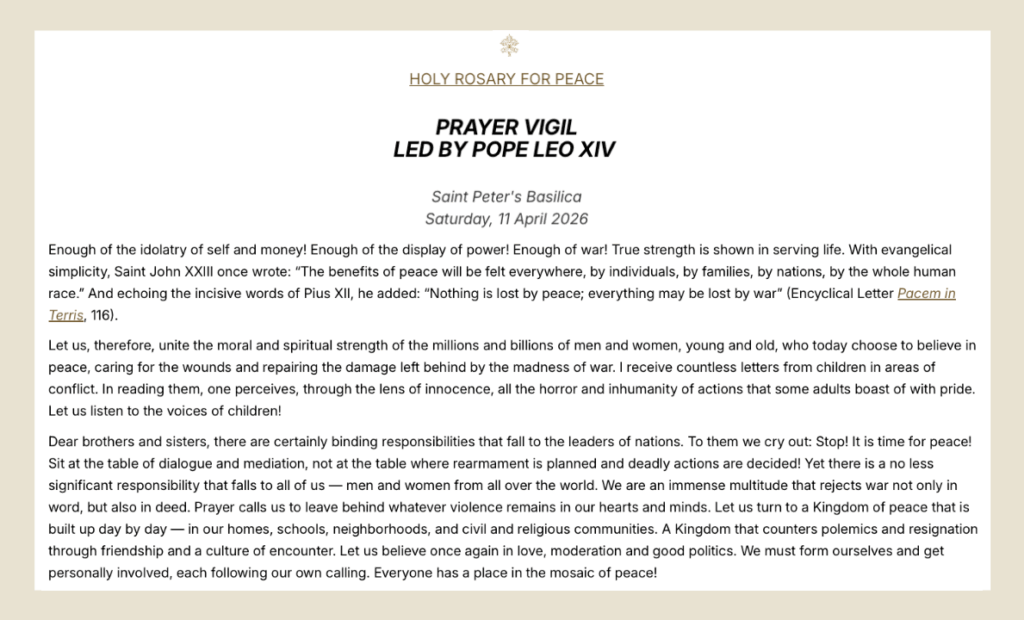
In the current situation, we need the Church to be a voice for peace. When emotions run high- as they are right now- the world needs the Church to be a counterweight. The world needs the Church to remain aloof from emotional chaos and grounded in the truth. But the Church grounds the world in reality by making sound arguments and giving solid reasons for why an immediate need for violence must not overshadow the eternal principles of justice. Emotional appeals for an outcome that is simply not possible in the circumstances is no way of moving the world towards resolution. Being a voice for peace does not mean simply reiterating the need for it. Playing John Lennon’s “Imagine” on repeat is not an answer to anything.
No one doubts, not even President Trump I imagine, Pope Leo’s sincerity in wanting peace. Even in the latest exchange, despite the vitriol, the President did not claim that Leo was insincere. However, men of good faith can disagree whether the pope’s appeals are adequate or will achieve the peace for which he sincerely yearns. That is a human judgement about a human formulation. Where I share some of these reservations is that papal addresses require more sound arguments about why there should be peace with recognition of why there is conflict in the first place. The Iranian regime is a bad actor. And the first country it terrorises is its own. And this regime cannot be allowed to have nuclear weapons in an area of the world that supplies so much of our energy. Diplomacy, sanctions and threats have not worked. And these measures and their pursuit are within the judgement of legitimate governments. These facts need to be recognised. And when they are, the road to reconciliation becomes more certain.
The just war tradition
A part of the Augustinian-Thomistic tradition of just war teaches that legitimate governments must make the call about whether armed conflicts are necessary according to certain principles. One of those principles is that a war can only be just if the resolution it brings, is just as well. Win the war but lose the peace is not a resolution- it is an adjournment. The difference in outcomes between World War I and World War II highlights this point perfectly.
Certain elements that make a war just cannot be known completely in advanced- so they have to be argued over in the meantime. And we are free to argue about what constitutes a just war in the present circumstances and what are the most moral means to prosecute it. But the argument can only be legitimate if principles are applied and sound arguments are made. And this is where the Church needs to find her moral voice in order to articulate what those principles are and how those arguments should be made. In order to do that, we must rely on the tradition that established those principles in the first place. When we abandon tradition- we abandon the first principles of the position we need to take. And then we can no longer speak with clarity or make sound arguments that influence the situation for the better. This applies as much to worship as it does to war.
Pope v President
Which brings into light the situation in the US. Nothing brings more failure than success. Not the most obviously intuitable idea I know. But hubris is a bedfellow to achievement. The US, like us all, needs someone to ensure that its successes are not undermined by arrogance. We have little sympathy for a sore loser. But we abhor a sore winner. And the US needs its allies to remind it when it is losing sight not just of its purpose; but of its moral centre. Abusing the pope on social media, even if you disagree with him, is a fairly clear sign you have lost that centre.
I think the present administration in the issue with the pope has lost its way partly because of what is at its centre. The present spiritual advisor to the President, Paula White, appears to be a televangelist with a thin grasp of Christian theology, but with a tight grip on her media savvy. This is not merely a lack of theology and an absence of tradition – it is a political program under the guise of a syntenic religion. We don’t need a religion in lock step with political power. We need a religion to tell us when we have gone wrong particularly in the moments when we are least aware that we are wrong.
Catholics in office
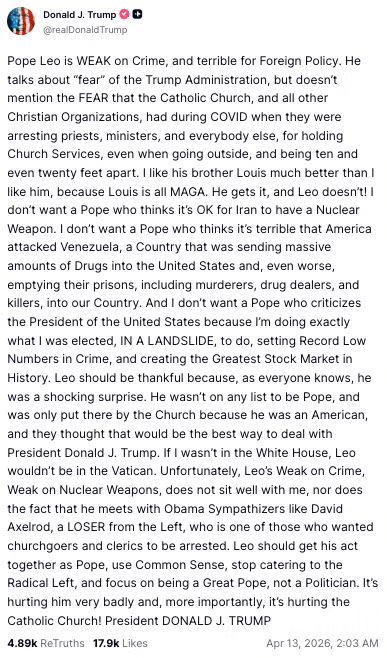
Since Catholics feature prominently in the Administration- Rubio and Vance- it is easy for us to think that they must have sway over the political culture of the administration. Recent events would suggest otherwise. President Trump did two things that angered Christians recently. He posted an attack against the pope on Truth Social- which angered Catholics; and he then posted an image of himself as the figure of the Lord, which angered both Catholics and evangelicals. After much outrage, only one of those two posts has been taken down.

Papacy as vocation
It is easy to be critical of the pope in situations like these. Especially when you sit on the sidelines and are not in the middle of the tension. But we do require a Catholicism that is robust and forthright, not one that drowns in soppy sentimentalism. Peace is the goal. But sometimes peace has to be preserved by violent means. But violent means that are just. We need the pope to speak effectively into the heart of the world and to define its moral centre. I do not think that we are there yet.
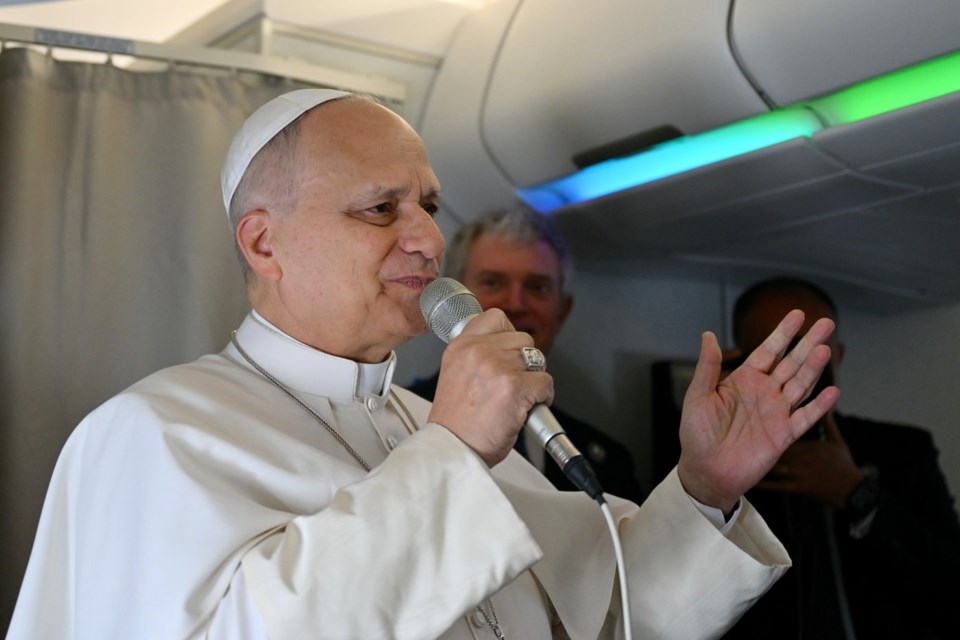
However, it is important to remember two things. The first, that the papacy too is a vocation. And Pope Leo is only at the start. Even though the pope is guaranteed the assistance of the Holy Ghost, it does not mean he gets that gift all at once. The pope too has to grow in grace and sanctity in his new office. That is not an excuse but a measure of its success. The second, the only way to respond to the promptings of the Spirit is to do so within the Tradition and the traditions of the Church. The world has faced these kinds of crises before, and the Church has found a way of making her voice heard. But she only does so when she draws upon the treasures of received wisdom. Abandon that wisdom and lose your way.
Conclusion
This essay was not a reflection on just war theory. There are thinkers much more well versed in this topic than I. It is rather a repetition of an idea that we all know very well: all Catholic principles are rooted in tradition. Tradition is not merely old things from our past we like. Tradition is a moral response to truth that guides us in each moment. When tradition is neglected, principles are replaced by whim and preference. We all prefer peace. But peace is not the mere absence of conflict or the papering over of irreconcilable differences. Sometimes, given our fallen human nature and our resistance to redemption, violence becomes necessary. But violence is only acceptable when it is regulated by the truth and pursued in charity. And this requires a church and her churchmen grounded in her tradition, so that the world may be anchored to its Redeemer.