

Having examined the first two articles of the Oath Against Modernism, namely those which concern the existence of God and His intervention in our history by means of His revelation that we are able to know with certitude, we come now to the third point, which concerns Christ and the Church.
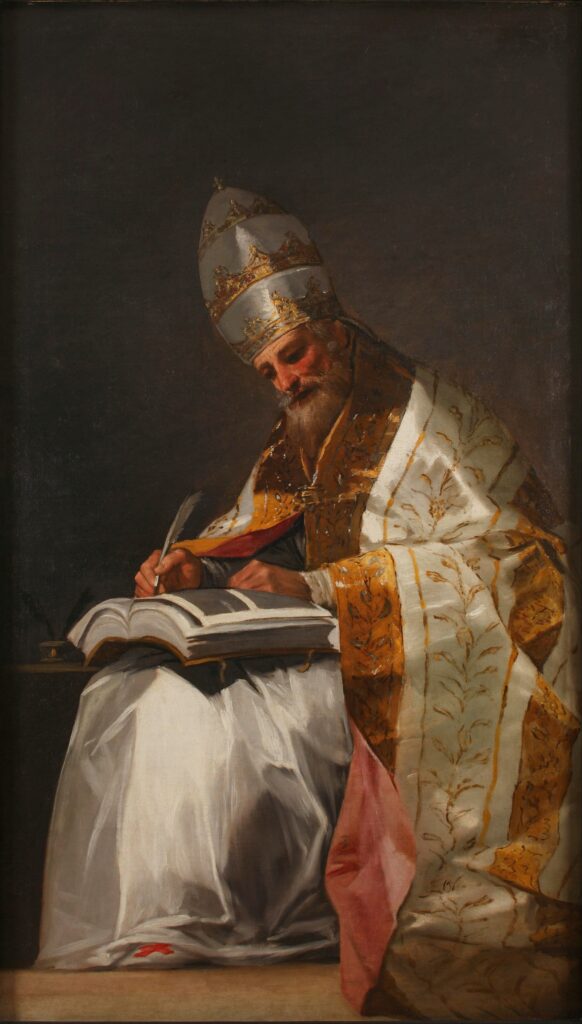
‘Thirdly, I believe with equally firm faith that the Church, the guardian and teacher of the revealed word, was personally instituted by the real and historical Christ when he lived among us, and that the Church was built upon Peter, the prince of the apostolic hierarchy, and his successors for the duration of time’.
Already St Augustine had shown there is no real distinction between Christ and His Church – Christ is the Head, we are the members, and so we form one single Body of Christ. The Oath follows this teaching by stating, in the same paragraph, that Christ truly walked among us and that He founded a Church. The text also insists upon the ‘real and historical Christ’. Indeed, one of the Modernists’ favourite themes is that the Jesus who walked this earth was no more than a gifted human being, but that after His death, His disciples began to think of Him as God. This is where we get the distinction between the ‘Christ of faith’ and the ‘Christ of history’.
The most fundamental problem with this is that the ‘Christ of faith’ is no Christ at all; He does not exist except as a figment of the imagination of Christians. Consequently, whatever the ‘Christ of history’ might have said or done doesn’t really make much difference to us, because He was just an extraordinary man. The teaching of the Church, on the other hand, is that whatever the Gospels tell us of Jesus actually happened. Whatever the Gospels tell us that Jesus said, He actually did say. Otherwise, the entire theology of the New Testament disappears for the simple reason that a man, however gifted, could not have reconciled humanity to God, which is the fundamental point of what is related to us in the Gospels.
A number of years ago, the typical Modernist mentality was expressed in a comment by an Orthodox theologian taking part in a series of dialogues with Catholic theologians. The topic was the primacy of Peter in the New Testament. When one of the Catholics pointed to Matthew 16 as indicative of a special role granted to Peter, the Orthodox mockingly said: ‘It is not possible that Jesus actually said those words’. It was a convenient way of getting around a clearly manifested truth. Unfortunately for the Modernists, it is not possible to reconcile belief in two Christs with the best scholarship. There was a time when it was fashionable to make the distinction between the ‘two Christs’, but nowadays the typical Modernist would tend to avoid it with: ‘Oh, he might have said that, but that’s not what He meant’.
So What Did He Mean?
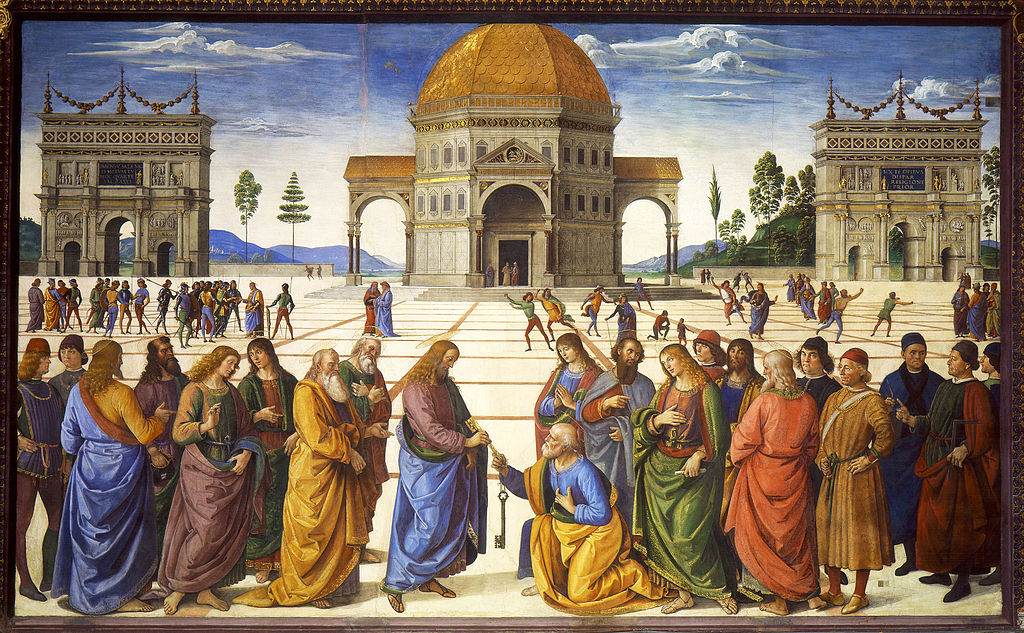
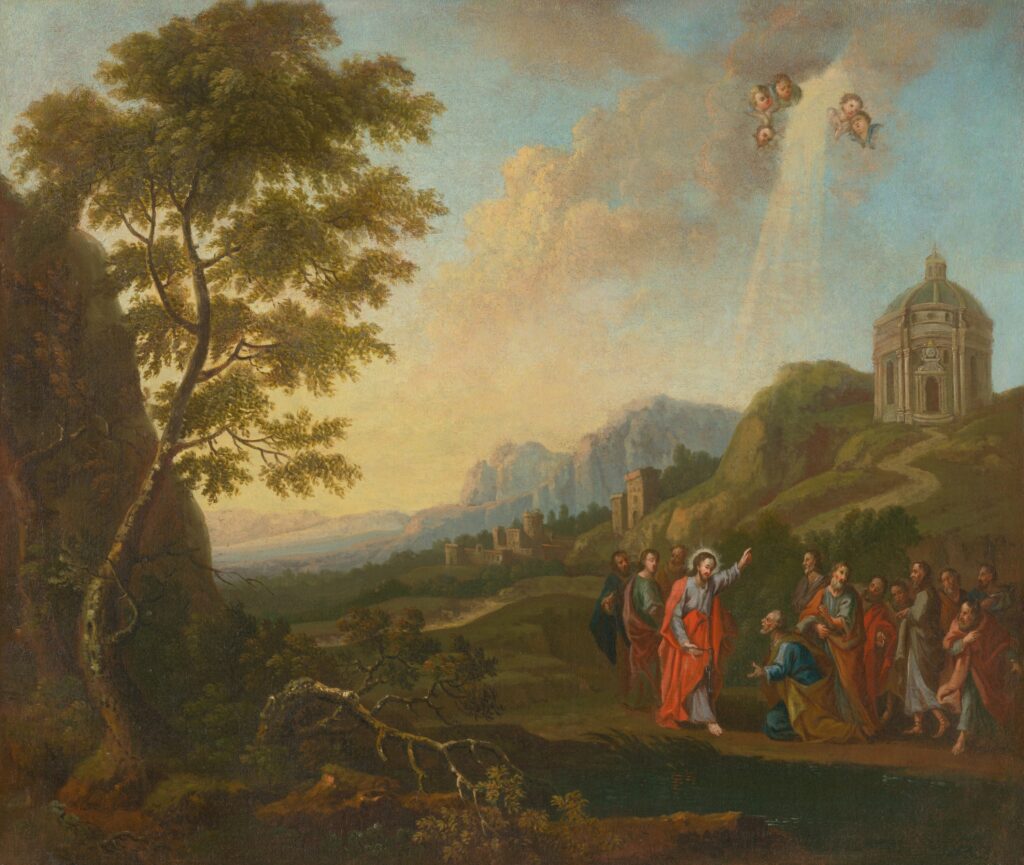
St Matthew describes the scene: ‘Jesus came into the quarters of Caesarea Philippi: and he asked his disciples, saying: Whom do men say that the Son of man is? But they said: Some John the Baptist, and other some Elias, and others Jeremias, or one of the prophets. Jesus saith to them: But whom do you say that I am? Simon Peter answered and said: Thou art Christ, the Son of the living God. And Jesus answering, said to him: Blessed art thou, Simon Bar-Jona: because flesh and blood hath not revealed it to thee, but my Father who is in heaven. And I say to thee: That thou art Peter; and upon this rock I will build my church, and the gates of hell shall not prevail against it. And I will give to thee the keys of the kingdom of heaven. And whatsoever thou shalt bind upon earth, it shall be bound also in heaven: and whatsoever thou shalt loose upon earth, it shall be loosed also in heaven’ (Mt 16:13:19).
The actual words of the Gospel are not difficult to understand. As Chesterton once said, the difficult verses of the Bible are not the ones that are hard to understand, but the ones that are easy to understand: they are so clear that they challenge us by their clarity. A number of points are here manifest: 1) Christ declares Simon to be blessed because the Father has revealed something to him; 2) He changes Simon’s name to Peter, the Rock; 3) He declares that He will build His Church on this Rock; 4) He prophesies that the gates of Hell will not overcome the Church He is founding on this Rock; 5) He gives Peter the keys to the kingdom of heaven; 6) He gives Peter the power to bind and loose things on earth, and by the very fact, those things shall be bound and loosed in heaven.
So, the real question is this: what does it mean to say that the Church is built on the Rock of Peter? What role is played by a foundation stone? The answers to this question are at the very heart of what it means to be a true Christian, and that is why St Pius X thought it an essential part of the Oath.
Extremes Touch Each Other
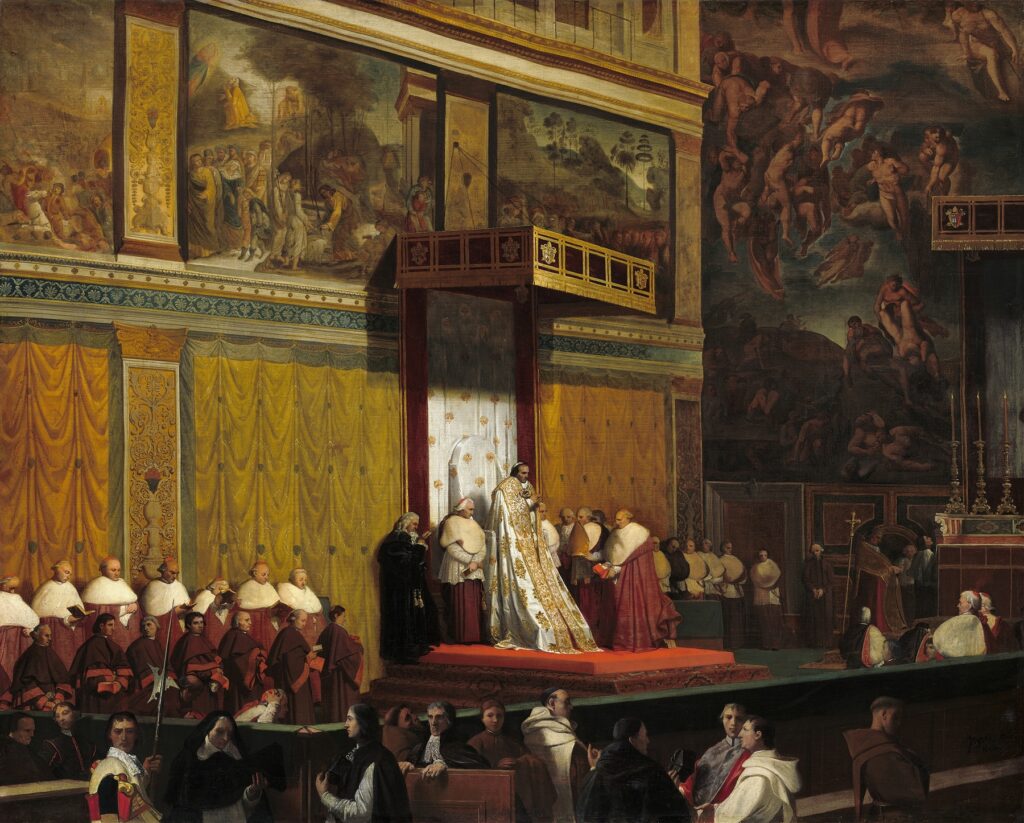
Let’s begin by excluding the two most common erroneous ways of understanding these words. One is to take them as referring to Peter’s personal profession of faith as a model of the faith of all believers. In this case, the words simply mean that since Peter confessed Christ’s divinity, Our Lord’s praise of his profession of faith is destined to be a paradigm for every act of true faith. In other words, anyone who believes in Christ, the Son of God, is professing the true faith like Peter and is therefore building their faith on the same Rock. Most Protestants would hold such a view to various degrees and, by the very fact, exclude any personal privilege being granted to Peter other than having been the first to profess the faith publicly.
The opposite error would concern many Catholics. It would make Peter the Rock on which the faith is built, in such a way that Our Lord preserved him and his successors to such a degree that the Pope can never say or do anything that would be in substantial contradiction with the faith. From this perspective, anything the Pope says or does is from God and is guaranteed by Him as being good and true. Those who hold this view to the letter are rare, but those who hold it to various degrees today are legion, and they are found both among ‘traditionalists’ and ‘progressives’, all of whom would qualify as ‘ultramontanes’1.
For some traditionalists, since the successors of Peter have a personal charisma for guiding the Church, anything the Pope says must be considered as coming from God Himself. This can lead to some rather amusing exercises in cerebral gymnastics to make a heretical statement out to be orthodox, or it can lead to the phenomenon we see today called ‘sedevacantism’, meaning that since the Pope has said or done things incompatible with the faith, he cannot be pope, and therefore the Apostolic See is vacant. This phenomenon, which has been around since shortly after Vatican II, gained many adherents under the pontificate of Pope Francis – for obvious reasons –, but those who fall for it fail to make the fundamental distinction that we shall make below.
On the other side of the spectrum, some Catholic liberals agree that the Pope has an ever-present charism to teach and therefore whatever he says is the truth. The Pope can thus become a sort of always inspired, absolute monarch/dictator whose will is law. The difference between them and the sedevacantists is that they actually like the novelties, whereas the former hate them. It is this kind of liberal reasoning that has led some to say, for example, that the magisterium of the Popes during and since Vatican II is non-negotiable, as if every word of Vatican II were defined dogma, when in reality, this Council defined nothing. As is now obvious, it is the same excessive understanding of the prerogatives of the Popes that leads to extremes that are diametrically opposed, but both end up in the same place: outside the communion of believers founded by Christ and called the Catholic Church.
The Buck Stops in Rome
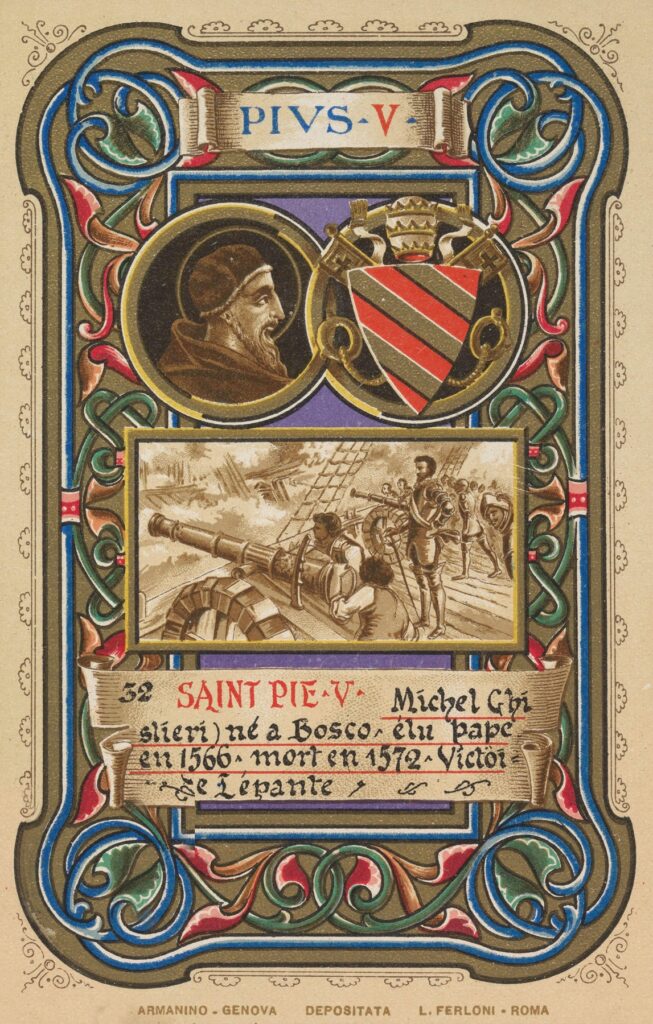
This is why it is important to read carefully the Church’s own teaching on what it means to say the faith of the Church is founded on Peter. This faith is contained in the First Vatican Council’s dogmatic definition, of which here is the essential part: ‘The Roman Pontiff, when he speaks ex cathedra, that is, when, in discharge of the office of pastor and teacher of all Christians, by virtue of his supreme Apostolic authority, he defines a doctrine regarding faith or morals to be held by the universal Church, is, by the divine assistance promised to him in Blessed Peter, possessed of that infallibility with which the divine Redeemer willed that His Church should be endowed in defining doctrine regarding faith or morals; and that, therefore, such definitions of the Roman pontiff are of themselves, and not from the consent of the Church, irreformable’2.
We have here the ultimate explanation of what it means to say that Peter is the Rock upon which the faith of the Church is built: when all is said and done, whenever in Church history there is debate about what has been divinely revealed and there must be a decision that binds the faith of the entire Church, that decision rests with the Successor of St Peter. This is true even when an Ecumenical Council has been convoked to treat of the matter, for the decrees of such councils are binding only once they have been solemnly approved by the Roman Pontiff.
This is the precious gift of the papacy to the Church, one for which every Christian, Catholic or not, should be grateful, for it preserves the Church from error and gives us the certitude that when we embrace the faith that has been defined by Peter and his successors, we are absolutely certain of being in the truth. By its very nature, this gift of infallibility is rarely used in Church history, and usually only when a dogma is brought into question. After all the debate, the buck stops with the Pope.
One may object: how does this fit in with the fact that several instances of Popes have been found who either did not live upright moral lives or played loose with dogma when not teaching authoritatively? Quite simply, the prerogatives of the Successor of St Peter include neither that of impeccability – not being able to sin and therefore scandalise others – nor that of permanent personal infallibility – not being able to make mistakes in their own thinking, speaking and writing. They demand a humble heart, ever attentive to what has been handed down by Tradition. In the clear teaching of Vatican I: ‘The Holy Spirit was promised to the successors of Peter not so that they might, by His revelation, make known some new doctrine, but that, by His assistance, they might religiously guard and faithfully expound the revelation or deposit of faith transmitted by the apostles’3. Without true holiness and true humility, a Pope can fail in his duties and scandalise the Church; he can even pronounce heresies when he is not giving a dogmatic definition. This is why we must pray for the one who holds the Keys of St Peter at any given time. Today, that man is Pope Leo XIV, to whom we owe not only prayer but respect and obedience.
Only three weeks after his election to the chair of St Peter, Pope Benedict XVI expressed in an admirable way what it means to be Pope: ‘The power that Christ conferred upon Peter and his Successors is, in an absolute sense, a mandate to serve. The power of teaching in the Church involves a commitment to the service of obedience to the faith. The Pope is not an absolute monarch whose thoughts and desires are law. On the contrary: the Pope’s ministry is a guarantee of obedience to Christ and to his word. He must not proclaim his own ideas, but rather constantly bind himself and the Church to obedience to God’s word, in the face of every attempt to adapt it or water it down, and every form of opportunism. … The Pope knows that in his important decisions, he is bound to the great community of faith of all times, to the binding interpretations that have developed throughout the Church’s pilgrimage. Thus, his power is not being above, but at the service of, the word of God. It is incumbent upon him to ensure that this word continues to be present in its greatness and to resound in its purity, so that it is not torn to pieces by continuous changes in usage’4.
Honour Thy Father
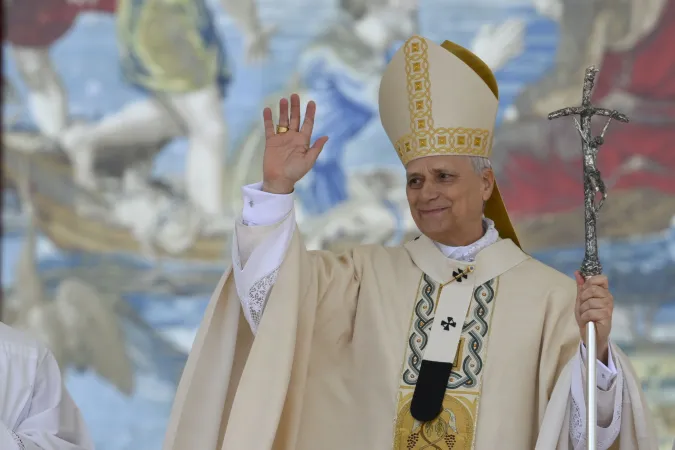
The papacy is essentially the gift of paternity to the Church. The Pope is the father of all Christians, and that is why we address him as ‘Holy Father’. In him, we see the successor of Peter, the Vicar of Jesus Christ on earth. As our father in the faith, we must apply to him the Fourth Commandment: Honour thy father and thy mother. One of the problems with our democratic societies is that we think we have the right to judge those we have elected. To a certain extent, this is true, since when they come up for reelection, we must be able to know how well they have performed. This is not so in the Church, which remains, in the strict sense, hierarchical. Once a Pope is elected, he receives his power to govern the Church directly from Our Lord Jesus Christ, and to Him alone he will have to give an account. As Vicar of Christ, we owe him veneration, obedience and filial love. Whatever may be his personal faults or failures, he carries the weight of the universal Church on his frail shoulders. He both needs and has a right to the prayers and respect of all the faithful. If it is true, as St John Vianney once said, that the ‘priesthood is the love of Jesus Christ’, it is also true that the Papacy is one of the most precious gifts, the crowning jewel, of that love. Without it, what Christians believe would be up for grabs and the Catholic Church would be just another denomination; without it, we could never be sure what exactly Christ taught as necessary for salvation; without it, Christianity would have no moral voice at all in the world.
- Ultramontane is taken here broadly to refer to an excessive understanding of papal prerogatives. ↩︎
- First Vatican Council, Dogmatic Constitution Pastor Aeternus, 18 July 1870 ↩︎
- Ibid ↩︎
- Benedict XVI, Homily of 7 May 2005. ↩︎