

In the last two articles, we considered certain aspects of the modernist crisis in the Church and how each of us is prone to being infected by the virus.
Three years after publishing the encyclical Pascendi, Pope St Pius X mandated an ‘Oath Against Modernism’ (1910) to be taken by any clerics in public office in the Church at any level – pastors, confessors, preachers, religious superiors, and seminary professors. The oath stresses the major points the holy pontiff considered fundamental to maintaining a clergy that was, in all respects, Catholic. By obliging all clerics to take this oath, he intended to keep them – and through them the people they served – free of any modernistic influence. The oath, therefore, gives us not only a summary of the most fundamental beliefs that should be the hallmark of every true Catholic, but more importantly, those that modern times have sought to impugn in various ways. It would therefore seem obvious that by giving them due consideration over the coming months, we will be well equipped to keep the modernist in us at bay.
Stop and Smell the Flowers
After professing a general acceptance of each and every article of faith that has been set forth and declared by the unerring teaching authority of the Church, the oath starts at the beginning: the existence of God. ‘I profess that God, the origin and end of all things, can be known with certainty by the natural light of reason from the created world (cf. Rm 1:19), that is, from the visible works of creation, as a cause from its effects, and that, therefore, His existence can also be demonstrated’.1
The reference to St Paul’s words to the Romans is worth pondering: ‘For the wrath of God is revealed from heaven against all ungodliness and injustice of those men that detain the truth of God in injustice, because that which is known of God is manifest in them. For God hath manifested it unto them. For the invisible things of Him, from the creation of the world, are clearly seen, being understood by the things that are made; His eternal power also, and divinity: so that they are inexcusable. Because that, when they knew God, they have not glorified Him as God, or given thanks; but became vain in their thoughts, and their foolish heart was darkened. For professing themselves to be wise, they became fools. And they changed the glory of the incorruptible God into the likeness of the image of a corruptible man, and of birds, and of four-footed beasts, and of creeping things’ (Rm 1:18-23). In this the apostle is simply repeating in his own way and expounding upon what the Book of Wisdom had already made clear: ‘All men are vain, in whom there is not the knowledge of God: and who by these good things that are seen, could not understand Him that is, neither by attending to the works have acknowledged who was the workman’ (Wis 13:1).
The conspicuous sense of both these texts is that anyone with the use of reason who does not arrive at the knowledge of the existence of God cannot possibly be making a good use of his reason. It also means that the simple assessment of the existence of the universe is, of itself, enough to lead an upright person to the existence of a Creator. This is why the lack of faith is offensive to God. The epistle to the Hebrews will state emphatically: ‘Without faith it is impossible to please God. For he that cometh to God, must believe that He is, and is a rewarder to them that seek Him’ (Hb 11:6).
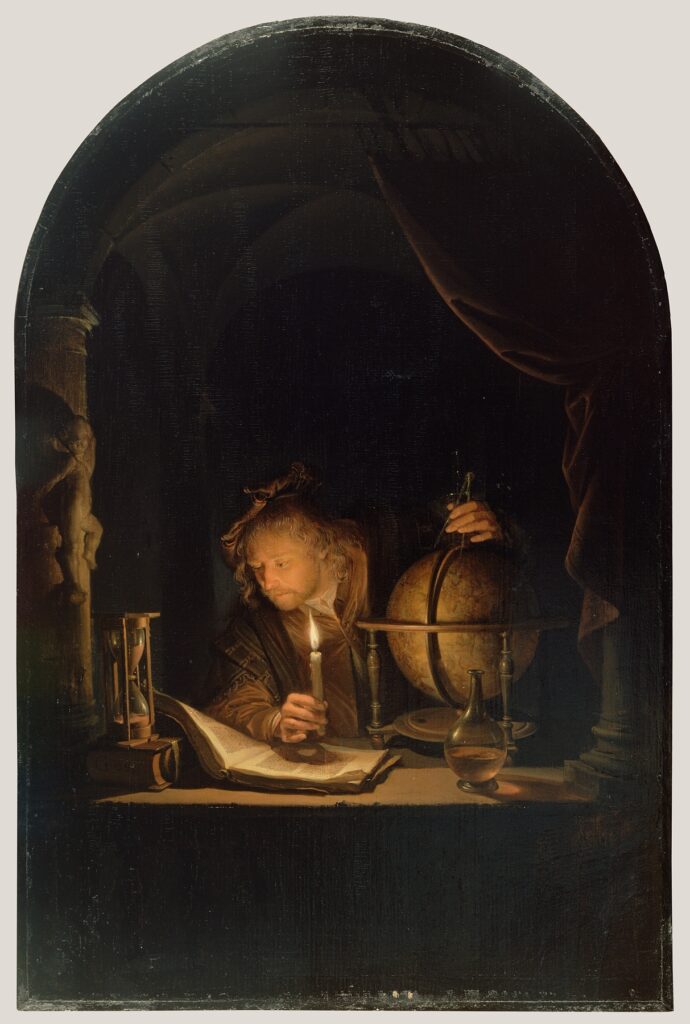
His existence, says the oath, can be demonstrated ‘as a cause from its effects’. In other words, a rational person instinctively seeks to know how and why things are the way they are. It is well known that children always seek to take things apart. They want to know what’s inside and how it works. Physicists lay out the laws that rule in nature by relying heavily on causality. If a particular being acts in a particular way, there must be some reason for it, and a rational person wants to find out, whereas an irrational being does not – this is what separates man from beast. It is this very same principle that the oath states comes into play here. It is not possible to experience the world without wondering how it came to be, and man’s intellect is gifted with the capacity to rise from this consideration to the knowledge of the Supreme Being that designed and created all things. This does require a certain capacity to marvel at things, capacity which has been greatly diminished in modern man who is all too often glued to his man-made computer/TV/phone screen instead of lifting his eyes to the stars or down to the flowers, each of which is infinitely more marvelous than the most sophisticated of computers: ‘But I say to you, that not even Solomon in all his glory was arrayed as one of these’ (Mt 6:29).
Get Your Own Dirt
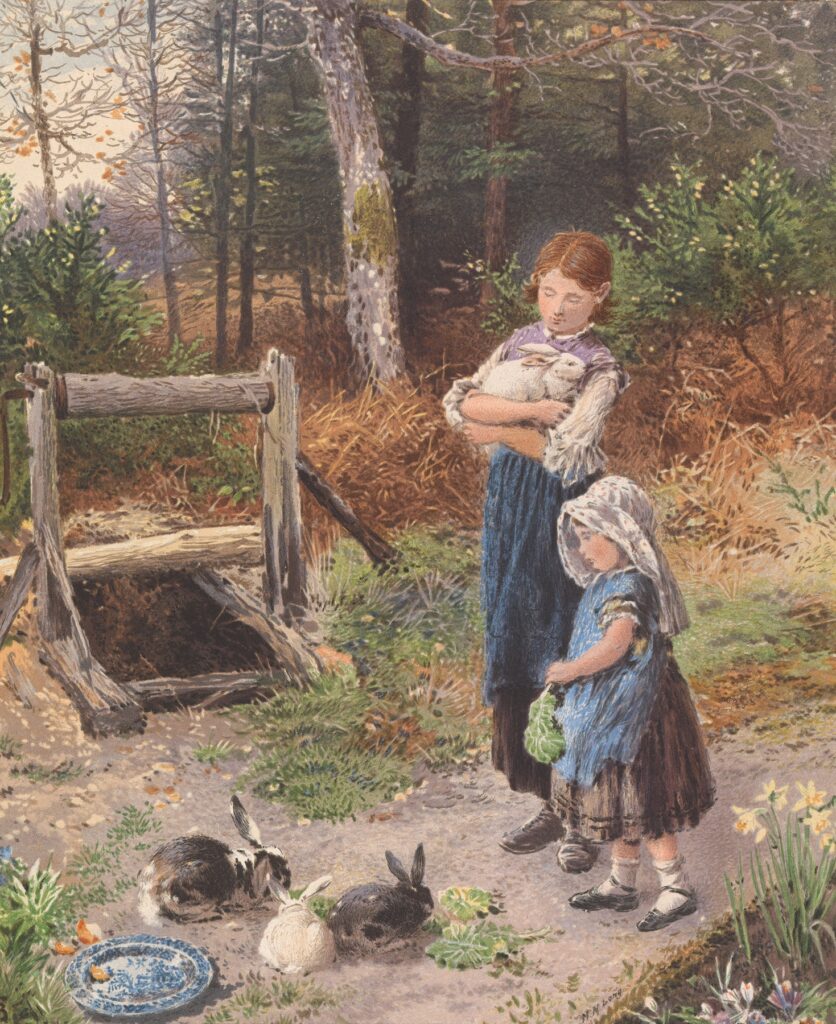
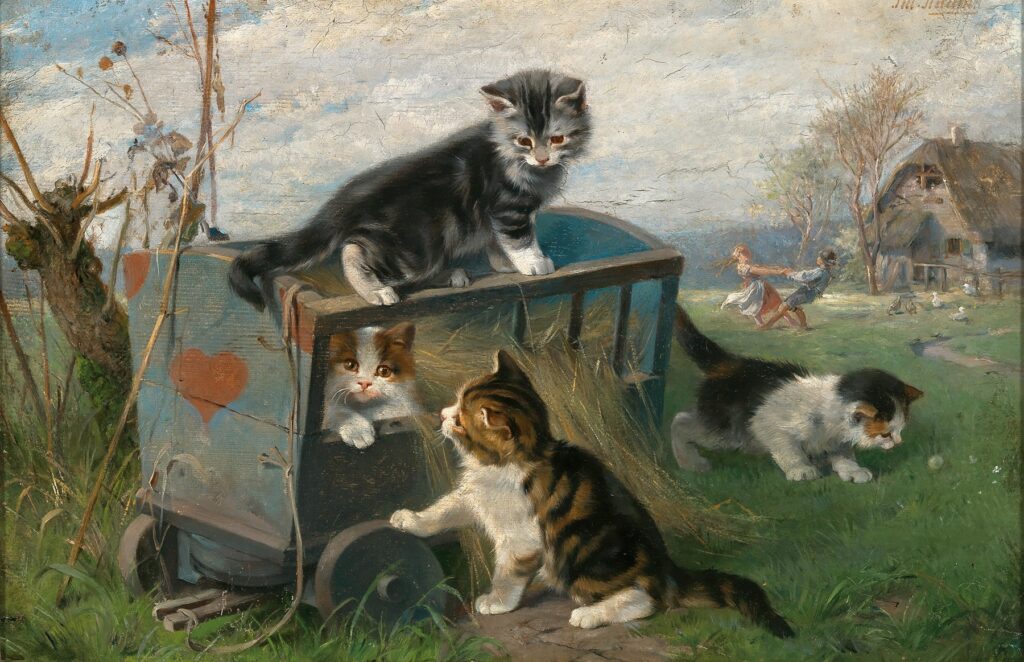
If human reason makes the effort, it can arrive at this truth. Indeed, all attempts at explaining the existence, even of a single ant, without a God, fail miserably, for one very simple reason: without a self-subsistent Being, no other beings could have ever come into existence, because none of them has within itself a sufficient reason for existing. It’s not rocket science. It’s sound, sane, rational logic, and no atheist has ever been able, or will be able, to debunk it. And so we can say that, if there are baby rabbits, there is a God. (If you prefer baby kittens, it works too!). No being can make itself, much less design itself. This is wisdom as old as the world. To neglect it is folly. To imagine extremely complex scenarios to explain it away is the epitome of pride. Even Voltaire, in his virulent hatred for the Church, could not keep himself from admitting: ‘The more I think of it, the less I can admit that this clock works and has no clock-maker’. The point is simple, and yet irrefutable. Recently, we went on a mountain hike. Through one part of the mountains where it would have been difficult to walk, wooden steps had been installed. I remarked with tongue in cheek how lucky we were that there had been 13.7 billion years to allow the evolution of those stairs. The remark surprised my companion, because everyone knows that steps don’t make themselves. But stairs are infinitely less complicated than the mountains, so why do we not see that if the stairs could not make themselves, neither could the mountains?
Up until modern times, almost everyone would have acknowledged this simple truth. Darwin’s theories, by positing extremely long periods of time in which things slowly evolved, led many to think that we don’t need a God anymore. We used to believe that God just made things, but now we seem to have figured out that they came into being gradually on their own. In addition to the still unproven weakness of the theory that does not – and cannot – demonstrate how one kind of thing can evolve into another, there is the even more fundamental error of logic, which fails to grasp that, in order for things to evolve, there would need to be something to begin with.
There is a story of the great Australian apologist, Frank Sheed, who was debating the existence of God with a man who described himself as an atheist. When Sheed spoke of the need for a Creator for the world to exist, the atheist quipped that, thanks to our knowledge of science, we now could make things that we always thought only God could make. Sheed challenged him: ‘Very well, then, could you make me, say, a rabbit, just one, a small one? How would you go about doing that?’ The atheist replied: ‘Sure, I can do that. I’d probably start by taking some soil in which I’d find many of the elements…’ but Sheed interrupted him and said: ‘Wait, you have to get your own dirt’. There, you really have one of the most egregious errors of evolutionists. They can never explain how there came to be something in the beginning. When you pin them down and ask them, they will tell you that the ‘nothing’ of the beginning was ‘almost nothing’, or ‘virtually nothing’, or ‘tended toward nothing’, that is to say, there were a few atoms floating around somewhere…. But where did the atoms come from? This, of course, they can’t answer, and so they fall into one of the most glaring philosophical errors that even beginners know about: a thing cannot be and not be at the same time. Here we truly have the heart of the matter. It’s precisely for this reason that the oath stresses the need for an Almighty Creator who decided to make things out of nothing (ex nihilo). There is no other explanation for the mystery of existence than that an infinite power drew things out of nothingness.
Retrieving Common Sense
G. K. Chesterton once said: ‘If there were no God, there would be no atheists’. Indeed, if there were no God, there could be nothing at all. The fact that contingent things exist, of its very self, proves the existence of God, for the very simple reason that if there were no self-subsistent, necessary Being, there could be no contingent beings – none of them can bring themselves into existence. All the beings we can experience – including ourselves – are contingent, which means they do not have within themselves their own justification or raison d’être, and therefore they do not have to exist, and, without God, would not exist. This truth is so simple and yet so irrefutable that we can safely say that, at the end of the day, all the debates between believers and scientists are pointless. All that is required is the very first step: either you acknowledge that one single atom needed an infinite being to get started, or you violate one of the most fundamental rules of logic, and then it does not matter how many things you may know about science, you are not thinking straight.
While this is not the place to develop Aquinas’ proofs for the existence of God, it may be helpful to mention his ‘third way’, as it is the one upon which the present reflections are based. He teaches that everything we can observe in nature has the possibility of existence. Indeed, otherwise they would not exist. At the same time, they do not have to exist. If there were no crocodiles, the world would still exist. If there were no rattlesnakes, the world would still exist, etc. If any particular human did not exist, the others would still be here. Since every single one of the creatures we can observe and study, by the very fact that they are contingent, can exist and not exist, it is not possible for them to have always existed. Now, since everything could never have existed, there could have been a time when nothing existed, but if there were a time when nothing existed, nothing would exist now, unless there were a being whose existence is absolutely necessary, and who brought the others into existence. This is God.2
The rejection of this simple truth is such a grave violation of the laws of rational thinking that it leads ultimately to a form of insanity, as Chesterton intimated: ‘The first effect of not believing in God is that you lose your common sense’.3 And an effect of losing your common sense is that you become vulnerable to nonsense, as once again Chesterton reminds us in one of his most popular quips, which can be summarised this way: ‘He who does not believe in God will believe in anything’. So, instead of the very rational belief that an infinitely perfect Being created all things, we are given the very irrational belief that things just began on their own, and again on their own, organised themselves into the marvelous cosmos that all can admire. This absurd belief – for it is a belief that has literally nothing at all to do with real science – alone explains why the most devastating ideologies in history developed only after men en masse started falling for the insanity of not believing in God. And this is ultimately why Holy Scripture twice issues the stark reproach: ‘The fool saith in his heart: there is no God’ (Psalm 13 and Psalm 52).
Escaping from the Labyrinth
This fundamental point has been the hallmark of the true seekers of God from the dawn of history. In modern times, after the euphoric period of the 19th and early 20th centuries, when it was popular to think that science would be able to explain the world without God, there has been a growing number of scientists who are arriving at the opposite conclusion and have the courage to say so. For instance, the American astronomer and NASA physicist Robert Jastrow (1925-2008), in his book, God and the Astronomers, illustrated his position as follows: ‘For the scientist who has lived by his faith in the power of reason, the story ends like a bad dream. He has scaled the mountains of ignorance, he is about to conquer the highest peak; as he pulls himself over the final rock, he is greeted by a band of theologians who have been sitting there for centuries’. But why have they been sitting there for centuries? Because they made good use of their reason, they put two and two together, and they knew that the existence of anything requires a God, that reason requires faith, for otherwise it wastes its energies in collecting minutiae about the universe while never connecting with the power and the intellect that brought them into being. It would be like an electrician trying to provide light to a house without knowing that there is a source of power to which he can connect. It is because true theologians are humble enough to acknowledge reality, and to sit at the feet of God, so to speak, that they are able to pierce the clouds, while the scientist who refuses to be convinced by the existence of a single atom locks himself up in a labyrinth that may cause him to get excited every now and then, but will never lead him to the marvel and wonder of the simple soul who knows that behind the marvellous universe there is an even more marvellous Creator.
In conclusion, the oath against modernism was designed to stress certain elements of the faith that are more particularly attacked today. The modernist god is a pantheistic god, who is identified with the universe. The true God, while being immanent to us – intimius intimo meo, as St Augustine would say – is also transcendent. He does not need creation, and He is not identified with it. He is above it. He created the world and keeps it in existence. By definition, there can only be one of Him, that is to say, only one Being who has in itself its own reason for existence, and who therefore has no limits, but rather contains every possible perfection. To posit another such being would put limits on the first one and therefore deprive it of its self-subsistent identity. And if there is only one God, there can only be one true religion, for the simple reason that the self-subsistent Being is absolute truth and absolute truth cannot contradict itself. If this Being decides to reveal Himself to us, He is going to make sure that His message is abundantly clear, simple and one. And so, the stage is set for next month’s article.
- The oath is here only restating what had been expressed with much more detail by the First Vatican Council, of which the following are the essential excerpts: ‘There is one true and living God, Creator and Lord of heaven and earth, Almighty, Eternal, Immense, Incomprehensible, Infinite in intelligence, in will, and in all perfection, who, as being one, sole, absolutely simple and immutable spiritual substance, is to be declared as really and essentially distinct from the world, of supreme beatitude in and from Himself, and ineffably exalted above all things which exist, or are conceivable, except Himself…God, the beginning and end of all things, may be certainly known by the natural light of human reason, by means of created things; (quote from Romans 1)…, but that it pleased His wisdom and bounty to reveal Himself, and the eternal decrees of His will, to mankind by another and a supernatural way: as the Apostle says, “God, having spoken on diverse occasions, and in many ways, in times past, to the fathers by the prophets; last of all, in these days, has spoken to us by His Son” (Hb 1:1-2). It is to be ascribed to this Divine Revelation, that such truths among things Divine as of themselves are not beyond human reason, can, even in the present condition of mankind, be known by everyone with facility, with firm assurance, and with no admixture of error’. ↩︎
- Cf. St Thomas Aquinas, Summa Theologiae, Ia, q. 3, a. 3. Fr Robert Spitzer, S.J., in New Proofs for the Existence of God: Contributions of Contemporary Physics and Philosophy, p. 127, summarises the self-subsistent Being in these words: ‘An absolutely simple reality (in act) is at once pure power and pure simplicity, pure act and pure inclusivity, pure being and pure capacity to unify all beings’. ↩︎
- G. K. Chesterton, The Oracle of the Dog, 1923. ↩︎