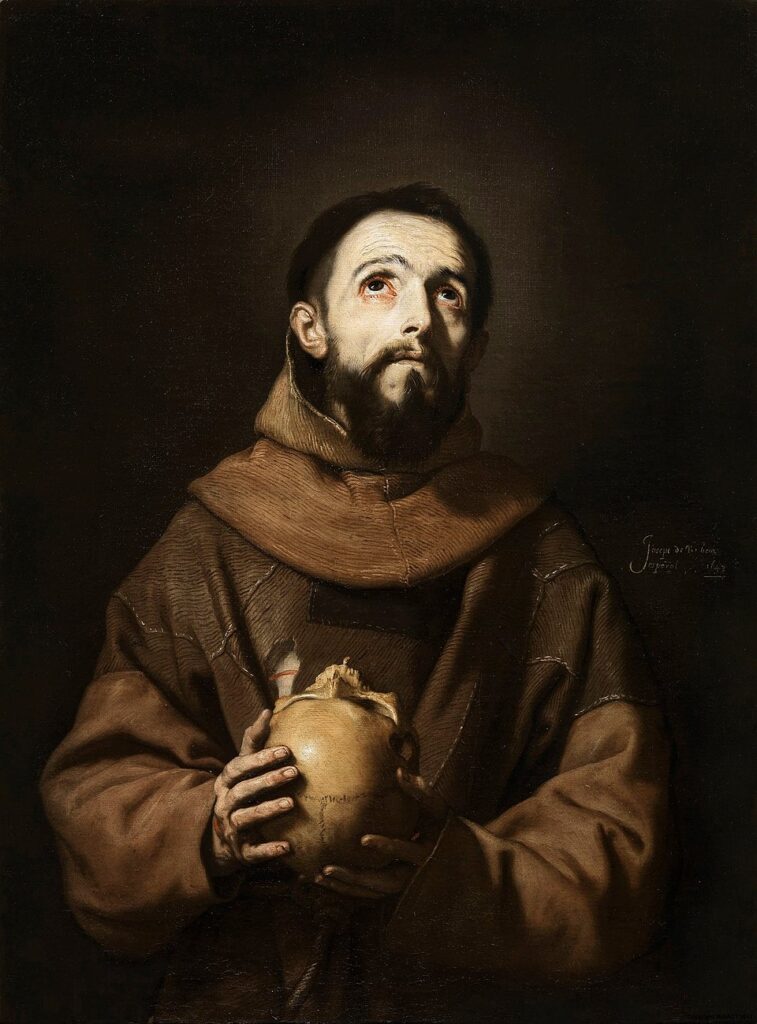
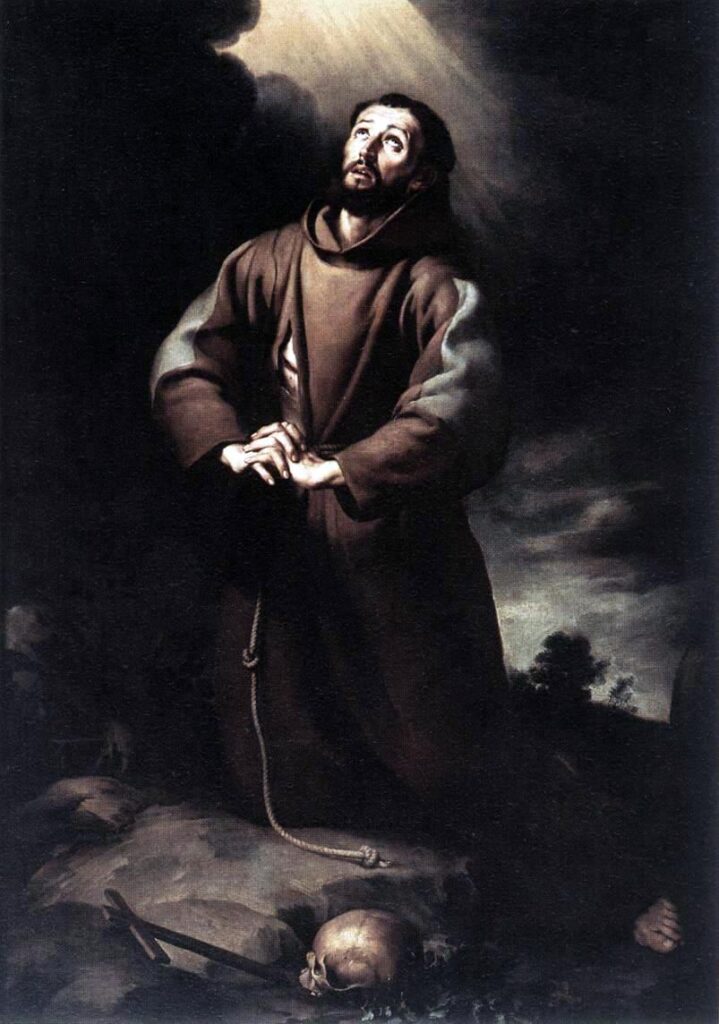
The Holy Father, Pope Leo XIV, has declared this year to be a special Jubilee Year in honour of Saint Francis of Assisi to mark the eighth centenary of the Poverello’s death. In so doing the universal Church recognises and draws renewed inspiration from this great witness to holiness. So who was this man who we commemorate and who we are be encouraged to know and imitate?
One of his earliest biographers, Julian of Speyer, refers to Francis as a Catholic and totally apostolic man. From the beginning this description became something of a catch-phrase to describe the holy man, becoming enshrined in the liturgical texts of his feast. Still today one of the antiphons of First Vespers reads: “Francis, the valiant catholic and perfectly apostolic, did instruct us to adhere to the faith of the Roman Church, and those who were her priests, he’d urge We should most of all revere.”
Sadly, however, this image of Saint Francis as intrinsically connected to the Church is not in the imagination of many today. A warrior for the environment, for the disenfranchised and for those on the peripheries of society would often more readily come to mind. At the root of this inversion, Pope Benedict XVI, during his series of Wednesday Audiences on the saints in 2010, identified a shift in contemporary attitudes towards the saint. He notes that “several 19th-century and also 20th-century historians have sought to construct a so-called historical Francis, behind the traditional depiction of the Saint, just as they sought to create a so-called historical Jesus behind the Jesus of the Gospels. This historical Francis would not have been a man of the Church, but rather a man connected directly and solely to Christ, a man that wanted to bring about a renewal of the People of God, without canonical forms or hierarchy.” This free-spirited Francis was, in the contemporary imagination, constricted and imposed upon by the institutional Church – forcing into its idea of religious life, imposing upon him a canonical rule of life.
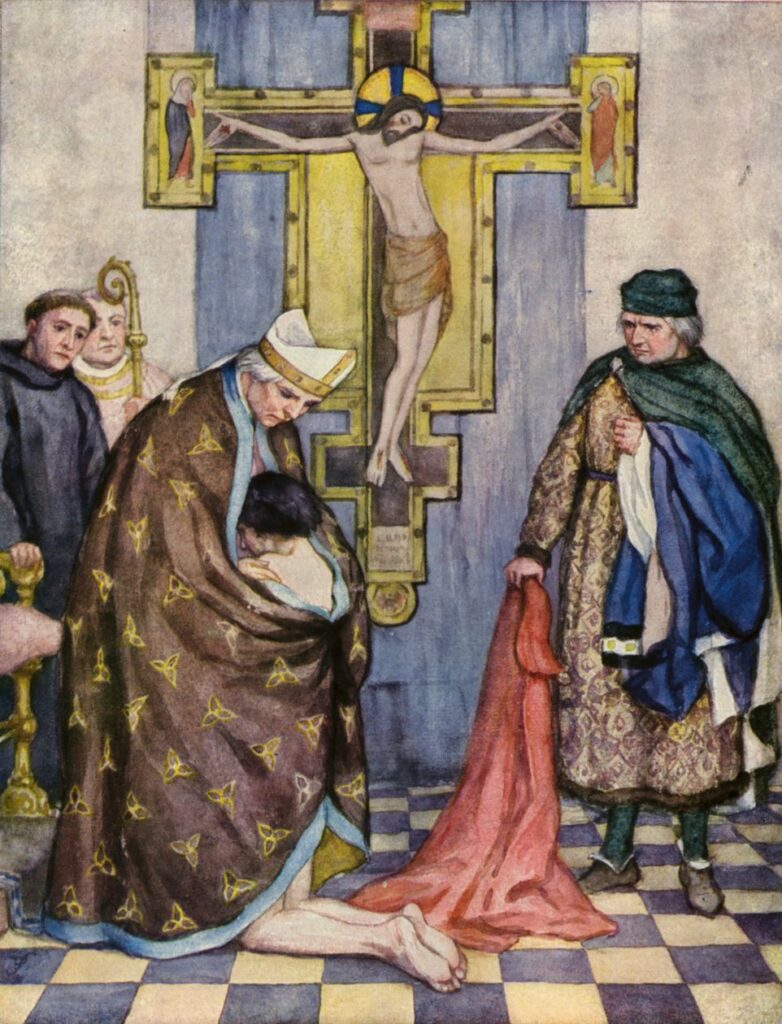
However, the reality is far different. It was Saint Francis himself who found refuge in the heart of the Church. When his father brought him into the public square, before the Bishop of Assisi, angrily seeking restitution for the money that Francis had given away to the poor, Francis famously strips himself completely naked, throws his clothing at the feet of his father, crying “I return to him the money on account of which he was so upset, and also all the clothing which is his, wanting to say from now on: ‘Our Father who are in heaven,’ and not ‘My father, Pietro di Bernardone’.” At that moment, the Bishop “gathered him into his arms, covering him with his mantle.” It was not simply a gesture of propriety, to cover Francis’ nakedness, but a sign of Francis embrace within the bosom of the Church in which he found his vocation.
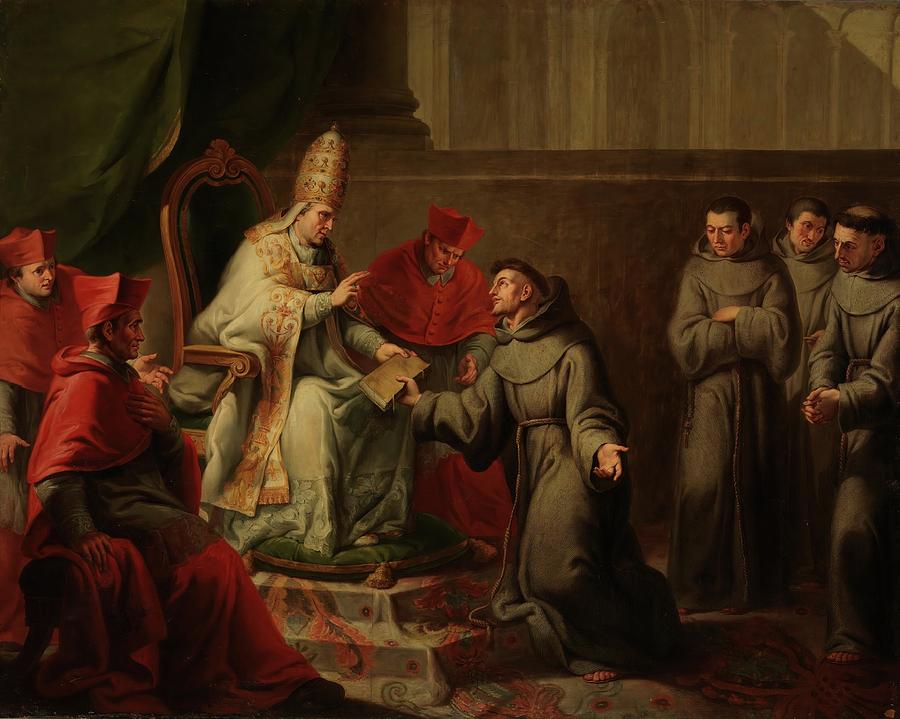
Similarly, having gathered to himself a group of followers, he was not content to follow the example of other ‘mendicant’ movements of his time, who remained independent of the Church’s authority and subsequently strayed into various heresies. Rather, he travelled to Rome, to propose to the Pope, Innocent III, his simple plan to live the Gospel of our Lord, Jesus Christ – a proposal that was warmly received by the Pontiff who approved their way of life according to the rule of the Gospel. “Thus,” as Pope Benedict notes, “he placed himself fully, with his heart, in communion with the Church, with the Pope and with the Bishops. He always knew that the centre of the Church is the Eucharist, where the Body of Christ and his Blood are made present through the priesthood, the Eucharist and the communion of the Church. Wherever the priesthood and the Eucharist and the Church come together, it is there alone that the word of God also dwells. The real historical Francis was the Francis of the Church, and precisely in this way he continues to speak to non-believers and believers of other confessions and religions as well.”
Living from the heart of the Church, Francis was apostolic in his preaching and defence of the Catholic faith, especially at a time which the purity of the faith was challenged by certain dualistic heresies, (especially of the Cathars and Albigensians), which threatened the truth of the Incarnation and the Sacramental economy of salvation. In the face of such serious distortions of the faith, the Church responded with vigour. The Fourth Lateran Council (1215) decreed wide-ranging canons upholding the sacramental reality of the Holy Eucharist, decreeing that the Blessed Sacrament (and Chrism) should be kept under lock and key, correcting the behaviour of clerics (against drunkenness and lewd behaviour, stipulating appropriate dress, admonishing them to faithfully celebrate the Sacraments), and denouncing the heresies of the day.
Faithful to the Church, Saint Francis met these challenges in his own unique style. He strenuously defended the truth of the Incarnation – of the humble, kenotic love of the eternal Son, who assumed our human nature. This truth formed the whole being of Francis and coloured the way he gazed upon existence. Because God had entered into the world, the whole of history was ‘charged’ with the divine presence: in the Church and her Sacraments; in the soul of each person; in the whole of creation.
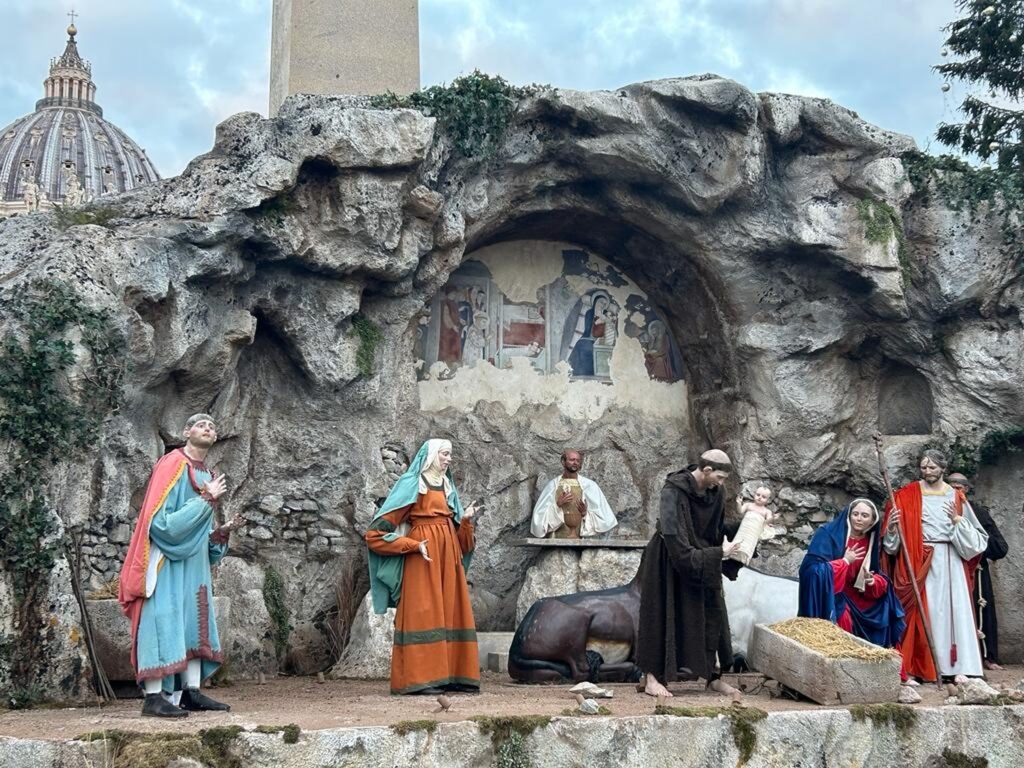
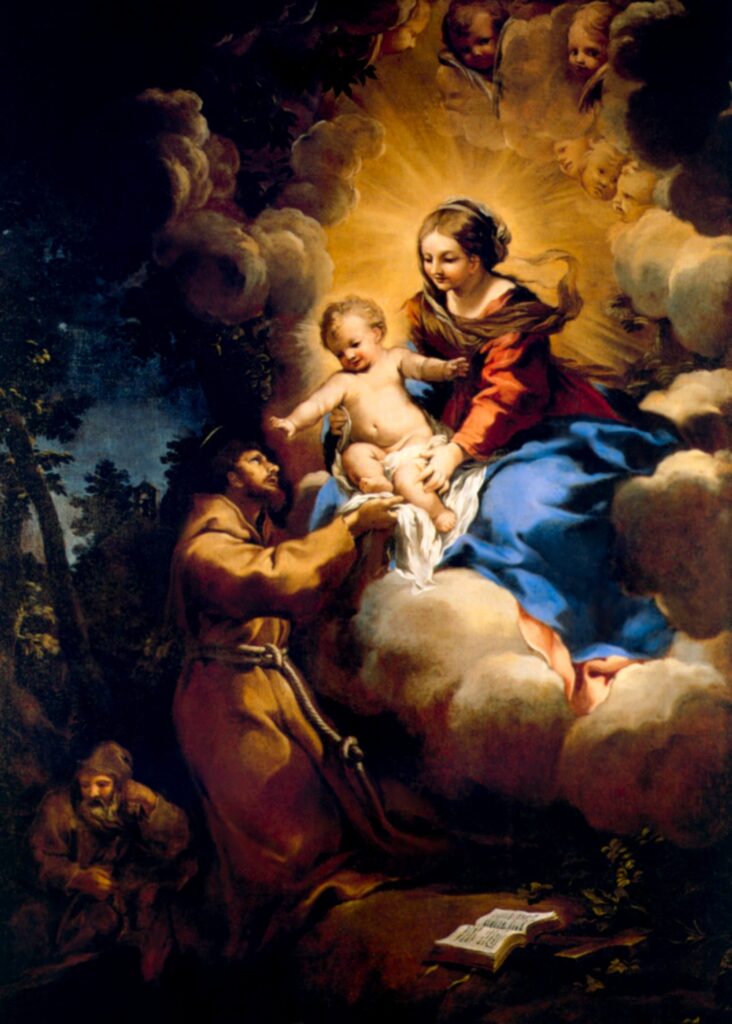
So thoroughly did the humility of the Incarnation occupy the memory of Francis that he scarcely wanted to think of anything else. In recalling this sublime wonder he assembled the first Christmas crib at the little village of Greccio. His purpose was simple – “to see as much as is possible with my own bodily eyes the discomfort of his infant needs, how he lay in a manger, and how, with an ox and an ass standing by, he rested on hay.” Through this simple gesture, Francis awakened the people of his day to the truth of God made man. The dark clouds of doubt – the quiet whisperings of heresy – were dispelled by the heartfelt love of this poor man for the poor Christ.
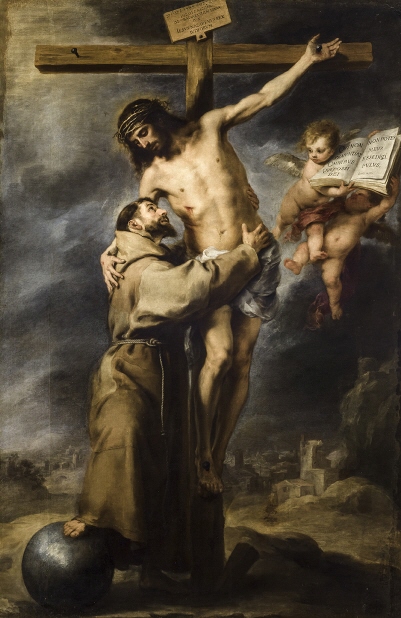
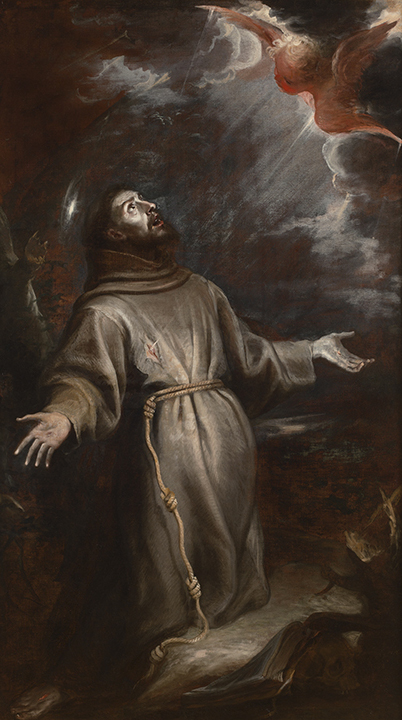
For Saint Francis, the wonder of the Incarnation did not end with the babe of Bethlehem, but moves towards Calvary. He saw the crib as intimately connected to the mystery of the cross. The love which moved Christ to descend from the bosom of the Father is ultimately manifest in his Passion and death. The cross, therefore, is central to Francis’ incarnational spirituality. In joining us in our humanity, Christ really suffers in his Passion. There is nothing apparent in his humanity. Thus Saint Bonaventure relates that while Francis was praying one time, “Jesus Christ appeared to him fastened to the cross. Francis’ heart melted at the sight, and the memory of Christ’s passion was so impressed on the innermost recesses of his heart that from that hour, whenever Christ’s crucifixion came to his mind, he could scarcely contain his tears and sighs.” The spirit of Francis was formed by his gaze upon the cross, and his conformity to Christ crucified would become manifest in the miracle of La Verna, where while contemplating the mystery of our salvation, Francis experienced firsthand the passion of Christ, and himself became a living sacrament, an icon, of the crucified in bearing the sacred stigmata, the wounds of Christ’s passion, on his own body.
Having been entrusted with the living memory of the Incarnation and saving Passion of Christ, the Church was the place where Francis encountered God. He realised that it was only within the Church that a true encounter with Christ could be maintained; that it was only in and through the Church that Christ’s saving presence through word and sacrament comes to us. In this, he was a thoroughly Catholic. Accordingly, in his Rule he explicitly promises obedience and reverence to the Lord Pope Honorius and his successors canonically elected and to the Roman Church. Concerning those who seek admission to the friars, he states in the Rule that the ministers should “examine them carefully concerning the Catholic faith and the sacraments of the Church.” He commended that “all the brothers be, live, and speak as Catholics; (and) if anyone of them strayed in word or in deed from Catholic faith and life and has not amended his ways, let him be expelled from our brotherhood.”
His emphasis on the Sacraments is particularly evident, for it is through them that the reality of the Incarnation and the immediacy of God in creation is realised. As we have already noted, the material reality of sacraments, through the medium of such elements as water, bread, wine etc. made them repugnant to some heretical voices. But for Saint Francis, they remained our only means of being in union with our God. In his Exhortation to the Clergy, he upholds the reality of Christ’s eucharistic presence. “We have and see nothing bodily of the Most High in this world except His Body and Blood.” In this, he recognises a profound continuity between the Incarnation of the Word and his ongoing presence among us in the Eucharist: “Behold, each day He humbles Himself as when He came from the royal throne into the Virgin’s womb; each day He Himself comes to us, appearing humbly; each day He comes down from the bosom of the Father upon the alter in the hands of a priest.”
It’s worth noting that this poverty and humility of Christ’s self-emptying, both originally in the Incarnation and continued through the Eucharist, was the source of Francis’ love of poverty. It is precisely the poor and humble Christ who descended from him royal throne to assume the poverty of our human condition that became the focus of Francis’ love and imitation. Poverty held no charm or merit in itself. It was precisely because Christ chose it for himself that Francis was so insistent on following in kind. It was in the Eucharist that Saint Francis continued to encounter Christ, poor and humble. In wonder at this divine condescension, he expressed his faith through a most beautiful prayer of praise and wonder:
Let everyone be struck with fear, let the whole world tremble, and let the heavens exult when Christ, the Son of the living God, is present on the altar in the hands of a priest! O wonderful loftiness and stupendous dignity! O sublime humility! O humble sublimity! The Lord of the universe, God and the Son of God, so humbles Himself that for our salvation He hides Himself under an ordinary piece of bread! Brothers, look at the humility of God, and pour out your hearts before Him! Humble yourselves that you may be exalted by Him! Hold back nothing of yourselves for yourselves, that He Who gives Himself totally to you may receive you totally!
In his deep reverence and wonder for the mystery of the Blessed Eucharist, Saint Francis also possessed an unfailing respect for priests, despite the obvious human weaknesses and failings within the Church and its ministers:
“We must frequently visit churches and venerate and revere the clergy not so much for themselves, if they are sinners, but because of their office and administration of the most holy Body and Blood of Christ which they sacrifice upon the altar, receive and administer to others. And let all of us know for certain that one can be saved except through the holy words and Blood of our Lord Jesus Christ which they pronounce, proclaim and minister.”
Francis realised that it was only within the Church that Christ’s saving presence through word and sacrament comes to us. And despite the individual failings of priests, this reality did not change. To prove this point, Francis would pick out the priest with the worse reputation to whom he would confess his sins, to show that the dignity of the office came from Christ and was not dependent on the individual.
At the same time, however, Francis did not shy away from reminding priests of the dignity of their office and of the need to live accordingly. He encouraged his friar priests to be conscious of what they are celebrating when they offered the Eucharistic sacrifice. In the Letter to Entire Order he wrote:
“Listen, my brothers: If the Blessed Virgin is so honored, as is becoming, because she carried Him in her most holy womb; if the Baptist trembled and did not dare to touch the holy head of God; if the tomb in which He lay for some time is held in veneration, how holy, just and fitting must be he who touches with his hands, receives in his heart and mouth, and offers to others to be received the One Who is not about to die but Who is to conquer and be glorified, upon Whom the angelslonged to gaze.
See your dignity, [my] priest brothers, and be holy because He is holy. As the Lord God has honored you above all others because of this ministry, for your part love, revere and honor Him above all others. It is a great misery and a miserable weakness that when you have Him present in this way, you are concerned with anything else in the whole world!”
This attention to the mystery also extends to the practicalities of the celebration, exhorting his brothers to celebrate the sacrifice worthily and to take care of the sacred vessels and linens used in the Mass.
“Consider how very dirty are the chalices, corporals and altar-linens upon which His Body and Blood are sacrificed. It is placed and left in many dirty places, carried about unbecomingly, received unworthily, and administered to others without discernment. Even His written names and words are at times left to be trampled under foot …
Whenever the most holy Body and Blood of our Lord Jesus Christ has been illicitly placed and left, let It be moved from there, place in a precious place and locked up. Likewise, wherever the names and written words of the Lord may be found in unclean places, let them be gathered up and put in a becoming place.”
Attention to liturgical detail (the appointment of altar, chalice, altar linens) is not something that we usually attribute to this poor lover of creation. Some might find is puzzling that a man who in his poverty was detached from earthly cares would be so concerned about the liturgical practicalities of church furnishings. But because of Francis’ deeply Catholic and sacramental sense, he insisted that everything connected to the celebration of holy Mass, and every word, gesture and deed, must proclaim the reality of Christ’s presence.
Let us pray, therefore, during this special Jubilee Year that the real Saint Francis might shine forth. May we take as our inspiration this thoroughly Catholic and Apostolic man who loved the Church that God has entrusted with the means of our salvation. With the help of the saint let us pray the grace to see and find Christ present in His Church: in the fragility of her Sacraments and the brokenness of her ministers. And with him, let us praise God for the wonder of His presence to us.