

Introduction
What do traditionalists do now? After the publication of Traditionis custodes, we were alarmed. But we acted. After the election of Pope Leo, we were surprised. And so we waited. Now, some time has passed and after the news stories from January’s consistory, we are both surprised and alarmed. And that is not a good combination. If we continue to wait, the risk is that individual TLMs will be left up to the whims of local ordinaries- such as Chicago and Charlotte. If we act, it is not clear that we should do anything different from what we have been doing. If I am reading well the general sentiment amongst traditionalists, we are defaulting to our ‘natural’ instinct: stand firm and hold to the traditions. And this we live out deliberately by being faithful to the TLM and the Tradition that flows into it and the traditions that flow from it. However, I want to propose in this essay, that what we have done up until now is not everything we need to do going forward. My intention is not to change and certainly not to criticise what we have done, but to add something else to it, as we advance.
Traditionalism is at a crossroads and we need to make up our mind about what to do next. This particular moment is not actually new to the Church; and as traditionalists we should be looking to received wisdom in order to figure out what to do. As in all things and as in every age- we need to be very modern about how we go about the business1 of tradition.
What we need right now
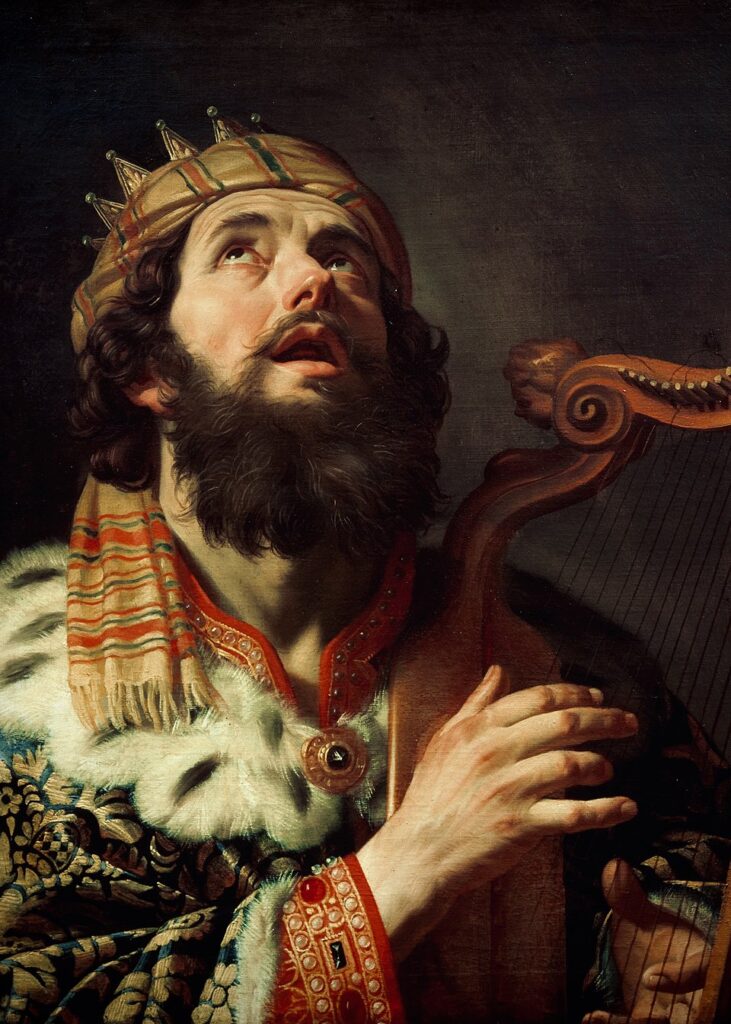
Traditionalism needs a champion. We need just one bishop in a substantial territory to not just give us the promise of hope; but rather to embody moral courage. So that even if he is in a land that is far from us, he can still be a light for us. We need to be praying for a miracle. And not just one miracle- but several. That the right priest gets chosen, he gets elected to a significant diocese and he becomes a rather extraordinary ordinary: that he resists the neutering of the curia, the politics of the chancery, the self-interest of the clergy and the malice of the culture. I say this so that the prayerful intentions of many of you- in your private devotions, in the sacrifices you make and the communions you receive- may all coalesce on this one intention: pray for a champion. I know all of you are praying fervently for the future of the TLM. However, I think a collective prayer intention for our movement need focus on this one thing: the Lord must send us a David. One without all the moral baggage of a David.
What we need from you
In the meantime, however, after you have done all of the above, I need you to do something else as well. For there is no point in the Lord raising up a champion if no one follows him into battle. If we are unprepared then no amount of grace can make up for a nature that is ill disposed to receive it. And these three things will, I believe, ensure our best interior dispositions to receive the grace, please God, that will soon be poured into our lives.
Many of you go to great lengths to ensure your family receives the fullness of the Tradition. As best as you can. Where you can. The tradition may lack a champion- it is not bereft of heroes. I know many of you are willing to pick up and move- some of you have done so already. But there are only so many times you can do that before your age and circumstances become a natural limit. It is also, after a time, somewhat self-defeating. If tradition is to flourish then it requires a fixed place. People have to know one another, trust one another and share a part of their lives with each other if the tradition is to actually be lived out well. The very nature of tradition itself demands that what has been handed to you be handed on by you. This means, by definition, someone to whom to hand it. If there is no tribe there can be no tradition.
Now, as necessary as that is, it is not entirely up to us. Masses get cancelled or moved to the school gymnasium to be celebrated only on the second Sunday after the first full moon upon the equinox- in a leap year. Alas, part of being in the Church means being at the mercy of certain decisions of churchmen. But in the meantime, we should learn something from the early Church that ironically, lives on better in certain Jewish neighbourhoods than it does in ours: how to survive as a community under the threat of persecution.
How to survive as a community under the threat of persecution
The contexts are not identical, but there is something in the blueprint however that we can learn from and adapt. I know that if an ordinary wants to shut down the TLM he can just take the clergy from you- something that doesn’t happen to the Jews or didn’t happen to the first Christians. At least not internally. If the Christians lost their clergy, it was to the lions and not because of the bishops. However, the lessons I think we have to draw from the wisdom of those who have gone before us are three.
Lesson one
The first, is that as traditionalists we have to master the art of turning the habits of our way of life into institutions that embody them. This idea is at the core of what Oriens does. It is also what the tradition teaches us.
It is much harder to marginalise tradition (and traditionalists) if we have constructed a network of institutions that surround our work. An obvious place to start is schools and a network- both local and international- of those schools. I know there are many families that want to start a traditionalist school. The costs and difficulties of home schooling for some families mean that they need a hand schooling their children. And they know they need some kind of institution to help them.
There are already a number of outstanding experiments across the traditionalist world of homeschooling families who have pooled their resources to create small schools. It is not easy. It is not cheap. And it is fraught with difficulties. We know from first-hand experience. But there is much scope for us to do more. After all- do we really have an alternative? And for those who have started schools- is it not time we built some kind of network across those schools? A network to share resources, know-how and support for up-and-coming communities and new ventures. We do believe in our own future- why not prepare for it by continuing to grow it. After all, no matter how many great schools we already have, if we believe in the Tradition, which we do, they are not even close to being enough. And not to mention, it is somewhat easier to meddle with the 10am High Mass then it is to interfere with the school. The optics alone make even the most doctrinal liberal pause to reflect on the potential fallout from the headlines.
For others, the kind of institution will vary. Perhaps it means looking to establish university residences or college dorms. This may be something as simple as renting rooms in a house for young traditional men and women (separately!) to live in. It may even morph into shared residences for recent graduates who need to find work in a large city away from home. Young people need connection and accountability- find a way for them to have it. But what is important is not just the institution alone, but the network that we create from it. Initiatives that remain unknown remain ineffective. Even if I may not be a student in Kansas or a young graduate in Melbourne, knowing that someone has already done what I am looking for tells me there are ways of making it happen. A network not only gives me options; it also gives me hope. But we must know about it first in order to learn from it!
Others again it may not mean starting an institution but rather strengthening some great works already in operation. For example, the specular efforts of Pelican Plus that brings traditional resources to a whole new audience. Support them. Others again who are contemplating religious life- you can’t start your own monastery and nor should you try- but you don’t have to do that. There are already monasteries devoted to the tradition and traditional religious life. (Hint: the priest who writes the article before mine every month has already done the hard part. Come to Tasmania- there are fewer snakes and no crocodiles down there. Australia: the land where if something is moving it is probably trying to kill you.)
The options for institutions are almost limitless- choirs, musical groups, libraries, cultural societies and guilds are some other examples. Given the nature, number and kind of ordeals that we are facing, traditionalism must learn to think in terms of institutions and institutionally. It makes us harder to ignore and impossible to erase.
Lesson two
The second is to know how to present our way of life as a call to holiness. The first Christians knew they had a particular problem to solve: now that they were no longer bound by the dictates of the Mosaic law, they needed to find a way to live their Christians lives in a way that would make sense to others in the world. After all, the way they loved one another- as I have loved you– would be the most effective means to baptise all nations and to teach them everything He taught us. But Christians could not explain to people about how to follow a law, they had to find a way of following a Man. And teaching others to do the same. This was how they discovered that a Christian way of life is a call to holiness. It was to be like Christ. It was the birth of vocation within the life of the Church. And how we understand vocation determines how we live our lives. As traditionalists our way of life, our clinging to the tradition is a vocation- it is how we answer that particular call to follow Christ.
If we do not translate our understanding of our way of life into an explanation of our call to holiness, we run the risk of confusing traditionalism with an intellectual exercise. One of the many errors of Protestantism is that it makes salvation a question of an inner state of mind. I know I am saved when I declare Jesus as my saviour. It is an error particular to them, but not confined to them. I am not a traditionalist just because I recognise the TLM, but rather when I live my life by conforming it to the wisdom I have received. I take the good, the wisdom, that has been handed to me and I elevate it by handing it on to those who are around me. It is my vocation because it is my way of following Christ. I sanctify my life by living into the wisdom the Church has handed to me and by handing it on to those who come after me. Traditionalism is not just an exercise in understanding, it is a way of following the Lord.
Lesson three
The third thing that we must master, is to become better at apostolate and apostolic work. This is our intention at Oriens for this year. I know our tendency, and I speak personally, is to assume that the truth will win the day. Automatically. That once I have explained clearly why something is good, true or beautiful then others will see it and there is no more work to be done. I used to believe that if you pointed out the transcendentals then people would see and recognise them. It was an error on my part. Without getting into the weeds of why this is so, let me just say that after nearly a century of perversion in our thinking, idolatry in our worship and immorality in our living, many have had lost their inner natural faculties of perception. Such is the distortion of our faculties; many cannot perceive the proper object of their internal senses. To simplify that idea for you- we’ve been exposed to darkness for so long that our eyes can no longer stand the light. The light of the true, the good and the beautiful may shine regardless of our abilities to perceive it; but it cannot be perceived until there are faculties formed to do so. We need not only shine a light, we must educate by offering some correction. Our neighbour not only needs an argument- he needs a friend.
At times, I think we run the risk of thinking that if people just go to the TLM they will be converted by it. That may happen- but I don’t think we should rely on it. At least not exclusively. Given the collapse on the culture- both secular and religious- we need to engage much more effectively and convincingly in apostolate. Again, I am speaking out loud and for myself, but I know we can do better. It does mean having some uncomfortable conversations, understanding a little more the objections- real or imagined- by those who are open to the idea but can’t quite bring themselves to embrace it. It means being a little patient, a little persistent and a little more willing to endure a bit of discomfort and take a few more risks. Apostolate is risky business- but we have the Lord on our side.
Conclusions
I know there are many outstanding examples out there in the traditionalist world at present. Some are just forming and other have been leading the way for a while. I am not writing because nothing is happening. Far from it. Rather it is a gentle reminder that whatever we have- will not be enough. And that is a good thing. A very good thing. And whatever we are doing, it needs to form some kind of network. Even stronger than we have now. If traditionalist schools and other realities were in over supply, it would bode poorly for our future.
I also want to remind you that I am not telling you what to do either. I am trying to find a way for you to find a solution to whatever situation you are in and whatever present battles you may face. Know that your struggle is not just yours. The Jews, of which I have a little experience, do very well at sharing information, news and resource with each other. At present in Australia, after the Bondi massacre just before Christmas, I marvel at how the Jewish community has rallied not only politically, but institutionally as well. Some of these people I know personally. And even though we do not agree on religion and many other things, I cannot help but think as I observe what they are doing, that I am seeing something of how the first Christians must have rallied together. Despite whatever the obstacles and the struggles of fallen human nature must have presented. I know there are many things that concern us; and the correct response is not positivity at all costs, to the point of losing good judgement. Rather, tradition has won the argument, it is now time to bring in others so they may enjoy the fruits of victory.
- I mean business its archaic sense- not its commercial one. ↩︎